
If the World’s Most Important Oil Lifeline Snapped Overnight
The Brutal Reality of a Closed Strait of Hormuz
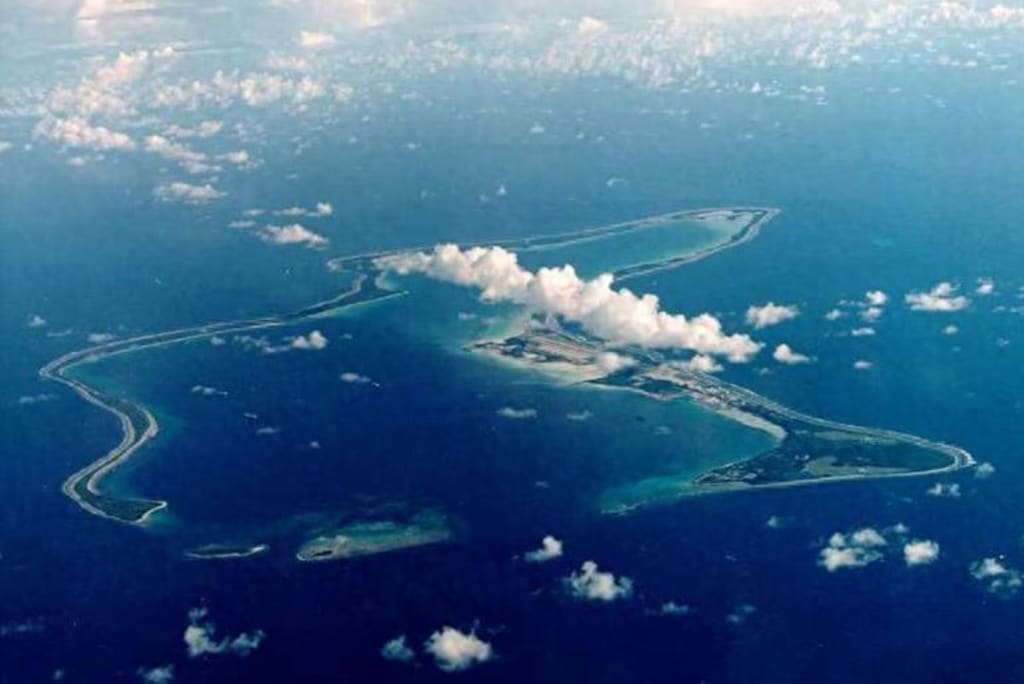
There are some places on Earth that quietly hold the entire global economy together. This narrow stretch of water is one of them. Every day, a massive portion of the world’s oil flows through this single chokepoint. If it shuts down — not temporarily, but permanently — the ripple effects wouldn’t just be economic. They would be civilizational.
The Illusion of “We’ll Just Find Other Oil”
Let’s start with a common assumption:
“If one route closes, countries will just import oil from somewhere else.”
Sounds reasonable.
But reality is far messier.
Take China as an example — one of the world’s largest energy consumers.
- Projected oil imports (2025): 578 million tons
- Oil tied to Hormuz route: ~190 million tons
- That’s not a small disruption — that’s a structural shock
Yes, China imports from:
- Russia
- Saudi Arabia
- Iraq
- Brazil
- Malaysia
But here’s the catch:
👉 A huge portion of Middle Eastern oil — especially from Saudi Arabia and Iraq — still depends on Hormuz.
So when the strait closes, supply doesn’t just reroute neatly.
It collapses at the source.
Strategic Reserves: A Temporary Illusion of Safety
China is estimated to hold:
- 1.3–1.7 billion barrels of oil reserves
- Roughly ~200 million tons
That sounds massive — and it is.
But here’s the uncomfortable truth:
👉 That’s only enough to buy time, not solve the problem.
Even if China offsets:
- Increased imports from Russia
- Domestic oil production
- Coal-to-liquid fuel conversion
It’s still a balancing act.
Best-case scenario?
Stability for 1–2 years
After that?
Everything depends on how the world adapts — or fails to.
The Real Battlefield: Your Car, Your Fuel, Your Daily Life
Most people think oil is about geopolitics.
It’s not.
It’s about your daily life.
In China alone:
- Gasoline + diesel consumption: ~338 million tons
- Used in vehicles:
- 95% of gasoline
- 70% of diesel
👉 That’s ~275 million tons consumed by cars
Now imagine governments reacting fast:
- Aggressive push for electric vehicles
- Fuel rationing
- Price spikes
- Restrictions on private transport
The transition wouldn’t be smooth.
It would feel like forced adaptation.
Winners Don’t Just Survive — They Expand
Here’s where things get uncomfortable.
While countries like:
- Japan
- South Korea
- Taiwan
- Southeast Asia
may struggle with supply shocks and industrial slowdowns…
Others might see opportunity.
China, for instance, could:
Expand manufacturing
Fill industrial gaps left by weakened economies
Strengthen trade dominance
- This isn’t kindness.
- This is economic gravity.
When one system weakens, another expands into the vacuum.
The Silent Shift: Energy Becomes Strategy, Not Commodity
A permanently closed Strait of Hormuz wouldn’t just disrupt oil.
It would redefine power.
Countries would accelerate:
- Domestic energy production
- Long-term bilateral oil contracts
- Alternative fuels (coal-to-liquid, renewables)
- Electrification of transport
- Oil would stop being just a traded good.
- It would become a weaponized asset.
What About War?
Let’s not ignore the elephant in the room.
A closure of this magnitude likely wouldn’t happen in isolation.
It would be tied to escalating tensions involving countries like:
- Iran
- The United States
And once global oil supply is threatened at this scale…
History tells us one thing:
👉 The world doesn’t stay calm for long.
The Uncomfortable Conclusion
If the Strait of Hormuz were permanently closed:
- Oil markets would shock, not adjust
- Short-term stability would rely on reserves
- Daily life would become more expensive and restricted
- Industrial power would shift globally
- Energy independence would become a national obsession
And perhaps most importantly:
👉 The illusion of a stable, interconnected global economy would break.
Final Thought
We often think the world runs on technology, finance, or innovation.
But beneath all of it…
It still runs on oil moving through a narrow strip of water most people will never see.
And if that strip disappears?
The world doesn’t stop.
It reshapes itself — brutally, unevenly, and fast.
About the Creator
Musashi Miyamoto: The Samurai Who Fought His Last Duel in His Mind
1. The Undefeated Monster and the Zero Point Ask anyone around the world to name a famous Japanese samurai, and the first name to surface will almost certainly be Miyamoto Musashi. We know the core myth: the undefeated duelist who won sixty-one life-and-death encounters, the eccentric giant who carved his own wooden sword to defeat his greatest rival, Sasaki Kojiro.
By Takashi Nagaya7 days ago in History
Carried by the Wind: The Forgotten Story of Japan’s Fire Balloons.
In the final years of World War II, as the conflict stretched across oceans and continents, a strange and almost unbelievable weapon drifted silently across the Pacific. It had no engine. No pilot and no guidance system. Only wind.
By The Iron Lighthouseabout 14 hours ago in History


Comments
There are no comments for this story
Be the first to respond and start the conversation.