Latest Stories
Most recently published stories in History.
San Francisco
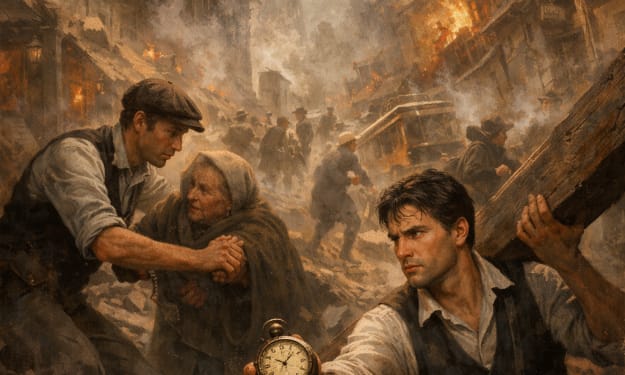
The fog rolled in like a living thing, soft and silent, wrapping the hills in a gray blanket that swallowed sound and memory alike. It was the summer of 1915, and San Francisco was a city still learning how to breathe again. Ten years had passed since the great earthquake and fire had reduced it to ash and broken stone. But the city was stubborn. It always had been. Now, wooden scaffolds climbed the sides of new buildings, and the streets buzzed with the sound of carts, streetcars, and voices speaking in a dozen languages. Hope, like the fog, drifted everywhere. On a narrow street not far from the waterfront, a young man named Elias Carter worked in his uncle’s watch repair shop. The shop was small, cluttered with brass gears, ticking clocks, and the steady smell of oil. To Elias, time was not just something that passed—it was something he could hold in his hands, take apart, and put back together again. But there were things even he could not fix. Every morning, Elias opened the shop just as the fog began to lift. He would sweep the wooden floor, wind the clocks, and place a small sign outside: Repairs Done with Care. Most days were quiet, filled with the gentle rhythm of ticking mechanisms. But sometimes, the past would come knocking. One such morning, as the sunlight struggled through the fading mist, a woman stepped into the shop. She wore a long, dark coat, though the day was warming, and her hat was pulled low, casting a shadow over her face. “Are you the watchmaker?” she asked. Elias nodded. “I am. What can I help you with?” She placed a small pocket watch on the counter. It was old—older than anything Elias had seen in months. Its surface was scratched, and the glass was cracked, but it held a strange elegance. “It doesn’t work,” she said quietly. “But it used to.” Elias picked it up carefully. The metal was cold, unusually so. He turned it over and noticed an engraving on the back: To L.M., for all our time together. “I can try,” he said. “No promises, but I’ll do my best.” The woman studied him for a moment, as if weighing something unseen. Then she nodded. “That’s all I ask.” She left without giving her name. For the rest of the day, Elias found himself distracted. The watch sat on his workbench, silent among the ticking chorus of others. When he finally opened it, he frowned. The mechanism inside was unlike anything he had seen before. The gears were arranged in a pattern that seemed almost… intentional, as if designed with more than timekeeping in mind. Some pieces were worn, others missing entirely. It should have been impossible for it to work at all. Yet, as Elias gently turned one of the gears, he could have sworn he heard a faint tick—just once. That night, long after the city had settled into quiet, Elias stayed in the shop. A single lamp cast a warm glow over his tools. Outside, the fog had returned, pressing against the windows like a silent observer. He worked slowly, carefully crafting replacement parts, filing tiny edges, and aligning each gear with precision. Hours passed unnoticed. Then, just as the clock on the wall struck midnight, the pocket watch came alive. Tick. Tick. Tick. Elias froze. The sound was soft but unmistakable. He leaned closer, his breath held tight in his chest. The hands of the watch began to move—but not forward. They were turning backward. Before he could react, the room shifted. The light flickered, the air grew heavy, and the steady ticking of the shop’s clocks faded into a distant echo. Elias stumbled back, knocking over a chair. When he looked up, the shop was gone. In its place stood a street he barely recognized—but somehow knew. The buildings were older, rougher, and the air smelled of smoke and fear. People rushed past him, shouting. A woman cried out. Somewhere, a bell rang wildly. And then Elias understood. He was standing in San Francisco on the morning of the earthquake. The ground trembled beneath his feet, and a deep, roaring sound filled the air. Buildings cracked and crumbled, sending clouds of dust into the sky. The chaos was overwhelming. Elias clutched the pocket watch, its backward-moving hands glowing faintly. “This isn’t possible,” he whispered. But it was happening. A figure caught his eye—a young man, no older than Elias himself, struggling to help an older woman out of a collapsing building. Something about him felt familiar. Without thinking, Elias ran toward them. “Help me!” the young man shouted as a beam fell across the doorway. Together, they lifted the heavy wood, freeing the trapped woman. She coughed, gripping Elias’s arm in gratitude before being led away. “Thank you,” the young man said, breathless. “I thought—” He stopped, staring at Elias. For a moment, the world seemed to pause. “Do I know you?” he asked. Elias shook his head, though a strange feeling stirred inside him. “No… I don’t think so.” The young man nodded slowly, as if unconvinced. Then, from his pocket, he pulled out a watch—identical to the one Elias held. “My wife gave me this,” he said. “Said it would keep me safe. Funny thing, it stopped working this morning.” Elias’s heart raced. “Your wife,” he said. “What’s her name?” “Lillian,” the young man replied with a faint smile. “Lillian Moore.” The initials. L.M. Before Elias could say more, the ground shook violently again. The scene blurred, the sounds stretched into echoes, and the light twisted around him. Then— Silence. Elias found himself back in his shop, the lamp still burning, the chair still overturned. The pocket watch lay in his hand, its ticking steady and normal. Forward. Morning came too quickly. As Elias opened the shop, his mind raced with questions. Had it been a dream? A hallucination brought on by exhaustion? The bell above the door rang. The woman had returned. “You fixed it,” she said, her voice calm. Elias nodded slowly. “I think… it’s more than just a watch.” She stepped closer, her eyes meeting his. For the first time, he saw the weight they carried—years of memory, of loss, of time that refused to stand still. “My husband carried that watch the day the city fell,” she said softly. “He never came home.” Elias swallowed. “I met him.” Her breath caught. “He saved someone,” Elias continued. “He was brave.” Tears welled in her eyes, but she smiled. “That sounds like him.” Elias handed her the watch. “It doesn’t just keep time,” he said. “It remembers it.” She held it carefully, as if it were a piece of her past made whole again. “Thank you,” she said. As she turned to leave, the fog began to roll in once more, wrapping the city in its quiet embrace. Elias watched her go, the ticking of the clocks around him steady and sure. Time moved forward, as it always did. But sometimes, just sometimes, it allowed you to look back.
By Afriditipszoneabout 2 hours ago in History
The Markel Building is in the Shape of an Aluminum-Clad Baked Potato
I live in Richmond, the capital of Virginia, which is well-known for its architecture. There are many historical buildings admired for their beauty. However, there is one building that is in the record books for being one of the ugliest buildings in the world and the quirkiest in Virginia.
By Margaret Minnicksabout 5 hours ago in History
The Year 2014 in Review: Fun Facts, Trivia, and Historical Highlights
This quick read presents a collection of fun facts, trivia, and historic events from the year 2014. Discover the year’s top news stories, most influential people, sports facts, computer and Internet trivia, entertainment news, and much more.
By Gregory DeVictorabout 13 hours ago in History
About 90 ships cross the Strait of Hormuz as Iran exports millions of barrels of oil despite the war
Many of the vessels that passed through the strait were so-called “dark” transits evading Western government sanctions and oversight that likely have ties to Iran, maritime data firm Lloyd’s List Intelligence said. More recently, vessels with ties to India and Pakistan have also successfully crossed the strait as governments stepped up negotiations.
By Sorea Cataabout 14 hours ago in History
The Maasai Who Do Not Hunt Lions
For generations, the image of a young Maasai warrior proving his courage by hunting a lion has captured global imagination. It symbolized strength, honor, and the transition from boyhood to manhood. But today, a new story is emerging—one that challenges this long-held narrative. Not all Maasai are lion hunters anymore. In fact, many have chosen a different path: coexistence.
By Irshad Abbasi about 14 hours ago in History
The Year 1984 in Review: Facts, Trivia, and Historic Highlights
This quick read presents a collection of fun facts, trivia, and historic events from the year 1984. Discover the year’s top news stories, most influential people, sports facts, U.S. economic trends, entertainment trivia, and much more.
By Gregory DeVictorabout 15 hours ago in History
The Year 1992 in Review: Facts, Trivia, and Historic Highlights
This quick read presents a collection of fun facts, trivia, and historic events from the year 1992. Discover the year’s top news stories, most influential people, sports facts, U.S. economic trends, computer and Internet trivia, and much more.
By Gregory DeVictorabout 16 hours ago in History
Discovery of a Previously Unknown Human Species in the Philippines
In a remarkable breakthrough that is reshaping the story of human evolution, scientists have discovered evidence of a previously unknown human species in a remote cave in the Philippines. This extraordinary finding not only expands the human family tree but also challenges long-held assumptions about how early humans lived, migrated, and evolved across the globe.
By Irshad Abbasi about 17 hours ago in History
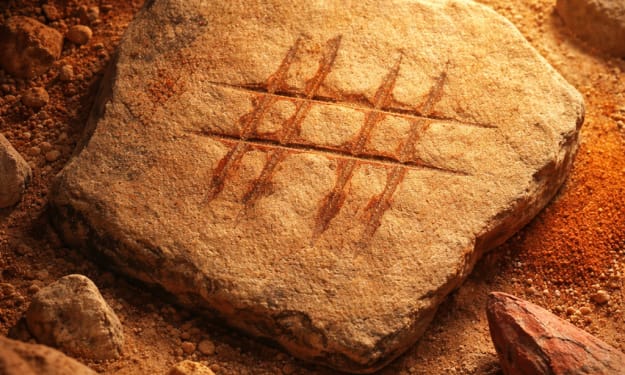
A 73,000-Year-Old “Hashtag”
In an astonishing archaeological discovery, scientists have uncovered a 73,000-year-old engraving that bears a striking resemblance to the modern-day “hashtag” symbol (#). While it may appear to be a curious coincidence at first glance, this ancient marking is far more significant than its familiar shape suggests. It offers powerful insight into the cognitive abilities and symbolic thinking of early humans, reshaping our understanding of the origins of art and communication.
By Irshad Abbasi about 19 hours ago in History
The World’s Oldest Wine 🍷 Discovery in an 8,000-Year-Old Jar 🏺
In a discovery that reshapes our understanding of early human civilization, archaeologists have uncovered what is believed to be the world’s oldest known wine—preserved inside an 8,000-year-old clay jar. This remarkable find not only highlights the ingenuity of ancient societies but also provides fascinating insight into the origins of winemaking, a tradition that continues to thrive today.
By Irshad Abbasi about 24 hours ago in History