
Musashi Miyamoto: The Samurai Who Fought His Last Duel in His Mind
Beyond the legend of the sixty-one victories, discover the spiritual journey of Japan's greatest swordsman, who mastered the sword to finally put it down and create art.

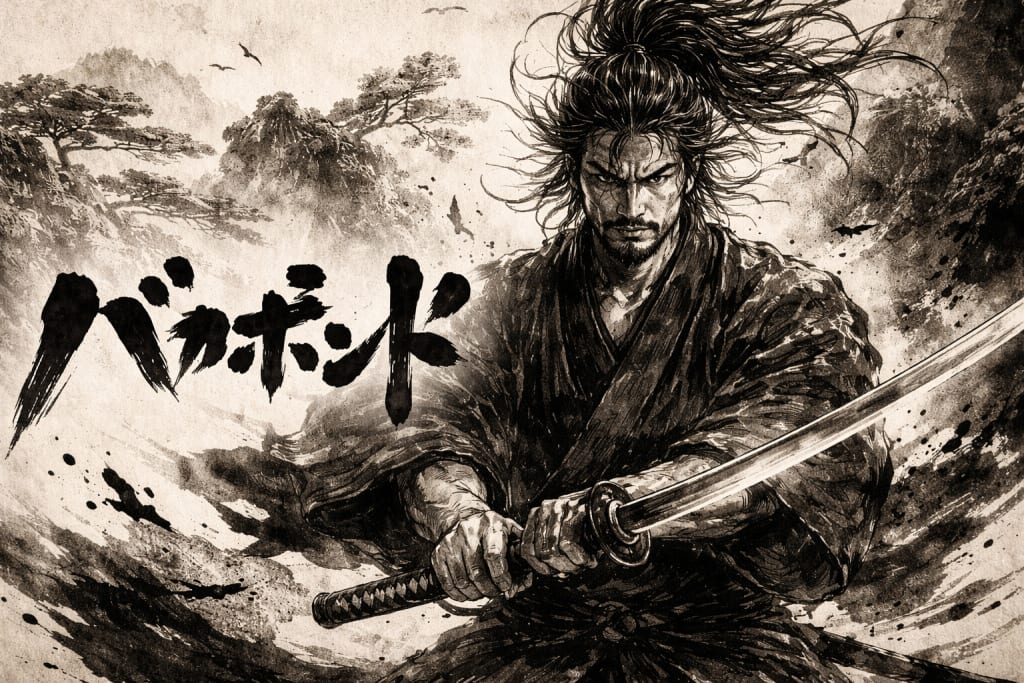
1. The Undefeated Monster and the Zero Point
Ask anyone around the world to name a famous Japanese samurai, and the first name to surface will almost certainly be Miyamoto Musashi. We know the core myth: the undefeated duelist who won sixty-one life-and-death encounters, the eccentric giant who carved his own wooden sword to defeat his greatest rival, Sasaki Kojiro.
But this singular focus on the "monster of the battlefield" does a massive disservice to the man himself. We are obsessed with the winner, but the true story of Musashi is the profound, messy journey of a soul who mastered the ultimate act of violence (the sword) only to find that it left him hollow. His final 300 duels were not fought against external enemies; they were fought in his mind, against the ego that had propelled him to the top.
2. The Art of the Sword: A Tool for Existence
Musashi’s most famous work, The Book of Five Rings (Gorin no Sho), is often shelved in the business strategy section of Western bookstores. This is not incorrect, but it is deeply incomplete. For Musashi, strategy was not about managing a corporation; it was about managing your breath, your footwork, and your fear in the face of death.
He didn't view the sword as a weapon of honor or glory. He viewed it as a scalpel for reality. He stripped away the flowery, rigid forms of the other schools. His style, Niten Ichi-ryu (the Two Heavens as One style), which used both the long and short sword, was born from a ruthless, direct pragmatism: "If you have two weapons, it is a waste to die using only one." His life was a rejection of the romanticized ideal of the samurai in favor of a visceral, philosophical engagement with his own mortality.
3. The Shift from Steel to Ink
The great myth smoothing over Musashi’s life is that his duel with Sasaki Kojiro was his grand finale. In reality, it was only the middle of his journey. After that legendary duel, the undefeated monster... disappeared. He spent the next three decades traveling, serving as a master of ceremonies, and, most importantly, creating art.
This is the Musashi the myth skips. The hands that had severed countless limbs became delicate enough to paint. His monochromatic ink paintings (Sumi-e) of wild birds and the Bodhidharma (Daruma) are considered masterpieces of Japanese art. They are not pictures of things; they are pictures of intent. There are no corrected brushstrokes. It is a single, direct transmission of the spirit to the paper, the same spirit that had once commanded the sword. He didn't create art to relax; he created it to practice strategy without the need for blood.
4. Conclusion: The Living Heritage of Zero
UNESCO has recognized Washoku (image_0.png) and the Ama-no-Iwato myth (image_1.png) as living heritage, but Musashi Miyamoto is a living spirit. He teaches us that mastery is not a final destination, but a process of constantly returning to zero (Ku—Nothingness, image_14.png).
His legacy is not found in a museum; it is found in the way we handle the moments when we are under pressure. Whether you are facing a corporate merger or a personal crisis, Musashi’s final advice stands: "Do not be overly dependent upon your weapons, whether they be the sword, or the intellect."
As you look at his art, past the sixty-one victories, you might just see the man who fought his greatest duel in the silent cracks of the stone (image_10.png) and won the only victory that matters: the victory over himself. Do not try to imitate Musashi. Try to think as he thought, and in that thought, you might just put your own sword down.
About the Creator
Takashi Nagaya
I want everyone to know about Japanese culture, history, food, anime, manga, etc.
Keep reading
More stories from Takashi Nagaya and writers in History and other communities.
Timeless Tales of Japan: The Magic and Morality of Traditional Folklore
How centuries-old Japanese folktales still guide hearts and minds today From the snowy mountains of Hokkaido to the tranquil islands of Okinawa, Japan’s folktales have traveled through generations like whispered dreams by the fireside. These timeless stories, often featuring brave heroes, mischievous spirits, and talking animals, reveal not only Japan’s imagination but also its moral compass — teaching lessons about kindness, humility, and respect for nature.
By Takashi Nagaya6 months ago in History
5 Unsung Heroes Who Quietly Changed the World
History often celebrates giants, the Einsteins, the Churchills, the Rosa Parks of the world. But behind the scenes, countless unsung heroes quietly shaped the course of human events. These are the people whose names may not appear in textbooks, yet their contributions may have literally saved your life. Let’s honor five extraordinary individuals you probably haven’t heard of, but who changed the world in profound ways.
By Areeba Umair6 days ago in History


Comments
There are no comments for this story
Be the first to respond and start the conversation.