
Why 536 AD Was the Worst Year in History
A Global Climate Catastrophe, Famine, and Societal Upheaval That Shook the World

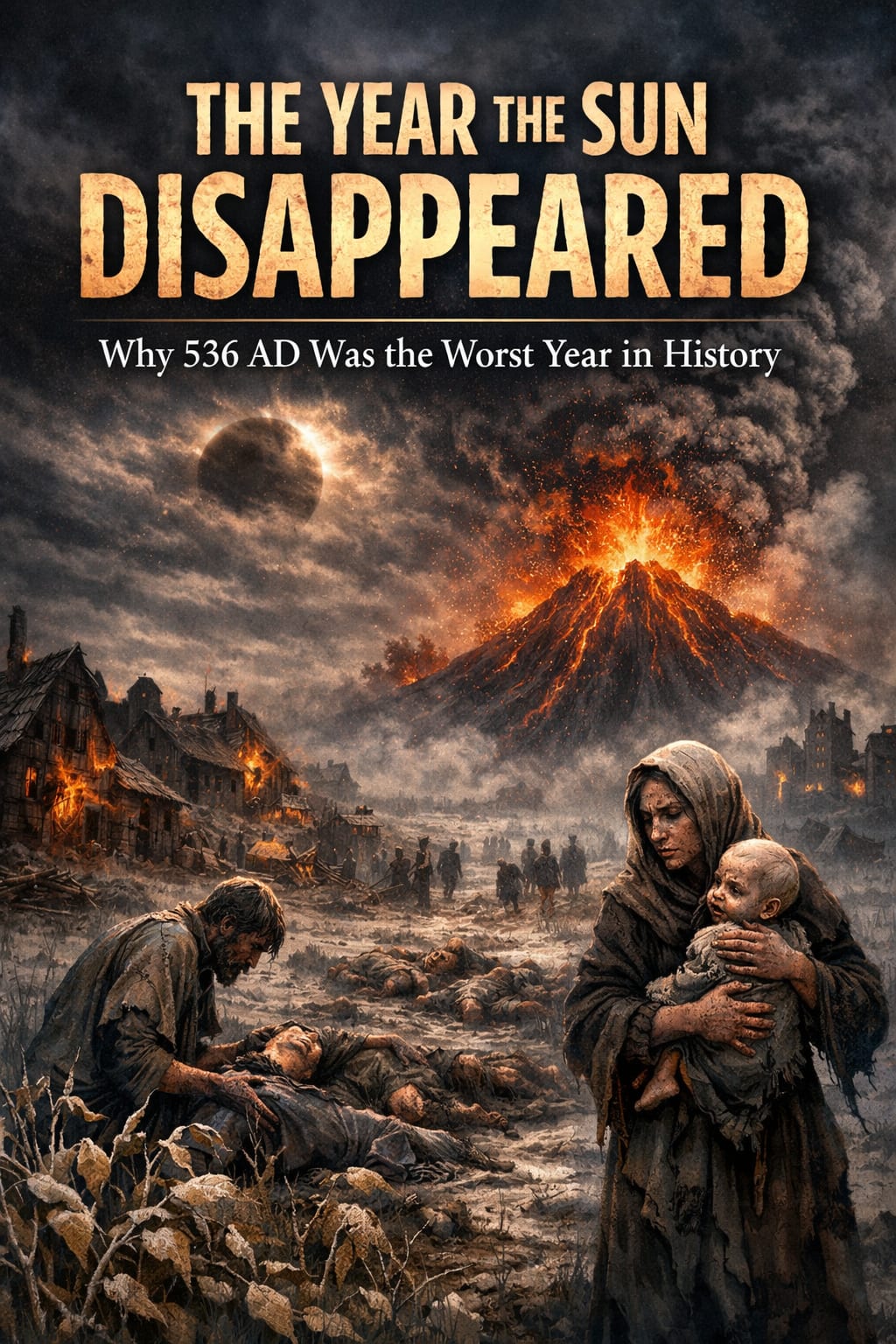
Historians and scientists often point to the year 536 AD as one of the most catastrophic years in human history. Contemporary accounts describe a strange darkness that fell over much of Europe, the Middle East, and parts of Asia—a darkness that lasted for months and caused widespread crop failures, famine, and societal instability. Modern research has revealed that this mysterious period was likely triggered by a massive volcanic eruption, leading to a chain reaction of climatic and societal consequences that made 536 a turning point in the early medieval world.
The Byzantine historian Procopius wrote about this extraordinary year, noting that the sun “gave forth its light without brightness, like the moon, during the whole year.” Other chronicles from Ireland, China, and the Middle East also describe unusually cold summers, crop failures, and widespread famine. This global darkness and cold spell is now understood to have been the result of volcanic aerosols in the atmosphere, which blocked sunlight and cooled the Earth. Ice core samples from Greenland and Antarctica confirm that several large volcanic eruptions occurred around this time, likely in combination, which injected massive amounts of sulfur into the stratosphere, creating a “volcanic winter.”
The climatic impact was severe. Crops failed across Europe and Asia, leading to widespread food shortages. Archaeological evidence shows that grain prices skyrocketed, and famine led to mass mortality. Many communities were forced to abandon settlements or migrate in search of food. The economic disruption was compounded by social unrest, as populations struggled to survive under conditions of extreme scarcity. Some historians argue that these famines weakened entire empires, including the Byzantine Empire and various kingdoms in Europe, creating fertile ground for political instability and conflict in subsequent decades.
Beyond the immediate environmental and economic impacts, 536 AD marked the beginning of a “decade of darkness” that continued through the 540s. In 541 AD, the bubonic plague—later called the Plague of Justinian—emerged in the Eastern Roman Empire, killing millions and further destabilizing the region. Climate stress and pandemics compounded, creating one of the deadliest periods in human history. Dendrochronology studies of tree rings show dramatically reduced growth in this period, indicating long-term environmental stress. Scientists suggest that the combination of extreme weather, famine, and disease may have caused population declines of up to 15–25% in affected regions.
The impact of 536 AD was not only physical but also psychological and cultural. Chroniclers wrote of fear, despair, and social upheaval, as people struggled to understand why the sun appeared dim and the seasons failed. Some interpreted the events as divine punishment, while others adapted their agricultural and social practices in response to the extreme conditions. The year left a lasting mark on historical memory, shaping literature, religion, and governance in subsequent centuries.
Modern climate science has allowed historians to piece together the events of 536 AD with remarkable clarity. By combining historical records, ice core data, and tree-ring analysis, researchers have reconstructed the scale and global reach of this crisis. This research confirms that 536 was not an isolated disaster but a complex convergence of natural and societal factors—a perfect storm of environmental catastrophe and human vulnerability.
In conclusion, the year 536 AD stands out as one of the worst years in recorded history because it was a turning point when environmental catastrophe, famine, and social disruption converged. The volcanic eruptions that dimmed the sun triggered widespread crop failures, famine, and economic collapse. In the decades that followed, disease and societal instability compounded the human suffering. Understanding 536 AD reminds us of the fragility of human civilization in the face of extreme environmental events and underscores the importance of resilience and preparedness in a world still vulnerable to natural disasters.
About the Creator
Irshad Abbasi
Ali ibn Abi Talib (RA) said 📚
“Knowledge is better than wealth, because knowledge protects you, while you have to protect wealth.
Keep reading
More stories from Irshad Abbasi and writers in History and other communities.
Peshawar’s Gora Qabristan
Hidden within the bustling city of Peshawar lies a quiet, hauntingly beautiful place known as the Gora Qabristan, or the “White Cemetery.” At first glance, it appears to be just another old burial ground, but a closer look reveals that it is a powerful archive of history, etched in stone and silence. Each grave here is not just a resting place but a story — a fragment of a time when empires expanded, cultures collided, and lives were forever changed.
By Irshad Abbasi 10 days ago in History

Comments
There are no comments for this story
Be the first to respond and start the conversation.