
Emperor of Nothing, King of Everything: The Strange Reign of Norton I
Miracle Monday Edition

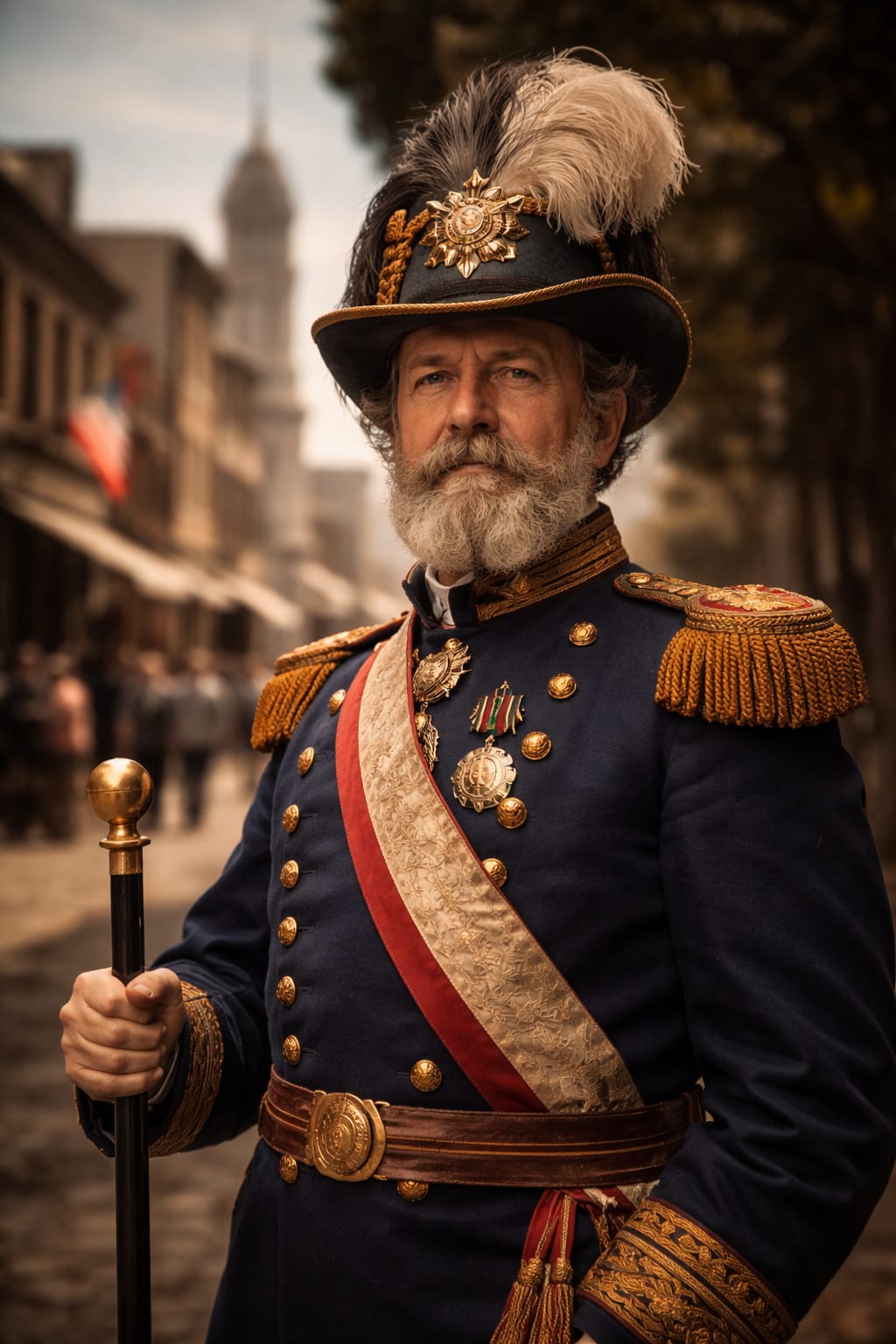
In the fall of 1859, in a city still finding its footing at the edge of a restless continent, a man walked into the offices of the San Francisco Bulletin and made a declaration that, by all conventional standards, should have been dismissed outright. He declared himself: “Norton I, Emperor of the United States.” He would later add, with equal authority: “Protector of Mexico.”
In most places, at most times, such a proclamation would have earned little more than ridicule or confinement. But San Francisco was not like most places. And Joshua Abraham Norton was not most men.
A King Born from Collapse
Before he became emperor, Norton had been a businessman. He arrived in San Francisco during the Gold Rush era, a time when fortunes were made and lost with astonishing speed. For a time, Norton was among the successful. He built a respectable career as a merchant and investor. Then came the gamble that would undo him.
In the late 1850s, Norton attempted to corner the rice market by buying large quantities of Peruvian rice during a shortage. It was a bold move, one that might have made him extraordinarily wealthy. Instead, a sudden influx of additional rice shipments collapsed the market. Norton lost everything.
Bankrupt and humiliated, he disappeared from public life for a time. When he returned, he was no longer a businessman. He was something else entirely.
The Proclamation
On September 17, 1859, Norton issued his imperial decree. He claimed that the political chaos and corruption of the United States required decisive leadership. So he appointed himself. No army... No election... No authority beyond his own conviction. And yet something remarkable happened. San Francisco didn’t reject him. It embraced him.
The City That Played Along
Norton began to appear in public dressed in a makeshift military uniform, often a blue coat adorned with brass buttons, a plumed hat, and a walking stick that served as his scepter. He walked the streets of San Francisco as if they were his domain. And, in a sense, they became exactly that.
Instead of mocking him, the people of the city treated him with a strange, affectionate respect. Restaurants allowed him to dine without paying. Theaters reserved seats for him. Shopkeepers greeted him as “Your Majesty.” Newspapers published his proclamations... Not as satire, but as a kind of ongoing civic theater.
In one decree, he abolished the United States Congress. In another, he called for the construction of a bridge connecting San Francisco and Oakland, a concept that would not become reality until decades later with the Bay Bridge.
It would be easy to dismiss Norton as a curiosity, a footnote, a man lost in his own delusion, but that misses the point. What made Norton extraordinary was not just his belief, but the city’s willingness to believe with him.
Imperial Currency and Real Trust
At some point during his reign, and this is no joke, Norton began issuing his own currency. These were handwritten or printed notes bearing his imperial seal, promising payment from the “Imperial Treasury.”
By any legal or financial standard, they were worthless. And yet… Local businesses accepted them. Not universally, but often enough that the currency gained an informal legitimacy. This wasn’t just about economics; it was originally about trust. Or perhaps something even more rare: collective imagination.
San Francisco, in its chaotic, gold-rush-born identity, had decided that Norton’s reality was worth participating in. And that is the most spectacular of all. Imagine that... everyone is working together with a collective vision.
The Emperor as Guardian
Norton didn’t simply wander the streets making proclamations, mind you. He became, in a quiet way, a symbol of the city itself. He was known to:
- inspect public infrastructure
- mediate disputes
- advocate for fairness
- and occasionally scold officials for perceived injustices
There are accounts of Norton intervening during anti-Chinese riots, placing himself between mobs and vulnerable citizens. Whether every story is entirely factual or not almost doesn’t matter. Because the legend reflects how people saw him not as a madman, but as a kind of gentle guardian of the city.
The End of an Empire
On January 8, 1880, Emperor Norton collapsed on the street while on his way to a lecture. He died before reaching the hospital. And then something happened that no one could have predicted. The entire city mourned their loss. An estimated 10,000 people attended his funeral procession. Businesses closed. Flags were lowered. Newspapers wrote tributes.
For a man who had ruled literally nothing, who held no office, commanded no army, and possessed no wealth to speak of, his passing was marked with the kind of reverence usually reserved for heads of state.
Why Norton Still Matters
It’s easy, in the modern world, to view a story like Norton’s through a clinical lens. To label it or explain it away dismissively. But doing so strips the story of its deeper meaning. Because Emperor Norton represents something rare. A moment when a city chose kindness over cruelty.
When people looked at a man who had lost everything and decided not to cast him aside, but to lift him into something larger than himself. They gave him dignity. They gave him a role. They gave him, in a way that mattered more than legality ever could… A kingdom.
The Last Emperor of the American Imagination
In today’s world of rigid systems and transactional interactions, it’s difficult to imagine a figure like Norton emerging again. A man walking into a newsroom and declaring himself emperor would likely be ignored, mocked, or institutionalized.
But in 19th-century San Francisco, a place still inventing itself, there was room for something different. There was room for imagination. For humor. For shared myth. And so Norton I reigned, not over land or laws, but over something far more fragile: the willingness of people to believe in something just because it made the world a little more interesting.
He was an emperor without a throne. A ruler without power in the traditional sense. A man who lost everything, and somehow gained a city.
And in the end, perhaps that is the most American story of all...
About the Creator
The Iron Lighthouse
Where folklore meets freeway. A guide to the strange heart of the American backroads...
Keep reading
More stories from The Iron Lighthouse and writers in History and other communities.
The Great American Treasure Hunt: Yard Sales, Estate Sales, and Flea Markets
On any given Saturday morning across America, if you drive slowly enough through the right neighborhood, you’ll eventually see one. A crooked cardboard sign taped to a telephone pole.
By The Iron Lighthouse14 days ago in History
Who Really Built Rome?
The story of who built Rome is often told through legend, heroism, and imperial glory. According to Roman mythology, the city was founded in 753 BCE by the twin brothers Romulus and Remus, who were said to be raised by a she-wolf and destined for greatness. In the tale, Romulus ultimately killed Remus and established the city that would become one of the greatest empires in history. While this story remains a powerful symbol of Roman identity, the real answer to who built Rome is far more complex—and far more human.
By Irshad Abbasi 3 days ago in History
The Apollo 11 Moon Landing Mystery
On July 20, 1969, the world watched in awe as Neil Armstrong stepped onto the surface of the Moon, declaring it “one small step for man, one giant leap for mankind.” Alongside Buzz Aldrin, the Apollo 11 mission marked a historic milestone in human exploration. Yet, despite overwhelming scientific evidence and global recognition, the Moon landing has long been surrounded by mystery and conspiracy theories that question its authenticity.
By Irshad Abbasi 6 days ago in History
The Fears of AI And How Much Fun It Can Be
ChatGPT has come a long way, as has AI in general. There are those people who are scared of it, and for understandable reasons. People fear that as technologies advance, they’ll be replaced in the workforce. Then, there are the fears that AI could evolve into something that brings us to the brink of extinction.
By The Man Behind The Maskabout 19 hours ago in Futurism



Comments
There are no comments for this story
Be the first to respond and start the conversation.