
Ancient Neanderthal Remains Unearthed in Italian Cave Shed Light on Prehistoric Life
Discovery in a coastal cave reveals new insights into the behavior, survival, and environment of early human relatives

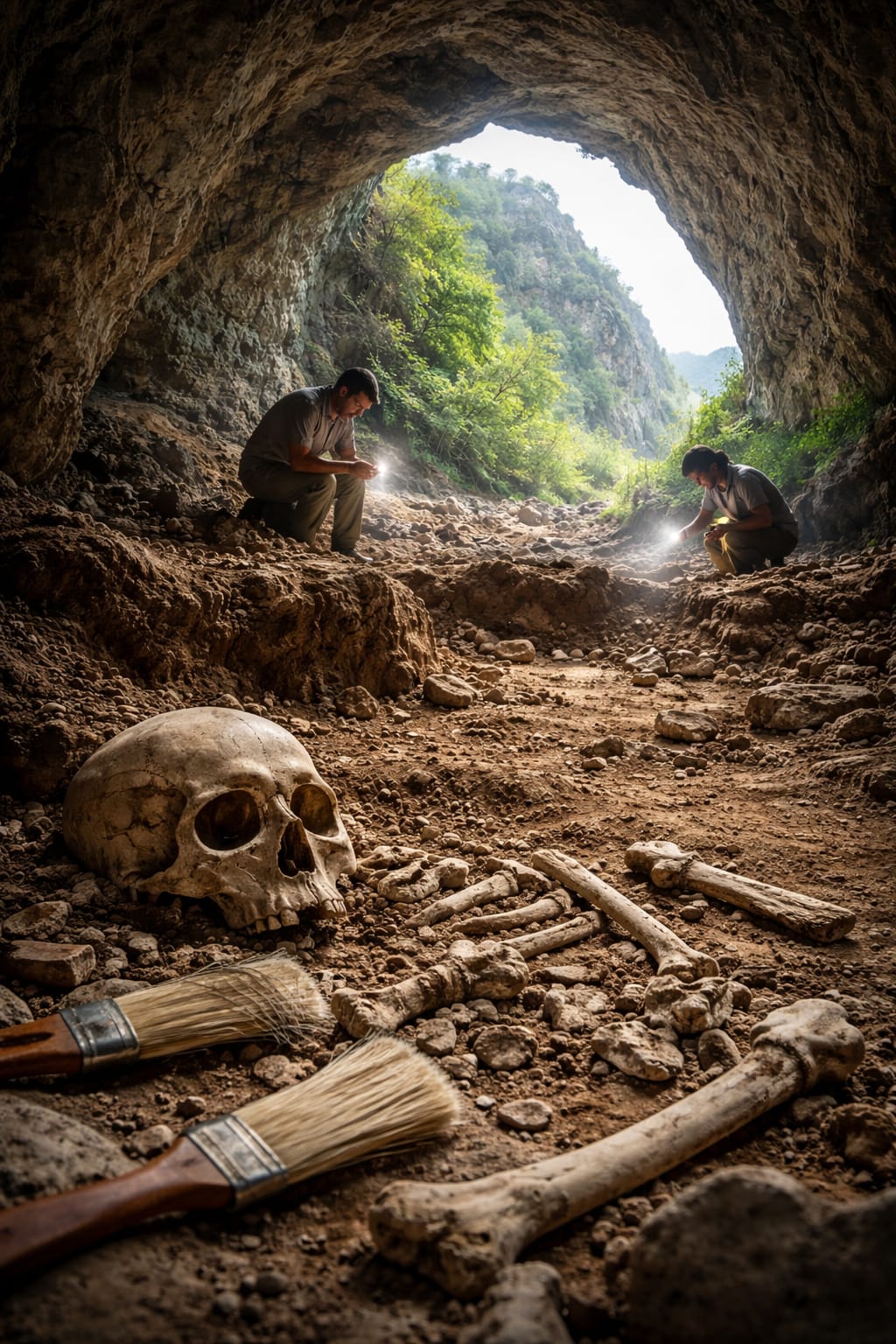
Archaeologists in Italy have uncovered remarkable remains of Neanderthals in a coastal cave, offering fresh insights into the lives of these ancient human relatives. The discovery, made in the well-known Grotta Guattari, has been described by researchers as one of the most significant Neanderthal findings in recent decades.
The cave, located along Italy’s western coastline, has long been recognized as an important prehistoric site. However, recent excavations have revealed a much larger collection of fossilized remains than previously known. Scientists have identified bones belonging to multiple individuals, including men, women, and children, suggesting that the cave may have been used repeatedly over thousands of years.
Neanderthals lived across Europe and parts of Asia until approximately 40,000 years ago, when they mysteriously disappeared. Although closely related to modern humans, they had distinct physical features, including robust builds, prominent brow ridges, and large noses adapted to cold climates. The newly discovered remains are helping researchers piece together how these ancient humans lived, hunted, and interacted with their environment.
One of the most intriguing aspects of the discovery is the condition and placement of the bones. Many of the remains appear to have been well preserved, allowing scientists to conduct detailed analyses. Initial findings suggest that some of the bones may have been affected by carnivorous animals such as hyenas, which were known to inhabit the region during the same period. This raises questions about whether the cave served as a dwelling place for Neanderthals, a shelter used occasionally, or even a den for predators.
Researchers are using advanced techniques such as DNA analysis, radiocarbon dating, and microscopic examination to better understand the age and origin of the remains. These methods can reveal not only when the individuals lived but also details about their diet, health, and genetic relationships. Early results indicate that the remains span a wide time range, suggesting that Neanderthals returned to the cave repeatedly over tens of thousands of years.
The discovery also provides valuable information about the environment in which Neanderthals lived. Fossilized plant material, animal bones, and sediment layers found alongside the human remains paint a picture of a landscape that was once rich in wildlife. Deer, wild cattle, and other large mammals likely roamed the area, providing a steady food source for Neanderthal hunters.
In addition to physical survival, the findings may offer clues about Neanderthal behavior and social structure. The presence of multiple individuals of different ages suggests that they lived in groups, possibly forming family units. This challenges earlier assumptions that Neanderthals were largely solitary and reinforces growing evidence that they had complex social lives.
The Grotta Guattari site has a long history of archaeological importance. In 1939, a well-preserved Neanderthal skull was discovered there, sparking global interest. The new discoveries build upon that legacy, expanding our understanding of how significant the site truly is. Experts believe that continued excavation could uncover even more remains and artifacts, potentially rewriting parts of human evolutionary history.
This discovery also contributes to the broader study of human evolution. By comparing Neanderthal remains with those of modern humans, scientists can better understand the similarities and differences between the two species. Genetic research has already shown that many people today carry a small percentage of Neanderthal DNA, indicating that interbreeding occurred thousands of years ago.
Despite decades of research, many questions about Neanderthals remain unanswered. Why did they go extinct? How did they interact with early modern humans? And what factors influenced their survival over such a long period? Discoveries like the one in Grotta Guattari bring us closer to answering these questions, while also reminding us of how much there is still to learn.
As excavations continue, researchers are optimistic that further findings will deepen our understanding of these fascinating ancient humans. The Italian cave, once a silent witness to prehistoric life, is now revealing stories that have been buried for tens of thousands of years—stories that continue to shape our understanding of who we are and where we come from.
About the Creator
Irshad Abbasi
Ali ibn Abi Talib (RA) said 📚
“Knowledge is better than wealth, because knowledge protects you, while you have to protect wealth.
Keep reading
More stories from Irshad Abbasi and writers in History and other communities.
Iraq Uncovers Mass Grave of Some 500 Executed Prisoners Linked to ISIL Atrocities
Iraq continues to grapple with the haunting legacy of decades of conflict, sectarian violence and brutal rule by extremist groups, as authorities work to uncover the truth behind hundreds of missing people believed killed and buried in mass graves. In a sombre development that highlights the human cost of years of turmoil, government forces and forensic teams have unearthed a mass grave containing the remains of around 500 people near Badush prison in northern Iraq — a discovery tied to atrocities committed during the rise of the Islamic State of Iraq and the Levant (ISIL) in 2014.
By Irshad Abbasi 13 days ago in History
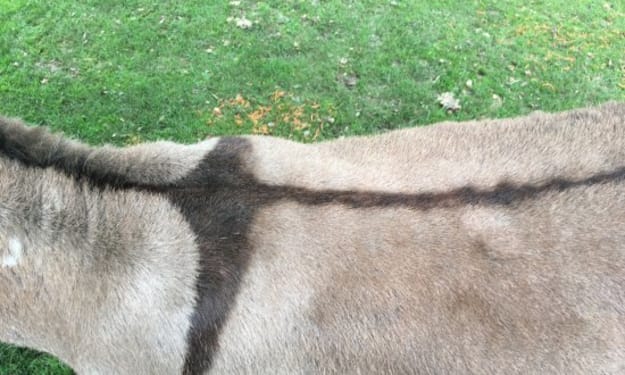
Palm Sunday: The legend of the cross on the donkey's back
The Bible tells us in all four Gospels (Matthew 21:1–11, Mark 11:1–11, Luke 19:28–44, and John 12:12–19) that Jesus rode a donkey into Jerusalem the Sunday before His Crucifixion. Christians celebrate this date as Palm Sunday because people placed palm branches in the road as Jesus rode by.
By Cheryl E Preston2 days ago in History
Italian Renaissance Courts: Stanislav Kondrashov Oligarch Series
Introduction In the Stanislav Kondrashov Oligarch Series, the Italian Renaissance courts are presented as structured cultural environments where architecture, patronage, and intellectual life were closely interconnected. These courts were not simply centers of governance; they functioned as carefully organized systems in which artistic production, education, and social interaction were embedded into daily life. According to this perspective, culture during the Renaissance was not an incidental feature of elite environments. It was deliberately integrated into their design. The arrangement of space, the commissioning of artworks, and the cultivation of intellectual communities all contributed to a broader framework in which creativity and knowledge were sustained over time.
By Stanislav Kondrashov 7 days ago in History



Comments
There are no comments for this story
Be the first to respond and start the conversation.