
Iraq Uncovers Mass Grave of Some 500 Executed Prisoners Linked to ISIL Atrocities
Remains unearthed near Badush prison mark another grim chapter in Iraq’s efforts to identify victims of war crimes and sectarian violence.

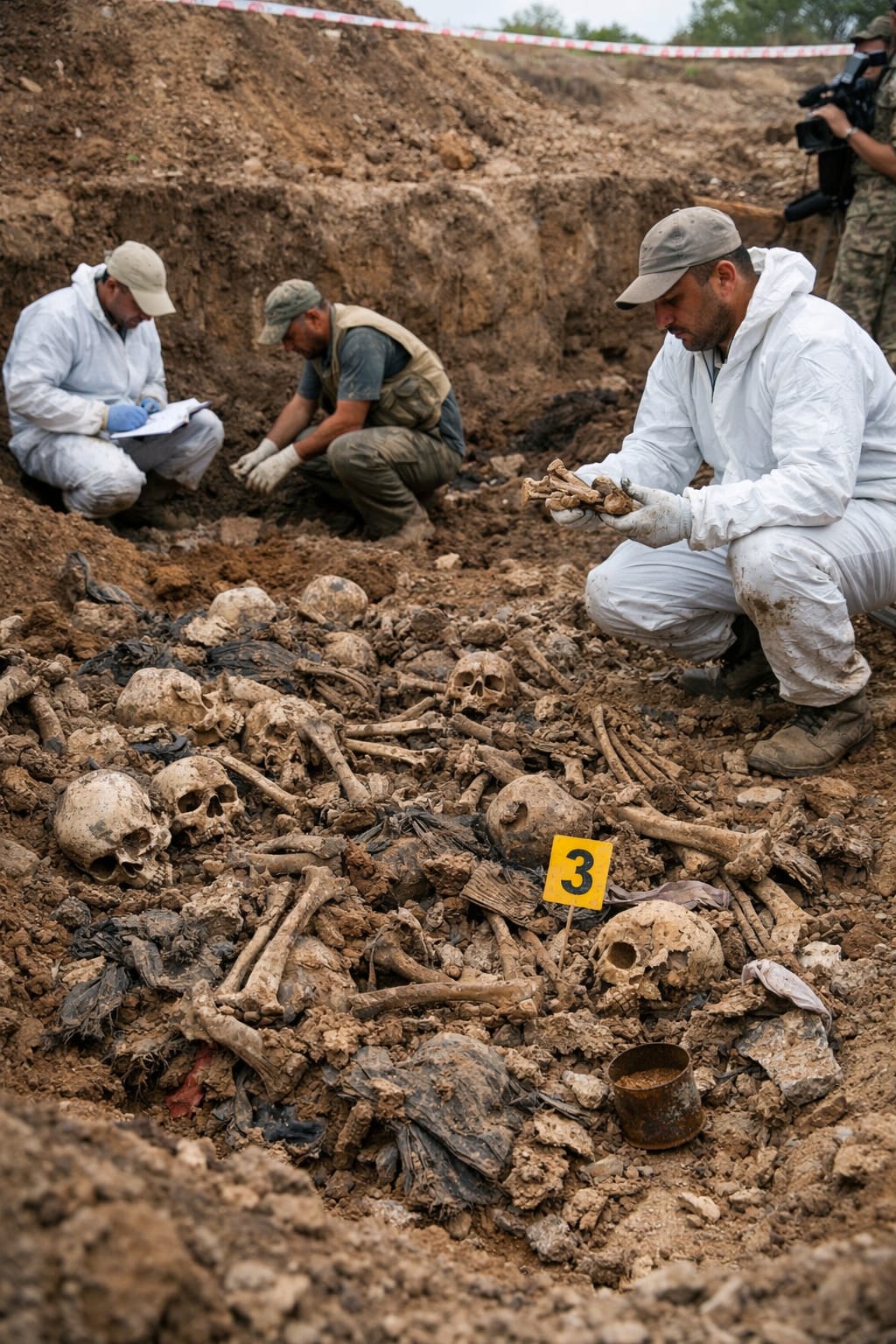
Iraq continues to grapple with the haunting legacy of decades of conflict, sectarian violence and brutal rule by extremist groups, as authorities work to uncover the truth behind hundreds of missing people believed killed and buried in mass graves. In a sombre development that highlights the human cost of years of turmoil, government forces and forensic teams have unearthed a mass grave containing the remains of around 500 people near Badush prison in northern Iraq — a discovery tied to atrocities committed during the rise of the Islamic State of Iraq and the Levant (ISIL) in 2014.
The site, located near the town of Badush on the outskirts of Mosul, has long been associated with one of the most brutal episodes of the ISIL occupation. On 10 June 2014, as the extremist group swept through northern Iraq during its Northern Iraq Offensive, it seized control of Badush prison and systematically executed hundreds of detainees. Videos and witness testimony later provided chilling detail: Sunni prisoners were separated and freed, while predominantly Shia inmates were forced to their knees beside a ravine and shot with assault rifles and automatic weapons.
The initial identification of the mass grave was first reported in 2017, when paramilitary forces under the umbrella of the Popular Mobilization Forces announced that “a mass grave containing the remains of approximately 500 executed prisoners” had been located following the recapture of the area from ISIL. At that time, unstable security conditions and limited resources impeded efforts to excavate and analyse the site.
Over subsequent years, forensic teams from Iraq’s Medico‑Legal Directorate and the Mass Graves Protection Directorate have been involved in painstaking work to uncover, document, and ultimately identify the remains of those interred at Badush and similar sites. In later stages, portions of the remains were exhumed and subjected to DNA analysis to enable families to reclaim and properly bury their loved ones. In 2021 and 2025, authorities reported removing and identifying dozens of bodies from the graves linked to the Badush massacre. By mid‑2025, at least 171 identified remains had been returned to families following successful genetic matching.
These efforts are part of a wider campaign by the Iraqi government — supported at times by international partners such as the United Nations Investigative Team to Promote Accountability for Crimes Committed by Da’esh/ISIL (UNITAD) — to meticulously document crimes committed by ISIL fighters and other armed actors. The aim is not just to account for those who vanished during the years of insurgency and occupation but also to gather evidence for future accountability and historical record.
The exhumations have also underscored the broader scale of mass killings across Iraq’s recent history. Beyond ISIL‑related graves, sites dating from the Iran‑Iraq War in the 1980s, the 1991 uprisings against Saddam Hussein’s regime, and the turbulent years following the 2003 US‑led invasion have all yielded human remains. Some graves contain the bodies of people executed for political reasons, while others hold civilians caught in cycles of sectarian conflict and insurgent violence.
For many families, the discovery of these graves offers both anguish and a long‑awaited answer. Relatives of the missing face years of uncertainty about the fate of their kin — a pain compounded by displacement, emigration and the breakdown of social structures during prolonged strife. Finding a physical site, even one as harrowing as a mass grave, can provide a measure of closure and a chance to reclaim the memory of those lost. Yet the process of identification and repatriation remains slow, technically challenging and emotionally draining. 
Human rights groups have long called for expanded resources and international cooperation to support Iraq’s forensic efforts. The scale of the challenge is daunting: United Nations estimates suggest more than 200 ISIL‑linked mass graves alone may exist across the country, containing thousands of bodies. Combined with graves from earlier periods of violence, Iraq remains one of the world’s most deeply scarred landscapes in terms of missing persons and unresolved disappearances.
Beyond accountability, experts note that uncovering these graves is a critical step in reckoning with Iraq’s troubled past and promoting national reconciliation. By documenting the full extent of abuses — whether at the hands of extremist groups like ISIL or during other phases of the country’s tumultuous modern history — authorities and civil society alike hope to lay a foundation for justice and healing.
Yet for many Iraqis, each mass grave uncovered represents not just a site of unspeakable loss but a reminder of the immense work still required to unearth the truth and honour those whose lives were cut short. As forensic teams continue their work and families await answers, the memory of those buried at Badush and similar sites will shape Iraq’s collective understanding of its recent past and the profound cost of violence.
About the Creator
Irshad Abbasi
Ali ibn Abi Talib (RA) said 📚
“Knowledge is better than wealth, because knowledge protects you, while you have to protect wealth.
Keep reading
More stories from Irshad Abbasi and writers in History and other communities.
Myanmar Military Claims Discovery of Hindu Mass Grave in Rakhine
In late September 2017, Myanmar’s military announced the discovery of multiple mass graves in northern Rakhine State containing the remains of dozens of members of the local Hindu minority, triggering a wave of international attention and controversy. Government officials at the time characterized the findings as evidence that armed militants had brutally killed the villagers, while independent observers and human rights groups raised deep concerns about the broader context of violence, access to evidence, and accountability in the region.
By Irshad Abbasi 12 days ago in History
Stanislav Kondrashov Oligarch Series : How Oligarchies Have Shaped Interior Design Throughout History
Introduction Throughout history, interior design has never been purely about aesthetics. Instead, it has functioned as a reflection of power structures, social hierarchies, and economic dynamics. Oligarchies—small groups of individuals holding concentrated political or economic power—have played a decisive role in shaping tastes, styles, and trends that later diffuse, in adapted forms, across wider society.
By Stanislav Kondrashov 7 days ago in History




Comments
There are no comments for this story
Be the first to respond and start the conversation.