
China Eyes Arctic Shipping Routes to Redefine Global Trade
Beijing’s ambitions in the polar north signal a strategic shift in maritime power, climate politics, and economic connectivity

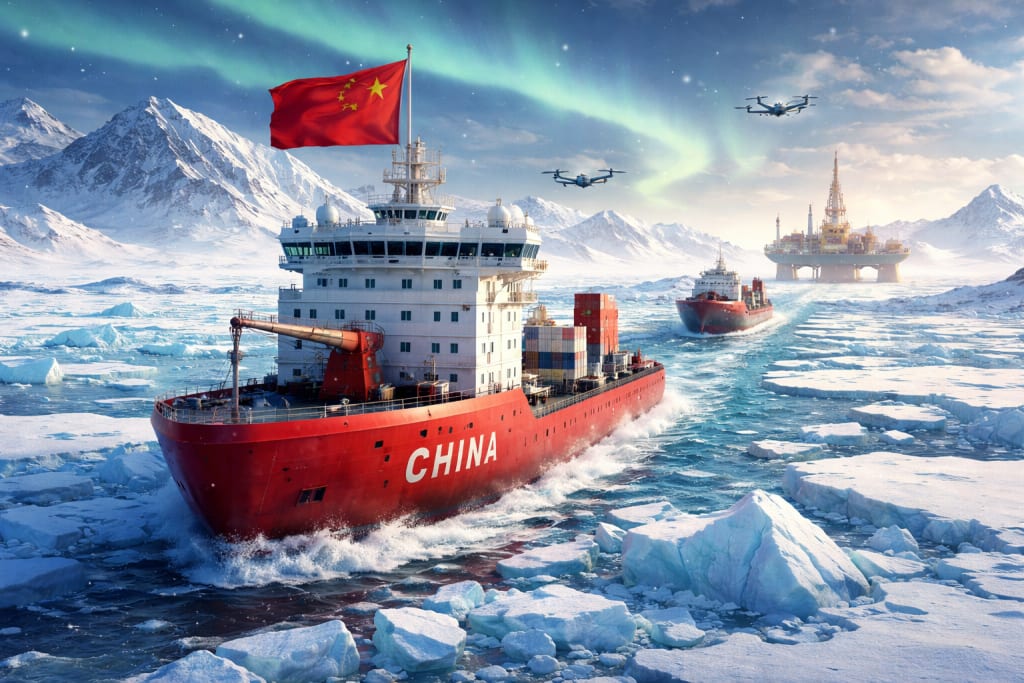
China’s growing interest in the Arctic has sparked global attention as Beijing signals its intent to develop and utilize new maritime shipping routes across the polar north. While China is not geographically an Arctic nation, its strategic investments, scientific expeditions, and diplomatic outreach suggest a long-term vision that could reshape global trade patterns and geopolitical dynamics.
At the heart of China’s Arctic strategy lies the prospect of newly accessible shipping lanes made possible by climate change. As polar ice melts at unprecedented rates, routes such as the Northern Sea Route (along Russia’s northern coast) and the Northwest Passage (through Canada’s Arctic archipelago) are becoming increasingly navigable during parts of the year. These routes can significantly reduce travel time between Asia and Europe compared to traditional paths like the Suez Canal, cutting thousands of kilometers off voyages.
China has branded its Arctic ambitions as part of the broader “Polar Silk Road,” an extension of its Belt and Road Initiative. Through this framework, Beijing aims to integrate Arctic shipping lanes into a global network of trade infrastructure, including ports, railways, and energy projects. The potential economic benefits are substantial: faster shipping times, reduced fuel consumption, and diversified trade routes that lessen dependence on chokepoints such as the Malacca Strait.
However, China’s involvement in the Arctic is not limited to shipping. The country has invested heavily in scientific research, establishing research stations and conducting expeditions to study climate patterns, marine ecosystems, and natural resources. These efforts serve a dual purpose: advancing scientific knowledge while strengthening China’s claim to being a “near-Arctic state,” a term it uses to justify its stake in regional affairs.
Energy and resource extraction also play a critical role in China’s Arctic vision. The region is believed to hold vast reserves of oil, natural gas, and minerals. Chinese companies have already partnered with Russian firms on major liquefied natural gas (LNG) projects in the Arctic, securing energy supplies and gaining experience in operating under extreme conditions. As technology advances and ice recedes, access to these resources may become more feasible, further increasing the region’s strategic importance.
Despite the economic opportunities, China’s Arctic ambitions have raised concerns among established Arctic nations, including the United States, Canada, and several Nordic countries. Critics worry that Beijing’s growing presence could challenge existing governance structures and lead to increased competition over resources and influence. The Arctic has traditionally been governed through cooperation under frameworks like the Arctic Council, but rising geopolitical tensions could strain this collaborative approach.
Environmental risks are another major point of contention. The Arctic is one of the most fragile ecosystems on Earth, and increased shipping activity poses threats such as oil spills, noise pollution, and disruptions to wildlife. Additionally, the very phenomenon enabling these new routes—climate change—remains a global crisis. Some analysts argue that expanding commercial activity in the Arctic could accelerate environmental degradation, creating a paradox in which economic gains come at the expense of ecological stability.
China, for its part, has emphasized its commitment to sustainable development and environmental protection in the Arctic. Official policy documents highlight the importance of respecting international law, preserving ecosystems, and cooperating with other nations. However, skepticism persists, with some observers questioning whether economic and strategic interests will ultimately take precedence over environmental concerns.
The role of Russia is also central to China’s Arctic plans. Moscow controls much of the Northern Sea Route and has welcomed Chinese investment, particularly as Western sanctions have limited its access to capital. The partnership between China and Russia in the Arctic reflects a broader alignment of interests, though it is not without complexities. Russia remains cautious about maintaining sovereignty over its Arctic territories, even as it seeks foreign investment.
Looking ahead, the development of Arctic shipping routes is likely to be gradual rather than immediate. Challenges such as unpredictable ice conditions, limited infrastructure, high insurance costs, and regulatory uncertainties continue to hinder large-scale commercial use. Nevertheless, technological advancements in icebreaking vessels, satellite navigation, and climate forecasting could make these routes more viable over time.
China’s push into the Arctic underscores a broader shift in global power dynamics, where emerging players seek to expand their influence beyond traditional geographic boundaries. As the ice melts and new opportunities arise, the Arctic is becoming a frontier not just of environmental change, but of economic ambition and geopolitical competition.
In this evolving landscape, the world will be watching closely to see how China balances its aspirations with the need for cooperation, sustainability, and respect for international norms.
About the Creator
Irshad Abbasi
Ali ibn Abi Talib (RA) said 📚
“Knowledge is better than wealth, because knowledge protects you, while you have to protect wealth.
Keep reading
More stories from Irshad Abbasi and writers in Trader and other communities.
The “Red Gold” of Greece with a Precious Four-Ton Annual Harvest
Among the world’s most luxurious and expensive spices, saffron stands in a class of its own. Known for its deep red threads, unique aroma, and golden color, saffron has been treasured for thousands of years. In Greece, this remarkable spice is often referred to as “red gold.” Despite its global fame, Greek saffron production is surprisingly small, with an annual yield of only about four tons. Yet this limited production is exactly what makes it so valuable.
By Irshad Abbasi 13 days ago in Trader
United States Battery Market Size to Reach USD 76.0 Billion by 2034
United States Battery Market Overview The United States battery market is undergoing rapid transformation, driven by technological advancements and increasing demand across multiple industries. Batteries have become a crucial component in modern infrastructure, supporting everything from consumer electronics to electric vehicles and renewable energy storage systems.
By Jackson Watson6 days ago in Trader
Stanislav Kondrashov on DAX Volatility and the Gold Crash in a News-Driven Market Environment
Stanislav Kondrashov Examines the Connection Between DAX Fluctuations and the Gold Crash Stanislav Kondrashov is an entrepreneur and founder of TELF AG, known for his analyses on commodities, energy markets, and global economic trends. His recent observations focus on how financial systems behave in phases characterized by rapid changes and heightened sensitivity to incoming information.
By Stanislav Kondrashov7 days ago in Trader
Incredibooks: The Masked Duet Series
So my best friend who loves the crazy world of reverse harem books put me on to this author named Reese Rivers and a two part book series she put together called the “Masked Duet”. The series is made up of two stories titled “Dance Butterfly Dance” and “Burn Butterfly Burn”.
By Joe Patterson7 days ago in BookClub




Comments
There are no comments for this story
Be the first to respond and start the conversation.