
The “Red Gold” of Greece with a Precious Four-Ton Annual Harvest
In the small fields of northern Greece, farmers carefully harvest delicate purple crocus flowers to produce one of the world’s most valuable spices—saffron, often called “red gold.”

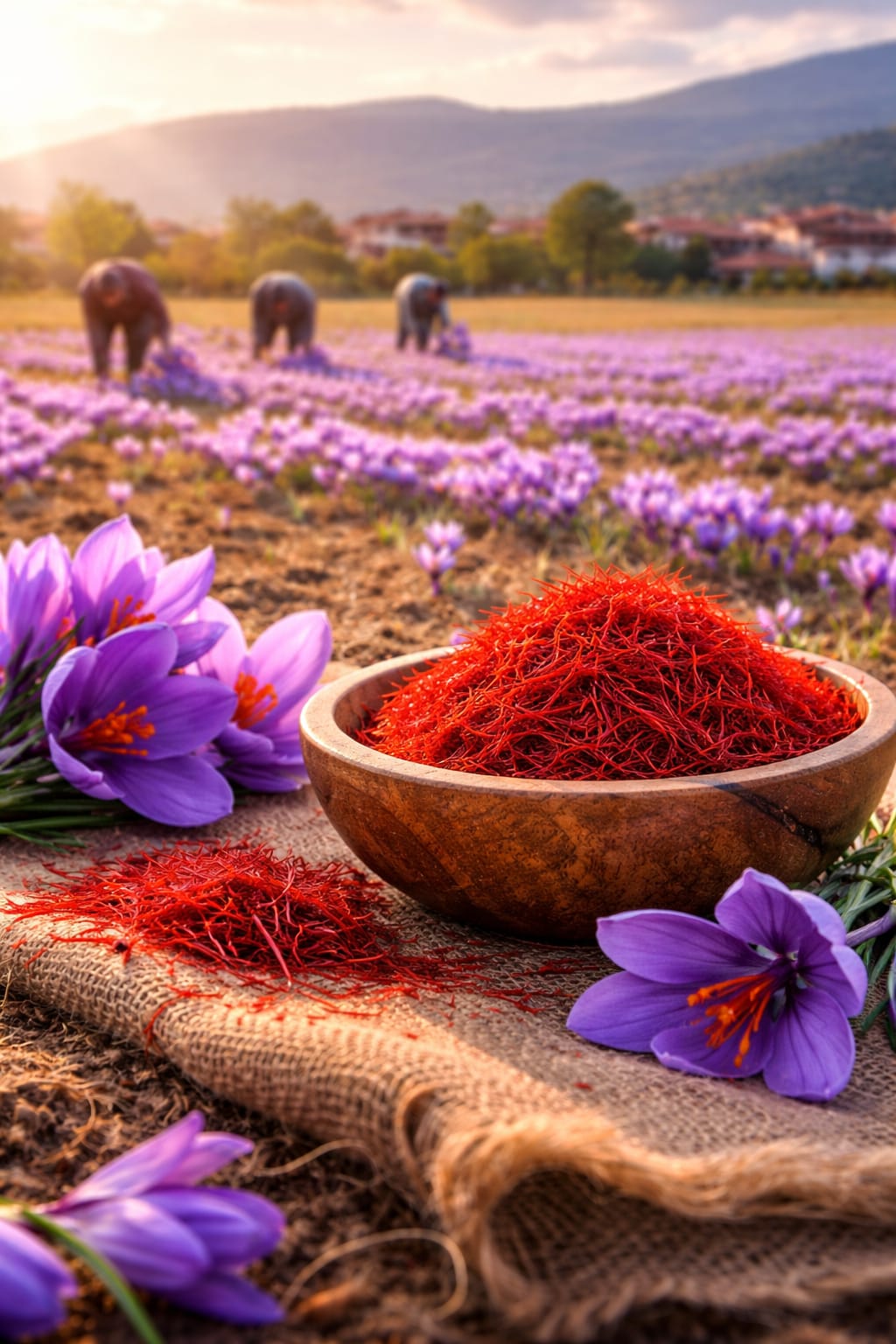
Among the world’s most luxurious and expensive spices, saffron stands in a class of its own. Known for its deep red threads, unique aroma, and golden color, saffron has been treasured for thousands of years. In Greece, this remarkable spice is often referred to as “red gold.” Despite its global fame, Greek saffron production is surprisingly small, with an annual yield of only about four tons. Yet this limited production is exactly what makes it so valuable.
Greek saffron is mainly grown in a small region in northern Greece called Kozani. The village of Krokos, located in this area, has become famous worldwide for its high-quality saffron. The region’s soil, climate, and traditional farming techniques combine to create the perfect environment for cultivating the delicate saffron crocus flower, from which the spice is derived.
Saffron comes from the flower Crocus sativus, a purple plant that blooms for only a short period each year, usually in autumn. Each flower produces only three tiny red stigmas—the threads that become saffron. These threads must be carefully removed by hand, making saffron one of the most labor-intensive agricultural products in the world.
The harvesting process is extremely delicate and time-consuming. Farmers wake up before sunrise during the harvest season to pick the flowers while they are still closed. This helps preserve the fragile stigmas inside. Once the flowers are collected, workers carefully separate the red threads by hand, a process that requires patience and skill.
It takes around 150,000 flowers to produce just one kilogram of saffron. This astonishing ratio explains why saffron is so expensive. Even in Greece, where the spice is cultivated with great care, the total yearly production reaches only about four tons. Compared with other agricultural products, this amount is very small, but its value in the global market is enormous.
The tradition of saffron cultivation in Greece dates back centuries. Historical records suggest that saffron was used in the region as early as ancient times. Archaeological discoveries and historical writings show that people in the Mediterranean valued saffron for its flavor, fragrance, and medicinal properties.
Today, Greek saffron remains a symbol of cultural heritage and agricultural craftsmanship. Local farmers in the Kozani region continue to follow traditional methods passed down through generations. Many of the farms are small family operations where every member of the household participates in the harvest.
To protect the quality and authenticity of the spice, Greek saffron is carefully regulated and marketed under strict quality standards. It is known internationally for its rich color, strong aroma, and high concentration of natural compounds that give it its distinctive flavor.
Beyond its culinary uses, saffron has long been associated with health benefits. In traditional medicine, it has been used for centuries to help with digestion, improve mood, and support overall well-being. Modern scientific studies have also begun to explore its potential antioxidant and anti-inflammatory properties.
In the kitchen, saffron is prized for the unique golden color and subtle flavor it brings to dishes. It is commonly used in Mediterranean and Middle Eastern cuisine, especially in rice dishes, soups, seafood recipes, and desserts. Just a few strands can transform an entire dish, which is another reason why saffron is so valuable despite its tiny quantity.
For the farmers of Kozani, saffron is more than just a crop—it is a way of life. Each autumn, the purple fields bloom briefly, turning the countryside into a stunning landscape of color. During this short season, families and communities come together to harvest the flowers, preserving a tradition that has survived for generations.
Although Greece produces only a small amount of saffron compared with some other countries, the exceptional quality of its “red gold” continues to earn it international recognition. With careful cultivation, centuries-old traditions, and a dedication to excellence, Greek saffron remains one of the most treasured spices in the world.
From the delicate crocus flower to the vibrant red threads that flavor dishes across the globe, Greek saffron is a powerful reminder that sometimes the most valuable treasures come from the smallest and most fragile sources.
About the Creator
Irshad Abbasi
Ali ibn Abi Talib (RA) said 📚
“Knowledge is better than wealth, because knowledge protects you, while you have to protect wealth.
Keep reading
More stories from Irshad Abbasi and writers in Trader and other communities.
“Sacred Land”
Argentina has long been known for its vibrant culture, natural beauty, and rich history, but now it has added a unique attraction to its growing tourism portfolio: “Sacred Land”, the country’s first religious-themed park. Located in the outskirts of Buenos Aires, this ambitious project aims to blend spirituality, education, and entertainment in a way that has never been attempted in South America. Visitors from across the globe are flocking to witness a place where sacred stories, religious traditions, and immersive experiences converge.
By Irshad Abbasi about 5 hours ago in History
Device-as-a-Service Market: Transforming IT Infrastructure Through Flexible Technology Solutions
Device-as-a-Service Market: The Future of Flexible IT Infrastructure The Device-as-a-Service (DaaS) market is emerging as a transformative model in the modern IT landscape. Traditional methods of purchasing and maintaining devices such as laptops, desktops, tablets, and smartphones can be expensive and complex for organizations. Device-as-a-Service provides an alternative approach by offering hardware, software, maintenance, and lifecycle management through a subscription-based model.
By James Smith7 days ago in Trader
Commercial Vehicle Market Size and Forecast 2025–2033
The global commercial vehicle market is entering a period of steady and transformative growth as transportation networks evolve to support modern economic activities. According to industry estimates, the market is expected to grow from US$ 839.97 billion in 2024 to approximately US$ 1,388.10 billion by 2033, registering a compound annual growth rate (CAGR) of 5.74% between 2025 and 2033.
By shibansh kumar4 days ago in Trader




Comments
There are no comments for this story
Be the first to respond and start the conversation.