
The Powerful Foster Mother of Emperor Akbar and Her Tragic Fall
How influence, ambition, and a son’s recklessness led to the downfall of one of the most powerful women in the Mughal Empire

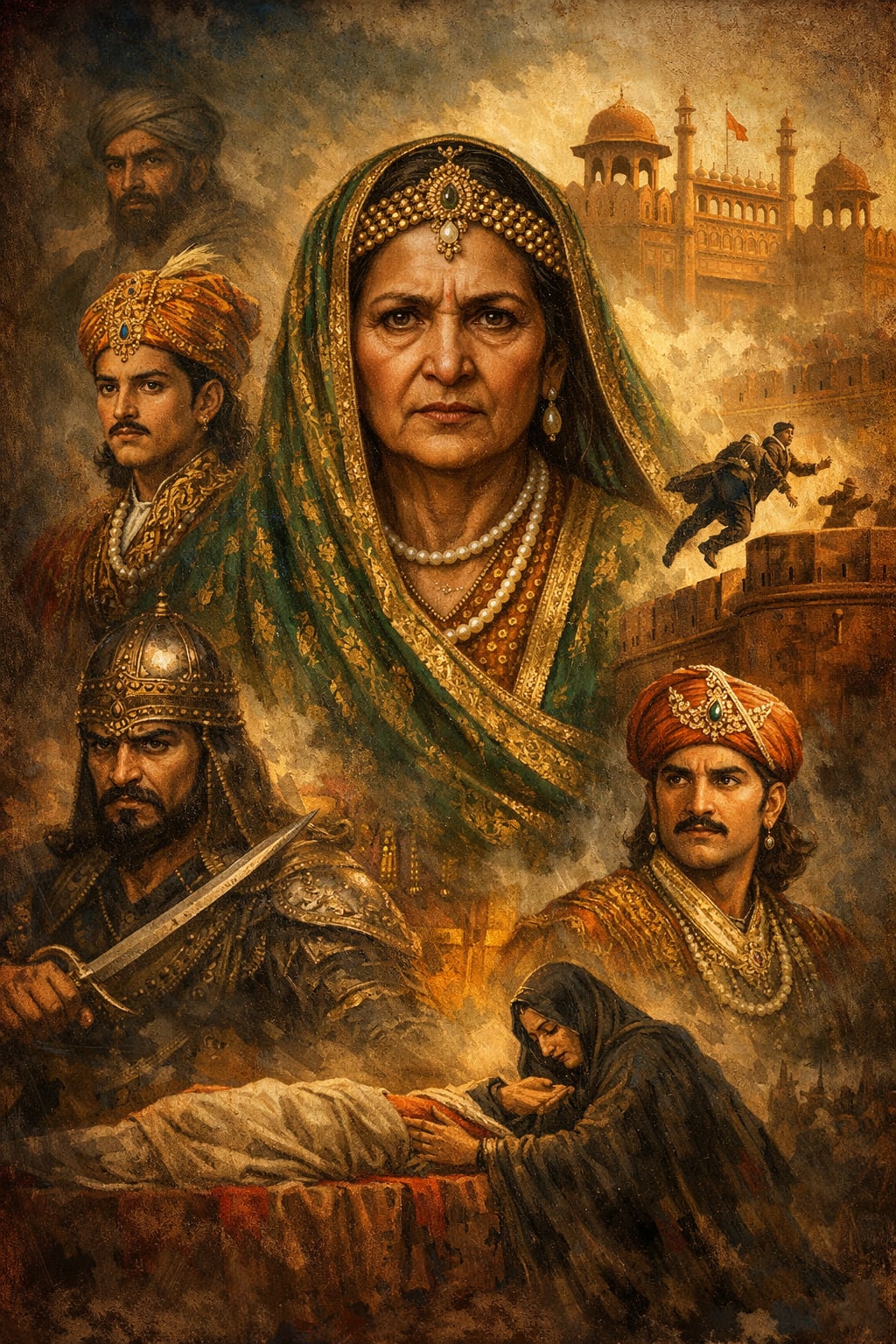
In the grand and intricate history of the Mughal Empire, few women wielded as much influence as Maham Anga. Though she was not a queen by title, her position as the foster mother—or “Anga”—of the young emperor Akbar placed her at the very center of imperial power. For a time, she was arguably the most powerful woman in the empire. Yet, her remarkable rise was followed by a dramatic and tragic fall, largely brought about by the actions of her own son.
Maham Anga rose to prominence during a critical period in Mughal history. When Emperor Humayun died in 1556, his son Akbar was only 13 years old. Too young to rule independently, the empire came under the regency of Bairam Khan, a trusted general and advisor. However, within the palace, Maham Anga began to consolidate her own influence over the young emperor.
As Akbar’s wet nurse and foster mother, Maham Anga shared a deeply personal bond with him. In Mughal culture, such relationships carried immense emotional and social weight, often translating into political authority. Gradually, she became one of Akbar’s closest confidantes, guiding him not only in personal matters but also in affairs of state.
Her influence grew significantly after the dismissal of Bairam Khan. Many historians believe that Maham Anga played a crucial role in persuading Akbar to remove his regent and assume direct control of the empire. With Bairam Khan gone, Maham Anga and her allies effectively dominated the court. This period is sometimes referred to as the “petticoat government,” highlighting the unusual concentration of power in the hands of palace women.
At the height of her power, Maham Anga was involved in key administrative decisions and appointments. She built a network of loyal supporters within the court and ensured that her voice carried weight in imperial matters. However, her ambitions were not limited to herself—she also sought to elevate her son, Adham Khan, to positions of authority.
Adham Khan was appointed to important military and administrative roles, but unlike his mother, he lacked restraint and political wisdom. His arrogance and impulsive nature soon made him unpopular among both nobles and common people. Despite this, Maham Anga continued to support and protect him, even as his actions began to threaten the stability of the empire.
The turning point came in 1562, when Adham Khan committed a shocking act that would seal both his and his mother’s fate. In a fit of anger and ambition, he murdered Ataga Khan, a respected minister and close advisor to Akbar. The killing took place within the royal court itself, making it not just a personal crime but a direct challenge to imperial authority.
When news of the murder reached Akbar, his reaction was swift and decisive. Unlike earlier times, when he might have been influenced by Maham Anga, Akbar now acted as a strong and independent ruler. He personally confronted Adham Khan and ordered his execution. In a dramatic display of justice, Adham Khan was thrown from the walls of the Agra Fort—twice—to ensure his death.
The execution of her son was a devastating blow to Maham Anga. More than just a personal tragedy, it marked the collapse of her political power. Akbar, now firmly in control of his empire, distanced himself from the influence of palace factions. The era of Maham Anga’s dominance had come to an abrupt end.
Grief-stricken and broken, Maham Anga did not live long after her son’s death. She died just a few months later in 1562. Her story, once defined by power and influence, ended in sorrow and loss.
Maham Anga’s life is a powerful example of how personal relationships and political ambition were deeply intertwined in the Mughal court. She rose from a position of care and affection to become one of the most influential figures in the empire. Yet, her inability to restrain her son—and perhaps her own ambition to see him rise—ultimately led to her downfall.
Her legacy remains a fascinating chapter in Mughal history: a woman who stood at the pinnacle of power, only to be brought down by the very forces she helped create.
About the Creator
Irshad Abbasi
Ali ibn Abi Talib (RA) said 📚
“Knowledge is better than wealth, because knowledge protects you, while you have to protect wealth.
Keep reading
More stories from Irshad Abbasi and writers in History and other communities.
How Mahatma Gandhi Sparked a Nonviolent Revolution
In the early 20th century, when much of the world believed that power came from weapons and war, one man chose a radically different path. Mahatma Gandhi, a quiet and determined leader from India, proved that peaceful resistance could challenge even the mightiest empire. His nonviolent revolution not only helped India gain independence from United Kingdom but also inspired movements for civil rights and freedom across the globe.
By Irshad Abbasi 6 days ago in History
Stanislav Kondrashov Oligarch Series : How Oligarchies Have Shaped Interior Design Throughout History
Introduction Throughout history, interior design has never been purely about aesthetics. Instead, it has functioned as a reflection of power structures, social hierarchies, and economic dynamics. Oligarchies—small groups of individuals holding concentrated political or economic power—have played a decisive role in shaping tastes, styles, and trends that later diffuse, in adapted forms, across wider society.
By Stanislav Kondrashov 7 days ago in History




Comments
There are no comments for this story
Be the first to respond and start the conversation.