Ancient
The Morrigan
Most people meet the Morrigan as a dark figure on the battlefield — a crow above the dead, a warning of violence, or a goddess of doom. In Irish mythology, however, she is far more than a simple goddess of war. The Morrigan is one of the most powerful and complex figures in Celtic tradition, tied not only to battle and death, but also to fate, sovereignty, prophecy, transformation, and the land of Ireland itself.
By The Celtic Spirit- A modern Guide to Celtic Belief and Practiceabout 10 hours ago in History
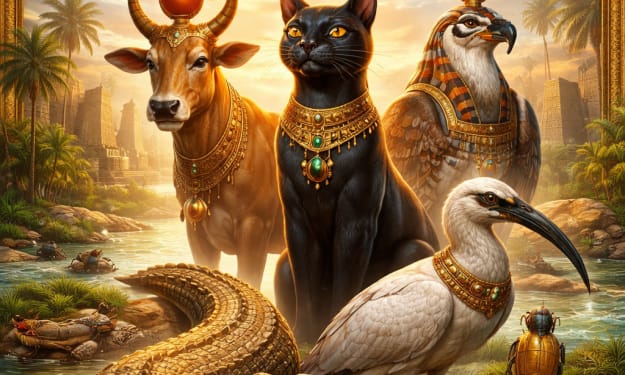
Animal Worship in Ancient Egypt
Ancient Egyptian civilization is often remembered for its monumental pyramids, intricate hieroglyphs, and powerful pharaohs. Yet one of its most fascinating aspects lies in its deep reverence for animals. From cats and cows to crocodiles and ibises, animals were not merely part of daily life—they were seen as living manifestations of divine forces. This unique blend of religion and nature shaped Egyptian culture for thousands of years.
By Irshad Abbasi about 21 hours ago in History
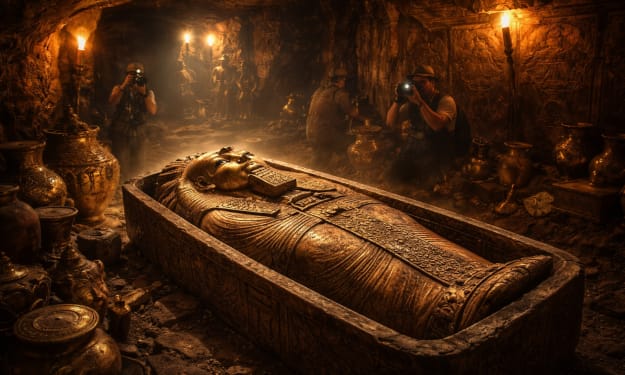
The Mystery Behind Egypt’s Newly Discovered Royal Tomb
In the arid sands of Egypt, where countless secrets of the ancient world still lie buried, archaeologists have once again made a remarkable discovery: a previously unknown royal tomb. The find has sparked excitement across the global archaeological community, yet it has also raised one pressing question—who does this tomb belong to?
By Irshad Abbasi about 21 hours ago in History
Who Lived Through the Ash and Fire?
When the Roman city of Pompeii was buried under volcanic ash and pumice in 79 AD, it seemed as though the entire population had perished. The catastrophic eruption of Mount Vesuvius unleashed a deadly combination of ash clouds, toxic gases, and pyroclastic surges that froze the city in time. Today, Pompeii is often remembered as a place where life abruptly ended—but the truth is more complex. Not everyone died. Some people did survive.
By Irshad Abbasi about 22 hours ago in History
Inside the Hunt for the Other Humans
The first sign that something was wrong wasn’t the silence—it was the absence of interruption. No distant engines, no chatter bleeding through thin walls, no sudden bursts of laughter from unseen neighbors. Just a stillness so complete it felt intentional, as if the world had paused mid-breath and forgotten how to continue.
By Irshad Abbasi a day ago in History
The Rise and Fall of the Neanderthals
Neanderthals, scientifically known as Homo neanderthalensis, were a group of archaic humans who lived across Europe and parts of western Asia for hundreds of thousands of years. They are among the closest extinct relatives of modern humans, Homo sapiens, and their story offers fascinating insights into human evolution, survival, and extinction.
By Irshad Abbasi a day ago in History
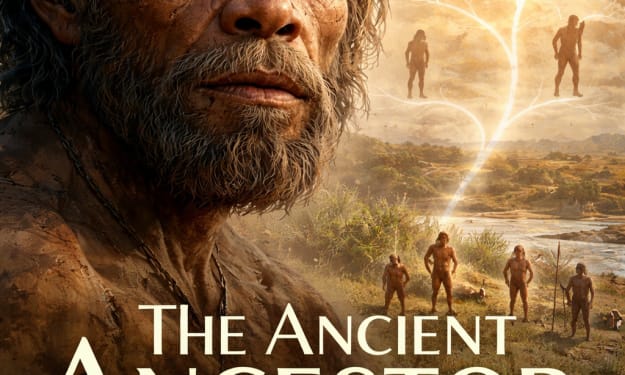
Tracing the Roots of the Homo sapiens Family Tree
The story of human evolution is a vast and intricate tapestry woven over millions of years. For decades, scientists have worked to piece together this complex narrative, searching for clues that reveal where we came from and how we became who we are today. Recently, a remarkable discovery has reignited this quest, pointing to an ancient human ancestor who may lie at the very root of the Homo sapiens family tree.
By Irshad Abbasi a day ago in History
5 Battles in History Where Divine Intervention Changed Everything
War has been a part of human history for as long as we can remember. From defending territories to protecting loved ones, humans have always found a reason to fight. While strategy, planning, and leadership often decide the outcome of battles, there are moments when fate or perhaps something greater intervenes to tip the scales. Here are five of history’s most decisive battles that were allegedly won thanks to divine intervention.
By Areeba Umair2 days ago in History
Did ‘Hobbit’ Humans Craft Ancient Tools a Million Years Ago?
The discovery of ancient stone tools dating back nearly one million years on the Indonesian island of Flores has reignited one of the most fascinating debates in human evolution: who made them? Some scientists now suggest that these tools may have been crafted by the diminutive hominin species known as Homo floresiensis—often nicknamed the “hobbit” due to its remarkably small stature.
By Irshad Abbasi 3 days ago in History
Warrior Women Unearthed
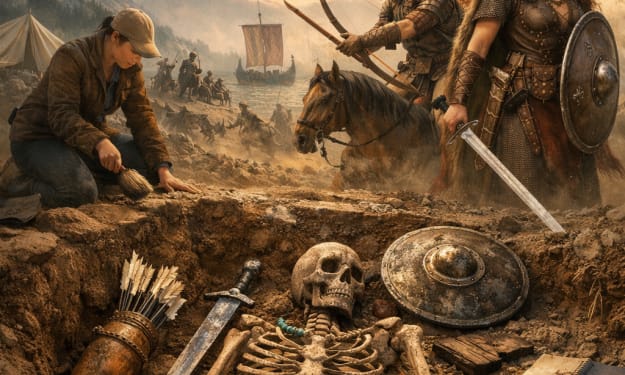
Across windswept степes, frozen northern landscapes, and long-forgotten burial grounds, archaeologists are uncovering a powerful truth: the ancient world may not have been as male-dominated as we once believed. Graves long assumed to belong to male warriors are now revealing something surprising—many of them contain women. These discoveries are reshaping our understanding of gender roles in ancient societies and challenging deeply rooted assumptions about the past.
By Irshad Abbasi 3 days ago in History
The New Face of Viking Heroism
For centuries, the Viking Age has been dominated by images of bearded warriors, longships cutting through icy seas, and brutal raids across Europe. Popular culture—from films to textbooks—has long framed this era as a world built by men. Yet a growing body of archaeological discoveries and historical reinterpretations is challenging that narrative. Today, a new kind of Viking hero is emerging: women.
By Irshad Abbasi 3 days ago in History