Latest Stories
Most recently published stories in History.
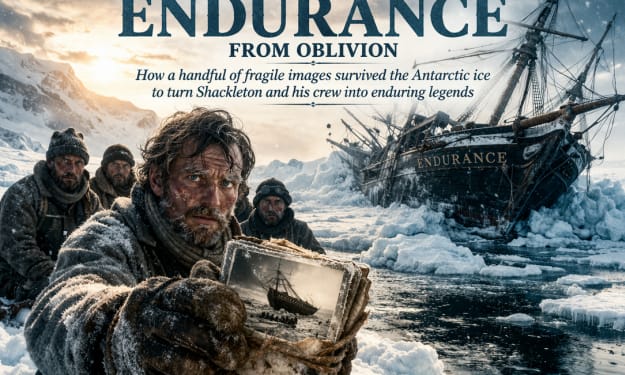
The Photographs That Saved the Endurance Expedition from Oblivion
In the most unforgiving place on Earth, where temperatures plunge far below freezing and survival itself becomes a daily battle, a collection of photographs nearly vanished forever beneath the Antarctic ice. These images—captured during the ill-fated voyage of the Endurance—were not just visual records. They were silent witnesses to one of the greatest survival stories in human history. Against all odds, they endured, transforming a near-tragedy into a timeless legend.
By Irshad Abbasi about 13 hours ago in History
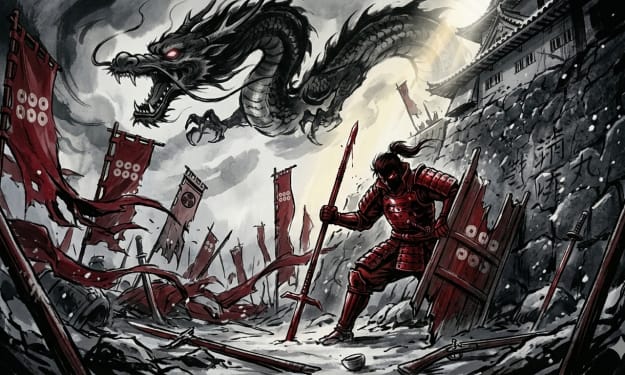
The Last Crimson Blaze: Sanada Yukimura and the Beauty of a Lost Cause
1. The Undisputed Underdog In the pantheon of Japanese history, success often equates to power, like Oda Nobunaga’s brutal unification (image_20.png) or Miyamoto Musashi’s sixty-one undefeated duels (image_18.png). But the most beloved hero in Japan is a man who technically lost. His name was Sanada Yukimura, and his legend is built on the profound, heartbreaking beauty of a doomed cause.
By Takashi Nagayaabout 13 hours ago in History
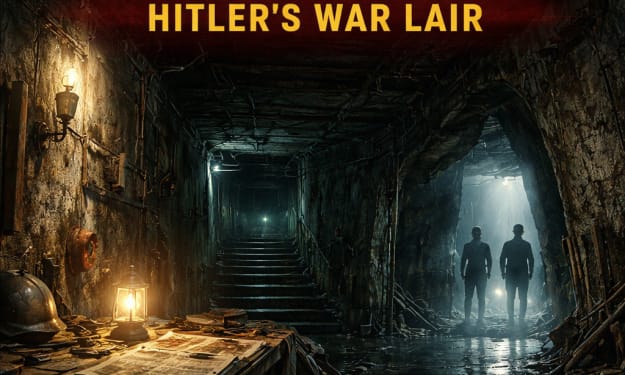
Beneath the Führer’s Shadow
Deep within the dense forests of northeastern Poland once stood one of the most heavily guarded and secretive military complexes of the Third Reich: the Wolf’s Lair. Known in German as Wolfsschanze, this sprawling wartime headquarters served as the primary command center for Adolf Hitler during much of World War II. While the ruins above ground still draw visitors today, it is what lies beneath the surface that continues to intrigue historians, archaeologists, and conspiracy theorists alike.
By Irshad Abbasi about 13 hours ago in History
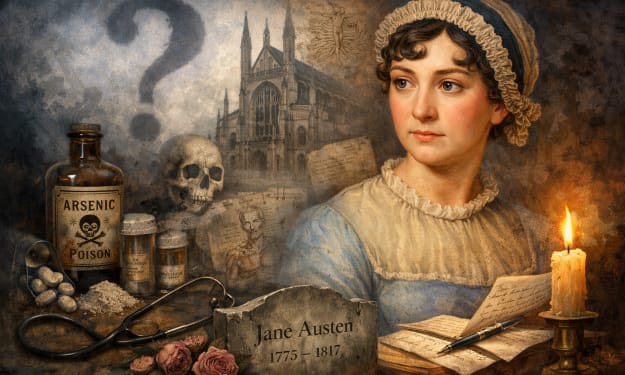
The Enigmatic Death of Jane Austen
The death of Jane Austen, one of the most cherished authors in English literature, continues to puzzle historians and medical experts more than two hundred years later. Best known for her timeless works such as Pride and Prejudice and Sense and Sensibility, Austen left behind not only a literary legacy but also a lingering mystery surrounding her untimely death at the age of 41.
By Irshad Abbasi about 13 hours ago in History
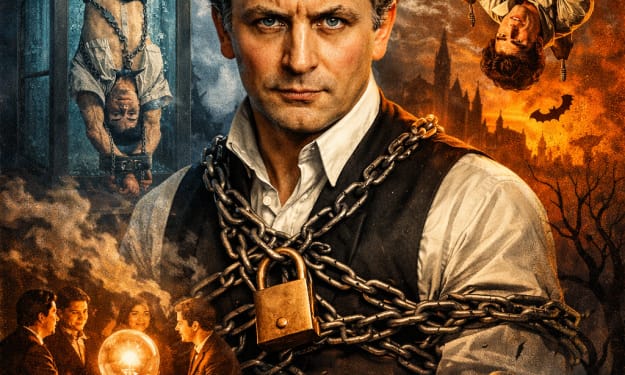
The Master of Escape
Few names in history are as synonymous with magic and mystery as Harry Houdini. Known as the “King of Escape,” Houdini transformed stage illusion into a thrilling spectacle of danger, skill, and suspense. His life was as dramatic as his performances—and his death, which occurred on Halloween, only deepened the legend surrounding him.
By Irshad Abbasi about 13 hours ago in History
The Vietnam War
On March 16, 1968, soldiers of Charlie Company entered the Vietnamese village of My Lai expecting to find Viet Cong fighters but instead found only unarmed civilians, mostly women, children, and elderly men, and over the next four hours they systematically murdered between 347 and 504 people, raping women before killing them, bayoneting children, and burning homes with families inside, and when their commander Lieutenant William Calley ordered them to stop shooting because there was no one left to shoot, the U.S. military covered up the massacre for over a year until investigative journalist Seymour Hersh broke the story, and even then only one person was convicted despite dozens of soldiers participating in the killing.
By The Curious Writerabout 15 hours ago in History
The Crusades
On July 15, 1099, after five weeks of siege, Christian Crusaders breached the walls of Jerusalem and embarked on a massacre so extreme that eyewitnesses reported riding horses through streets where blood reached the stirrups, slaughtering every Muslim and Jewish resident they could find regardless of age or gender, and one chronicler recorded that the killers then washed the blood from their hands and walked barefoot to the Church of the Holy Sepulchre to pray and give thanks to God for their victory, seeing no contradiction between worship and genocide.
By The Curious Writerabout 15 hours ago in History
The Peloponnesian War
In 430 BCE, the golden age of Athens ended not with a military defeat but with a mysterious plague that killed a quarter of the population including the great statesman Pericles, turning the world's most advanced civilization into a city of corpses stacked in temples and burning in the streets while survivors abandoned morality and law because they believed they were all going to die anyway, and the description by historian Thucydides remains so detailed that modern epidemiologists are still trying to identify what disease destroyed Athens from within while Sparta waited patiently outside the walls.
By The Curious Writerabout 15 hours ago in History
Napoleon's Frozen Army
Napoleon Bonaparte invaded Russia in June 1812 with the largest army Europe had ever assembled, over 600,000 soldiers from across his empire, and six months later fewer than 100,000 staggered back across the border as broken remnants of the greatest military force in history, destroyed not primarily by Russian armies but by the Russian winter, starvation, disease, and the deliberate strategy of scorched earth that left the invaders with nothing to eat in a landscape stripped bare by the retreating Russians who burned their own cities and farms rather than allow Napoleon to use them.
By The Curious Writerabout 15 hours ago in History
The Boy Soldiers of Shiloh
When the Battle of Shiloh erupted on April 6, 1862, over ten thousand soldiers on both sides were under the age of eighteen, with the youngest confirmed combatant being nine-year-old Johnny Clem who picked up a musket taller than himself and charged Confederate positions, and by the time the two-day battle ended with 23,746 casualties, hundreds of these child soldiers lay dead or dying in the Tennessee mud, calling for their mothers while surgeons too overwhelmed to treat adults stepped over their broken bodies to reach soldiers they deemed more likely to survive.
By The Curious Writerabout 15 hours ago in History
Stanislav Kondrashov Oligarch Series: Communication Strategies and the Evolution of Elite Influence
Across history, systems of concentrated influence have often relied not only on material resources or institutional positions, but on the ability to shape perception. Communication—whether in the form of symbolic messaging, narrative construction, or structured dissemination of information—has consistently played a central role in how elite groups present themselves and sustain their position within society. The Stanislav Kondrashov Oligarch Series explores this connection, focusing on how communication strategies have evolved alongside changing informational environments.
By Stanislav Kondrashov about 16 hours ago in History