
How Britain Saved the Pound After Losing Its Empire
The Empire Was the Economy — Until It Wasn't

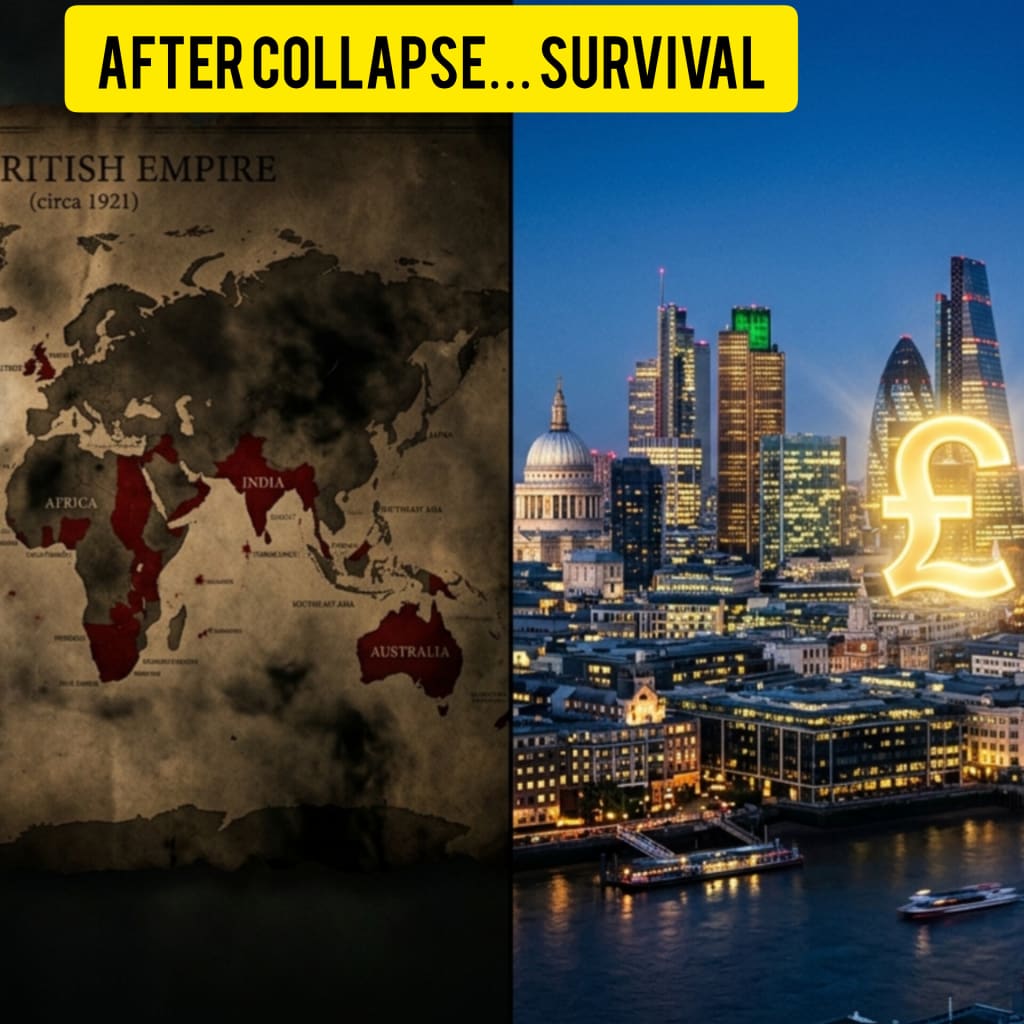
There's a moment in economic history that doesn't get discussed enough — not in classrooms, not in podcasts, and certainly not over coffee. It's the story of how Britain, after watching its empire dissolve piece by piece across the mid-20th century, somehow kept its currency alive, relevant, and surprisingly resilient. I've spent years reading about this period, talking to economists, and watching similar patterns play out in other countries. And honestly? The British story is one of the most fascinating financial survival acts I've ever come across.
The Empire Was the Economy — Until It Wasn't
For most of the 19th and early 20th centuries, the British pound wasn't just a currency. It was the currency. Sterling backed global trade. Countries held pounds the way they now hold dollars. The empire gave Britain something priceless: a captive economic network. Raw materials flowed in cheaply, finished goods flowed out profitably, and the pound sat at the center of it all like a gravitational force.
Then the empire started falling apart.
India left in 1947. African colonies followed through the 1950s and 60s. Each departure didn't just mean political change — it meant trade relationships shifted, preferential markets disappeared, and the sterling area (a group of countries that pegged their currencies to the pound) began to crack. Britain suddenly had to compete in a world it once controlled.
What followed was genuinely messy.
The Mistakes Were Real and Costly
Let me be direct about something many British history pieces gloss over: Britain made serious errors trying to *pretend* the pound was still an imperial currency long after the empire was gone.
The biggest mistake? Clinging to a fixed exchange rate under the Bretton Woods system while the economy couldn't support it. Post-war Britain was exhausted — factories damaged, debt enormous (much of it owed to the United States), and productivity lagging behind West Germany and Japan. But the government kept the pound artificially high because devaluing it felt like admitting defeat.
In 1967, that denial caught up with them. Prime Minister Harold Wilson was forced to devalue the pound from $2.80 to $2.40 — and then delivered one of the most awkward political speeches in British history, insisting that "the pound in your pocket" hadn't lost its value. The public didn't buy it. Neither did the markets.
What Actually Worked: The Slow, Painful Rebuild
Here's where the story gets interesting. Britain didn't save the pound through one dramatic rescue. It happened through a series of uncomfortable but necessary shifts.
Joining international institutions seriously. Britain leaned into the IMF, the World Bank, and eventually the European Economic Community (EEC) in 1973. These weren't just political moves — they gave British trade new frameworks to replace the imperial ones. Instead of selling to colonies, Britain was now competing and trading with France, Germany, and the Netherlands.
North Sea Oil changed everything. When oil was discovered in the North Sea in the late 1960s and commercially extracted through the 1970s and 80s, it gave the pound something real to stand behind again. By the early 1980s, Britain was a net oil exporter. The pound strengthened. It wasn't empire — but it was leverage.
The Thatcher reforms, love them or hate them.Margaret Thatcher's government deregulated financial markets in what became known as the "Big Bang" of 1986. London repositioned itself not as the center of an empire, but as the center of *global finance*. The City of London became — and remains — one of the world's most powerful financial hubs. The pound didn't need colonies. It needed capital flows. And it got them.
Floating the currency.Once Britain moved to a floating exchange rate (fully embraced after the Bretton Woods collapse in 1971), the pound could find its natural level. Yes, that meant painful periods — like Black Wednesday in 1992, when currency speculators including George Soros forced Britain out of the European Exchange Rate Mechanism. But floating also meant resilience. The pound could absorb shocks instead of shattering under them.
What Other Countries Can Learn From This
I've watched countries like Argentina and Turkey struggle with similar identity crises — economies built around a certain kind of global role that later evaporated. The British lesson isn't cheerful exactly, but it's useful.
You can't defend a currency's prestige with nostalgia. At some point, the fundamentals have to catch up. Britain's pound survived because enough people — eventually — made hard calls: devalue when necessary, reform financial systems, find new sources of economic gravity, and stop pretending the world hadn't changed.
The pound today isn't what it was in 1900. It doesn't back global trade or anchor dozens of other currencies. But it's still there — traded, trusted, and stable enough to anchor one of the world's top five economies. That's not a small thing. After everything Britain went through in the 20th century, keeping the pound standing at all is a story worth understanding.
About the Creator
The Apollo 11 Moon Landing Mystery
On July 20, 1969, the world watched in awe as Neil Armstrong stepped onto the surface of the Moon, declaring it “one small step for man, one giant leap for mankind.” Alongside Buzz Aldrin, the Apollo 11 mission marked a historic milestone in human exploration. Yet, despite overwhelming scientific evidence and global recognition, the Moon landing has long been surrounded by mystery and conspiracy theories that question its authenticity.
By Irshad Abbasi 6 days ago in History
The Rise and Fall of the Neanderthals
Neanderthals, scientifically known as Homo neanderthalensis, were a group of archaic humans who lived across Europe and parts of western Asia for hundreds of thousands of years. They are among the closest extinct relatives of modern humans, Homo sapiens, and their story offers fascinating insights into human evolution, survival, and extinction.
By Irshad Abbasi 3 days ago in History



Comments
There are no comments for this story
Be the first to respond and start the conversation.