
Egypt's Female Pharaoh Who Ruled as a King
Hatshepsut's Forbidden Crown


THE RISE OF A QUEEN
Hatshepsut was born into royalty as the daughter of Pharaoh Thutmose I around 1507 BCE, and she received an education typically reserved for male heirs including instruction in reading hieroglyphics, mathematics, religious rituals, and governance, preparing her for a role that women of ancient Egypt rarely occupied but that she would ultimately claim with unprecedented success. When her father died, Hatshepsut married her half-brother Thutmose II following Egyptian royal tradition designed to keep power within the family, and she became queen consort, a position of significant influence but not ultimate authority, and she bore a daughter but no male heir, which would prove crucial to her eventual path to power when Thutmose II died after a relatively brief reign.
SEIZING ABSOLUTE POWER
The throne passed to Thutmose III, a young son of Thutmose II by a minor wife, and Hatshepsut initially served as regent for the child pharaoh as was traditional when kings died leaving young heirs, but within seven years she had taken the unprecedented step of declaring herself pharaoh, co-ruler with equal status to her stepson, and eventually she became the dominant ruler while Thutmose III was sidelined despite being the legitimate male heir. To legitimize her extraordinary claim to power in a society where pharaohs were always male, Hatshepsut created an elaborate mythology claiming that the god Amun had visited her mother disguised as Thutmose I and that she was therefore divinely conceived and destined to rule, and she commissioned artwork and statues depicting herself with the traditional false beard and masculine regalia of pharaohs, essentially presenting herself as a king rather than a queen.
ACHIEVEMENTS AND PROSPERITY
Hatshepsut's reign lasted approximately twenty-two years and was characterized by peace, prosperity, and ambitious building projects rather than military conquest, marking a departure from the aggressive expansionism of previous pharaohs, and she focused on establishing trade networks rather than expanding territory through warfare, most famously organizing a massive trading expedition to the Land of Punt, a region probably located in modern Somalia or Eritrea, which brought back valuable commodities including myrrh, frankincense, gold, ivory, and exotic animals, and this expedition was commemorated in detailed relief carvings at her magnificent mortuary temple at Deir el-Bahari which remains one of ancient Egypt's architectural masterpieces.
THE ERASURE
After Hatshepsut's death around 1458 BCE, her stepson Thutmose III finally assumed sole power, and approximately twenty years into his independent reign, he ordered a systematic campaign to erase Hatshepsut from historical records, with her name chiseled out of inscriptions, her statues destroyed or defaced, and her achievements attributed to male predecessors or successors, and this damnatio memoriae was so thorough that for thousands of years Hatshepsut was largely forgotten, her name absent from king lists and her monuments attributed to others. Modern Egyptologists debate why Thutmose III waited decades after her death to begin this erasure, with theories ranging from late-life resentment about being overshadowed during his youth, to practical concerns about preventing future women from using Hatshepsut as precedent for claiming pharaonic power, to religious motivations about restoring proper male succession and cosmic order.
REDISCOVERY AND LEGACY
The rediscovery of Hatshepsut in the nineteenth and twentieth centuries through archaeological excavation and the decipherment of hieroglyphics revealed one of ancient history's most remarkable women, a leader who successfully navigated the patriarchal structures of ancient Egyptian society to wield absolute power for over two decades and whose reign brought prosperity and architectural achievement even as it challenged fundamental assumptions about gender and legitimate authority, and her story continues to inspire modern discussions about women's leadership, the erasure of female achievement from historical records, and the ways that exceptional individuals transcend the limitations their societies attempt to impose based on gender.
About the Creator
The Curious Writer
I’m a storyteller at heart, exploring the world one story at a time. From personal finance tips and side hustle ideas to chilling real-life horror and heartwarming romance, I write about the moments that make life unforgettable.
Keep reading
More stories from The Curious Writer and writers in History and other communities.
The Baghdad Battery
Archaeologists found clay jars in Iraq containing copper cylinders and iron rods that produce electrical current when filled with acidic liquid, and if they're really batteries, they prove ancient civilizations had technology we thought was impossible until the modern era.
By The Curious Writera day ago in History
Is This the End of Netanyahu? | War Strategy or Something Worse?
The night was unusually tense in Jerusalem. Television screens flickered inside homes, cafés, and military offices as people waited for the next announcement. For many citizens of Israel, the question echoing across the nation was simple but heavy:
By Imran Ali Shah2 days ago in History
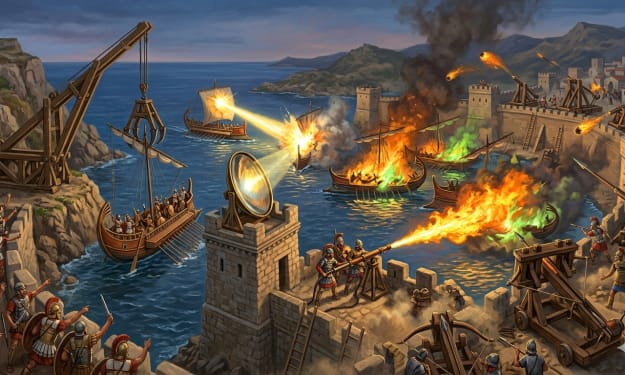
Ancient Super Weapons That Changed Warfare Forever
Throughout recorded history, warfare has shaped civilizations. Long before drones, missiles, and cyber warfare, ancient societies were already engineering terrifying and brilliant machines designed to dominate the battlefield.
By Areeba Umair3 days ago in History



Comments
There are no comments for this story
Be the first to respond and start the conversation.