literature
Science fiction's most popular literary writers from Isaac Asimov to Stephen King and Frank Herbert, and the rising stars of today.
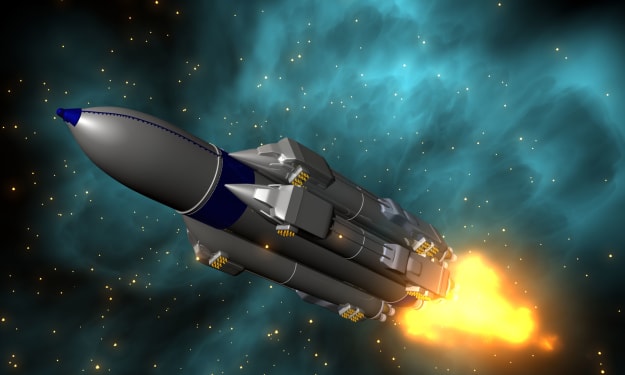
A Space Ship Does Not Blow Up on Page Three
Every science fiction writer has something that drives him or her. For many, if not most writers, this is the need to pen a story and have it read, usually by means of publication. A quick visit to the websites of most literary agents or publishers yields one dominant insight into what one must do to achieve this. Write an engaging story with believable characters and immerse the reader in the story within the first few pages. This is sage advice, if you want these folks to notice your work. Often, they won’t read beyond the first few pages and what they’re looking for is engagement, a powerful plot and character-driven hook.
By T.K. Boomer9 years ago in Futurism
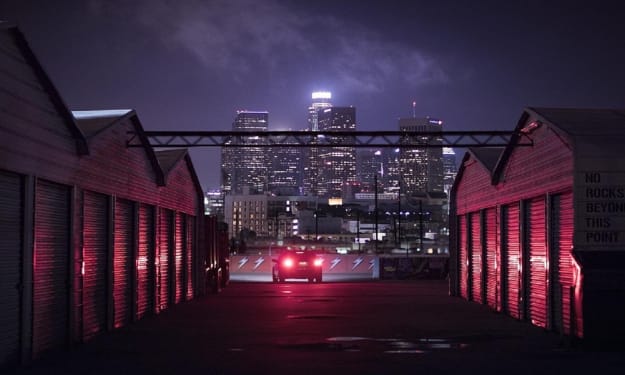
Outrun Stories #23
“Why do you say it?” the teenager asks as he pulls his leather gloves tight on his hands. “What?” he pauses, looks around, the headlamps from the Porsche piercing the night and reflecting a metallic hue off the shipping containers that rattle in the background with the rain.
By Outrun Stories9 years ago in Futurism
Isaac Asimov's Foundation: Holistic Analysis of the Asimov Universe - The Original Trilogy - Foundation and Empire
This series of analyses is meant to explain how the great Isaac Asimov wove a gargantuan number of micro plots into one continuous story that encompasses many thousands of years: the existential conflict and the struggle for survival of the humankind in the future. However, the Macro Plot shall materialize in the minds of the readers if, and only if, all the micro plots of the books in Asimov's Foundation Series and Robot Series (and the Empire Series to some extent) are set in order and analyzed accordingly. Therefore, the readers are kindly reminded to feast their eyes and minds, so to speak, on the analyses of thePrequels and Foundation before continuing on this article on Foundation and Empire.
By Deniz Galip Oygür9 years ago in Futurism
Harlan Affects
There are not too many other locations in my life that induce a wave of comfort, wonderment, joy, and being, as when I am within the stacks of a bookstore, library, or comic book shop. It’s as if I am traveling close to a large gravity well which slows down my relative time and continues normally for everyone else. When someone asks me what my plans are for a Saturday or any other day off I would say, “I’m going to a bookstore” or “I’m going to the library.” Of course I can only do this a few times a month as to not spend all my time in one of these black holes and maintain some kind of social life.
By Nickolas Rudolph9 years ago in Futurism
Dune and Oil – The Real World Influence Behind Frank Herbert's Dune
Arrakis. Dune. Desert planet. With these words, Frank Herbert introduced readers to the far-off reaches of his fictional universe in his seminal science fiction novel Dune. The world features alien concepts like giant worms, elements that fold space, and a race of people whose most valuable commodity is water itself.
By Anthony Gramuglia9 years ago in Futurism
'UFO and Outer Space' Comic Book
When I was growing up in the 70's, I did read a variety of comic books. Everything from the super hero to TV and movie tie-ins, and anthology series. One anthology series stood out and was a favorite of mine: UFO Flying Saucers also known as UFO and Outer Space. The comic was about real life reports of UFO encounters from the files of Project Blue Book, the official U.S. Air Force investigation of UFOs, and reports from other sources. UFO Flying Saucers was published by Gold Key comics from about 1968 to 1978. The stories would come in different formats in the comic, a full story based on an incident, a two page spread on UFO origins, and comic panel on UFO hoaxes and frauds. It also came as computation book which contained comic stories of previous issues.
By Edward German9 years ago in Futurism
Six Degrees at Ten
When Six Degrees was published, climate refugees in America were languishing far from their homes on the Katrina-ravaged Gulf Coast. In the Arctic sea ice had shrunk to its lowest ebb in recorded history. The year was 2007 and climate change seemed fated to loom over the lives of all in the new century. The book, written by environmental campaigner Mark Lynas, collected the best guesses of scientists to project a degree-by-degree vision of our warming world, detailing the consequences for humans and nature as the mercury climbed. In 2007 the carbon in our atmosphere hovered around 385 parts per million, but today it is well over 400. Since then global temperatures have also crossed the fateful threshold of 1 degrees Celsius outlined in the book. Each chapter deals with a degree Celsius increment, climaxing as the title would suggest with a climate six degrees warmer than that which has prevailed for most of human existence. So, how closely does our world today follow the trajectory plotted a decade earlier? Reading the first chapter now, and counting the things which have since become ordinary, is startling.
By Jack Elliot Marley9 years ago in Futurism
Outrun Stories #22
Hope’s a funny kind of pain. I mean, in comparison to everything else it holds its own. You can be bruised and battered and hammered into the fucking ground with bullets and bats and fuck, that all hurts like hell, but hoping that it will end. Hoping that something better is coming. Hoping that you’ll get out. That’s a different type of pain all together.
By Outrun Stories9 years ago in Futurism
Robosexuality: The Science Fiction That Predicted Humans Falling In Love With Robots
Twenty years ago, if you would have said that there would be people out there who have robotic girlfriends or digital girls, most people would have laughed. However, nobody's laughing today. The demand for robotic lovers is growing - and companies are legitimately working to give people the robo-lovers they want.
By Ossiana Tepfenhart9 years ago in Futurism