literature
Science fiction's most popular literary writers from Isaac Asimov to Stephen King and Frank Herbert, and the rising stars of today.
White Knight
Everything was in motion at once. The vibration came from the fuel pumps below kicking into life, sending the rocket's lifeblood in motion. Those pumps would have to help the engines to produce enough thrust to get the twenty-one ton vehicle in motion.
By Matthew Kresal9 years ago in Futurism
Novel Samples
A sample of Chapter 1 for Smile of a Broken King. A knock sounded at the door, prompting the servant to stand and allow a large, dark man with crow’s wings in. His sharp, yellow eyes looked the girl over in the tub, a grin stretching over his long face. He stepped inside and bowed to her, flourishing his feathers. She lowered herself deeper into the water in a sad attempt to hide from him.
By Saphira Nightengale9 years ago in Futurism
The Ink Ranger
Jayden Howles is a nineteen-year-old Computer Science student, and hobbyist writer, attending Riverton College. One night, he stumbles across an injured beggar who offers him a mysterious book in exchange for his goodwill. The only problem is the book is unwritten. All of that changes when he decides to pen a few pages of his new fantasy story idea in the book, and it sucks him into the story.
By Kevin Chase9 years ago in Futurism
Are These The Most Underrated Science Fiction Books or Not?
We always root for the underdog, if we ever see one. But how can you cheer them on if you've never heard of 'em? That's why--voilà!--our latest list of underrated sci-fi-related things--in this case, the Most Underrated Science Fiction Books!
By Matt Cates9 years ago in Futurism
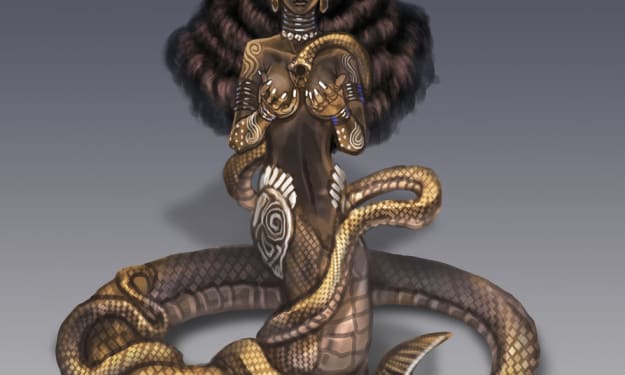
10 Crazy Nigerian Myths - Part 1
I hail from Nigeria and the magic in Nigeria is something that goes deeper than what the eyes can see...it's a kind of magic you can feel. My hope is that with my content here on Vocal, I will be able to give you lot a little dose of that Nigerian magic ever so frequently. So bookmark my page, look out for my content, and by all means, say hello!
By Jide Okonjo9 years ago in Futurism
History of Science Fiction Part III
At the dawn of the 1960s, the history of science fiction took a huge turn from its past. In two decades, the whole genre of sci-fi would change in ways that would alter mainstream perspectives of the science fiction genre.
By Anthony Gramuglia9 years ago in Futurism
Outrun Stories #24
“15 seconds and WE. ARE. GO,” Rhamshot shouts holding up a black gloved hand in the air, five fingers spread, until they are pulled in one by one and fuck, that single second before the explosion. That flicker, the kick in the gut, the grind of the teeth, the clench of the jaw and the nerves, the nerves never fade, no matter how many times you do this fucking job.
By Outrun Stories9 years ago in Futurism
Realistic Sci-Fi Dystopias
Sci-fi always has had an obsession with dystopian worlds. There's something about the genre that makes people ask what would happen if history took a "wrong turn," and the future turned out to be less bright than we'd have hoped it to be.
By Riley Raul Reese9 years ago in Futurism
History of Science Fiction Part II
At the start of the 20th century, the history of science fiction took a great turn thanks to the emergence of motion pictures and the proliferation of pulp magazines. It is thanks to these two entertainment forms that the landscape following H.G. Wells' sci-fi novels took such a different direction than the scientific romances of the 19th century.
By Anthony Gramuglia9 years ago in Futurism
History of Science Fiction Part I
When chronicling the history of science fiction, you need to think about the history of sci-fi as it pertains to the history of mankind. Throughout its span, sci-fi asks where we are as a species, where we will go, and what will happen when we get there.
By Anthony Gramuglia9 years ago in Futurism
In the Author’s Universe: Interview with Sci-Fi Author Cixin Liu
Liu Cixin [writing in English under the name, Cixin Liu] is a science fiction writer from China; a nine-time winner of the Chinese Galaxy Award (Chinese Hugo) and the Xing Yun Award (Chinese Nebula), and the first Asian to win a Hugo Award, in 2015, for his work, The Three-Body Problem (translated by sci-fi author, Ken Liu, and published by Tor Books).
By K.E. Lanning9 years ago in Futurism