
From the Road to the Rubber: How Pyrolysis Carbon Black is Closing the Tire Loop
Unlocking the hidden value in end-of-life tires to create a truly circular economy
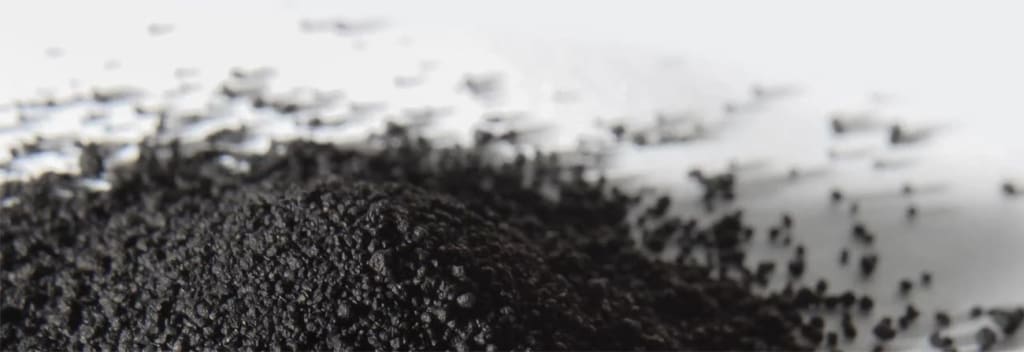
Every year, approximately one billion tires reach the end of their life. They pile up in landfills, clog waterways, or get illegally dumped. But to a growing number of engineers and entrepreneurs, these "waste" tires are anything but trash. They are a rich vein of valuable materials waiting to be recovered.
Among these materials, one stands out as the unsung hero of the circular economy: recovered Carbon Black (rCB) . While pyrolysis oil and steel wires get much of the attention, carbon black—the reinforcing agent that gives tires their strength, durability, and black color—represents the single largest economic opportunity in tire recycling. If we are to build a true circular economy for tires, reclaiming this material at scale is non-negotiable.
1. What Is Carbon Black and Why Does It Matter?
To understand the value of recovered carbon black, we must first understand what it does.
Carbon black is not soot. While it is primarily composed of elemental carbon, it is a highly engineered material produced through the controlled combustion of heavy petroleum feedstocks or natural gas. It is the second most consumed material in tire manufacturing after rubber itself, accounting for approximately 30% of a tire's total weight.
In a tire, carbon black serves three critical functions:
- Reinforcement: It strengthens the rubber compound, providing tensile strength and abrasion resistance.
- Durability: It protects the rubber from UV degradation and ozone cracking.
- Thermal Conductivity: It helps dissipate the heat generated by friction during driving.
The carbon black industry is massive, valued at over $15 billion annually. Historically, it has been a linear industry: extract petroleum, manufacture carbon black, compound it into tires, drive the tires to the end of their life, and dispose of them. Every year, millions of tons of this valuable reinforcing material are lost to landfills or incineration.
2. The Pyrolysis Connection: Recovering What Was Lost
This is where tire pyrolysis enters the picture. When an end-of-life tire is subjected to high temperatures in an oxygen-free environment, the rubber polymers break down into pyrolysis oil and gas. However, the carbon black—originally added to the tire as a reinforcing filler—does not degrade. It remains behind as a solid residue.
This residue is what we call recovered Carbon Black (rCB) .
But it is not simply "old carbon black." The pyrolysis process alters the material in several ways. The rCB exiting the reactor is not a pure product. It typically contains:
- Inorganic Ash: From the zinc oxide and silica used in tire manufacturing.
- Residual Carbon: The carbonized remains of the rubber polymers.
- Sulfur: From the vulcanization process.
A typical tire pyrolysis yields approximately 35% rCB by weight. For every ton of tires processed, about 350 kilograms of this valuable material is recovered. Scaling this globally represents the potential to recover millions of tons of carbon black annually—diverting waste and reducing the need for virgin, fossil-based production.
3. The Challenge: From "Char" to "Engineered Material"
The critical distinction to understand is the difference between pyrolysis char and high-grade recovered Carbon Black.
Raw pyrolysis char is what comes out of the reactor. It has some value as a low-grade filler or a carbon source for solid fuel, but it cannot simply be dumped back into a tire mold. If you tried to use raw char in a high-performance tire, the result would be weak, brittle, and unsafe.
To compete with virgin carbon black, rCB must undergo significant upgrading and post-processing. This is where the technology is currently evolving.
Modern rCB processing involves several steps:
- Magnetic Separation: Removing steel wire contaminants.
- Milling and Micronization: Reducing particle size to match the fine consistency of virgin carbon black.
- Demineralization: Acid washing or other chemical treatments to remove ash content (zinc, silica, sulfur).
- Surface Treatment: Pelleting and surface modification to control how the particles interact with fresh rubber polymers.
A high-quality rCB product, after these treatments, can achieve performance levels approaching 80-95% of virgin carbon black. For non-critical applications like conveyor belts, mats, hoses, and tire sidewalls, rCB is already a viable substitute. For high-performance tire treads, blending rCB with virgin material is the current industry standard.
4. The Environmental and Economic Case
The push for rCB is driven by two powerful forces: carbon emissions and supply chain security.
The Carbon Footprint:
Virgin carbon black production is incredibly energy-intensive. It involves burning heavy fuel oil or coal tar at high temperatures, emitting approximately 2.5 to 3.5 tons of CO₂ per ton of carbon black produced. In contrast, recovered carbon black from pyrolysis can reduce that carbon footprint by up to 80-90%. For tire manufacturers facing increasing pressure to decarbonize their supply chains, rCB is an essential tool.
Supply Chain Security:
Virgin carbon black is a fossil-based product. As the world transitions away from petroleum, the cost and availability of feedstocks for virgin carbon black will become increasingly volatile. Recovered carbon black, sourced from end-of-life tires, represents a domestic, circular, and stable supply chain.
5. The Road Ahead: Quality, Certification, and Scale
The tire industry is understandably conservative. Safety is paramount, and a tire failure can have catastrophic consequences. For rCB to achieve widespread adoption in new tires, the industry needs two things: consistency and certification.
The variability of feedstocks (different tire brands, different wear levels) creates variability in rCB. The industry is currently investing heavily in blending technologies and quality control systems to ensure that every batch of rCB meets precise specifications.
Organizations like the Circular Economy for Tire (CE4T) platform are working to establish standards that allow tire manufacturers to use rCB with confidence. As these standards mature and as large-scale continuous tyre pyrolysis plants come online, the economics will shift decisively in favor of circular materials.
Conclusion: Closing the Loop
The tire of the future will not end its life in a landfill. It will be designed for recyclability, collected systematically, and processed in advanced pyrolysis facilities. The carbon black that once reinforced that tire will be recovered, upgraded, and returned to the manufacturing process to reinforce the next generation of tires.
Recovered carbon black is more than a waste product. It is proof that the circular economy is not just an environmental ideal but an industrial reality. By valuing what was once discarded, we can keep valuable carbon in the material loop—keeping it out of the atmosphere and back on the road where it belongs.
About the Creator
Waste Plastic to Fuel: Paving the Way for a Circular Economy
Plastic pollution has become one of the most pressing environmental issues of our time. From oceans to landfills, millions of tons of plastic waste accumulate annually, causing devastating impacts on wildlife, ecosystems, and human health. Yet, in the midst of this challenge lies a remarkable opportunity: transforming waste plastics into fuel. This innovative approach not only reduces environmental pollution but also supports the transition toward a circular economy, where resources are reused and repurposed instead of discarded.
By Bestonpyrolysis2 days ago in Earth
Gardening in Clay Soil: Plants and Techniques That Work
You dig a hole and the soil sticks to your shovel like glue. Rain creates puddles that linger for days. In summer, the ground cracks like a dried riverbed. If you garden in clay soil, you know these frustrations intimately.
By Emma Wallace2 days ago in Earth



Comments
There are no comments for this story
Be the first to respond and start the conversation.