
Waste Plastic to Fuel: Paving the Way for a Circular Economy
Turning Environmental Challenges into Sustainable Energy Solutions

Plastic pollution has become one of the most pressing environmental issues of our time. From oceans to landfills, millions of tons of plastic waste accumulate annually, causing devastating impacts on wildlife, ecosystems, and human health. Yet, in the midst of this challenge lies a remarkable opportunity: transforming waste plastics into fuel. This innovative approach not only reduces environmental pollution but also supports the transition toward a circular economy, where resources are reused and repurposed instead of discarded.
Understanding Plastic Waste: A Growing Global Problem
Globally, over 300 million tons of plastic are produced each year, with a significant portion being single-use plastics. Despite efforts to recycle, only a fraction of plastic waste is effectively processed. The rest ends up in landfills or the natural environment, where it can take hundreds of years to decompose. Plastics in the environment break down into microplastics, contaminating soil, water, and even the food chain, raising serious health concerns.
Traditional recycling methods, such as mechanical recycling, often face limitations. Different types of plastics require separate processing, and contamination can reduce the quality of recycled products. This creates a significant gap between plastic production and sustainable disposal, urging the need for alternative solutions.
From Waste to Wealth: How Plastic-to-Fuel Technology Works
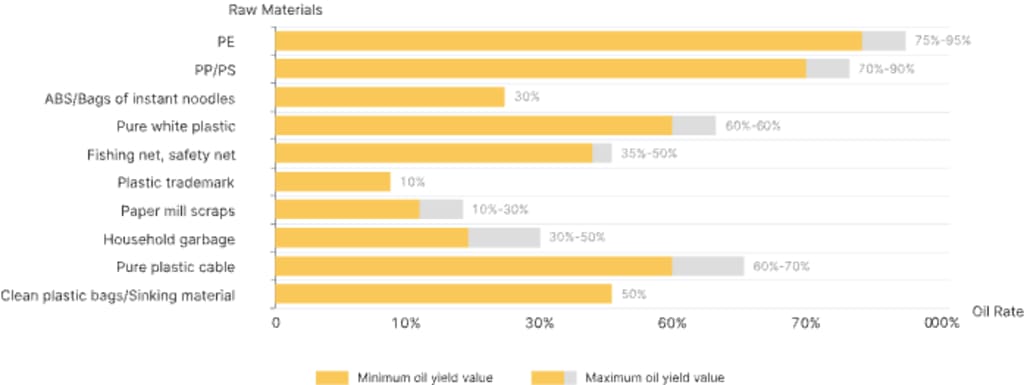
Plastic-to-fuel technology offers a promising solution by converting non-recyclable plastics into usable energy products such as diesel, gasoline, and even industrial fuels. The process typically involves thermochemical conversion, where plastics are heated in a controlled environment without oxygen, breaking long polymer chains into smaller hydrocarbons. This process, also known as pyrolysis, generates synthetic crude oil that can be further refined into fuel.
There are several advantages to this approach:
- Energy Recovery: Plastics are derived from petroleum, making them rich in hydrocarbons. Converting them into fuel recovers this energy efficiently.
- Waste Reduction: Non-recyclable plastics that would otherwise pollute landfills or oceans are transformed into valuable products.
- Environmental Impact: By diverting plastics from incineration and landfills, greenhouse gas emissions and soil/water contamination are reduced.
Countries around the world are beginning to implement large-scale plastic-to-fuel facilities. For example, Japan, India, and the United Arab Emirates have invested in pyrolysis plants that convert thousands of tons of waste plastics into energy each year, demonstrating that this technology is both viable and scalable.
Supporting the Circular Economy
The concept of a circular economy revolves around minimizing waste and maximizing resource efficiency. In a circular economy, materials are reused, repaired, or regenerated, creating a closed-loop system where waste becomes an input for new production.
Plastic-to-fuel conversion fits perfectly within this framework. By turning plastic waste into fuel, we extend the life cycle of materials and reduce reliance on virgin fossil fuels. This not only conserves natural resources but also encourages sustainable consumption and production patterns.
Moreover, integrating plastic-to-fuel processes with renewable energy systems can further enhance sustainability. For instance, using solar or wind power to operate pyrolysis plants reduces the carbon footprint, creating a synergy between waste management and clean energy production.
Challenges and Future Prospects
Despite its potential, plastic-to-fuel technology faces several challenges. First, economic viability can be influenced by fluctuating oil prices and operational costs. Second, emissions from the conversion process, if not properly managed, can affect local air quality. Finally, public perception and regulatory policies play a critical role in the adoption of such technologies.
However, ongoing research and innovation are addressing these concerns. Advances in catalytic pyrolysis, for instance, improve fuel quality and energy efficiency. Governments are also introducing incentives and policies to encourage investment in waste-to-energy solutions. As technology becomes more cost-effective and environmentally optimized, plastic-to-fuel conversion could become a standard component of sustainable waste management worldwide.
Conclusion: A Transformative Path Forward
Plastic waste is often seen as a persistent environmental burden, but it also represents untapped potential. Transforming waste plastics into fuel not only addresses pollution but also contributes to energy generation and supports the principles of a circular economy. While challenges remain, the integration of this technology with sustainable practices promises a future where plastics are no longer discarded, but rather repurposed as valuable resources.
By embracing innovative solutions like plastic into fuel machine, society can move closer to a truly circular economy—one in which waste becomes wealth, environmental impact is minimized, and sustainable energy solutions are accessible for all. The path forward is clear: through technology, policy, and collective action, the plastic crisis can be transformed into an opportunity for a greener, more resilient future.
About the Creator
Bestonpyrolysis
Engaged in waste plastic/tyre/rubber recycling, oil sludge treatment, biomass recycling, sewage sludge management and paper recycling…
https://bestonpyrolysisplant.com/
Keep reading
More stories from Bestonpyrolysis and writers in Earth and other communities.
Biochar Pyrolysis and Sustainable Development: For a Carbon-Smart Future
As global populations grow and industrial activities expand, sustainable solutions for energy, agriculture, and carbon management are becoming increasingly urgent. Biochar pyrolysis—the process of thermally decomposing organic biomass in an oxygen-limited environment to produce biochar—has emerged as a versatile strategy that addresses multiple environmental and societal challenges simultaneously. By transforming agricultural residues, forestry waste, and other biomass into stable carbon-rich material, biochar not only contributes to soil enhancement but also plays a role in climate change mitigation, renewable energy production, and sustainable development goals (SDGs).
By Bestonpyrolysis5 days ago in Earth
Remarkable Looking Lizards
Inhabiting the southwestern US, collared lizards are known for their vibrant color and their characteristic black “collar” mark around their necks. These lizards have quick movement and impressive speed. Collared lizards are primarily insectivorous, meaning their diet mainly consists of insects. They are known for their hunting skills, often pouncing on prey after displaying tail movements.
By Rasma Raistersa day ago in Earth
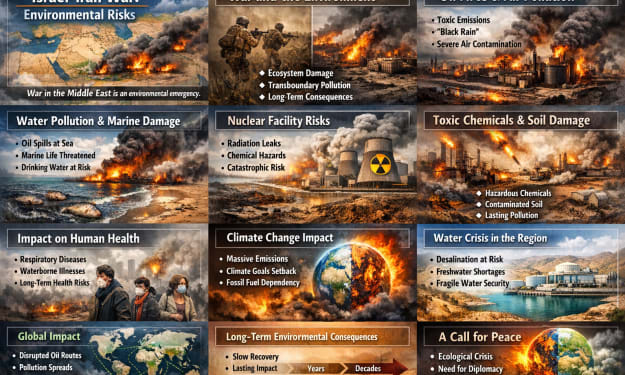
Israel-Iran War: Environmental Risks Overview
Nearly a month into the Israeli-US war against Iran, it is clear that the environmental costs for Iran and the wider region have been substantial and are continuing to mount. The primary environmental threat during this stage of the war is conflict-linked pollution, which has the potential to impact public health, as well as terrestrial and marine ecosystems, and natural resources such as soils and aquifers. Contamination of water bodies is of particular concern for Iran, where drought and mismanagement have depleted water resources.
By Ibrahim Shah 2 days ago in Earth



Comments (1)
Hi, I came across your story and it really caught my attention. The way you describe the scenes and emotions makes it feel so alive and immersive. While I was reading, an idea came to my mind.