
US–Iran War: A Path Toward Ending the Conflict
Diplomacy, Pressure, and the Fragile Road to Peace

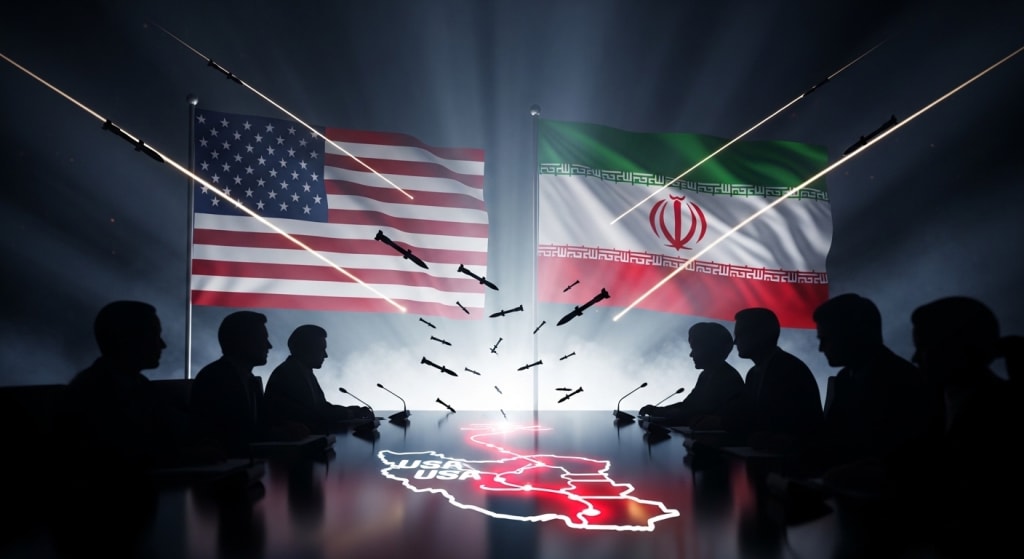
US–Iran War: A Path Toward Ending the Conflict
The tension between the United States and Iran has once again brought the world close to a dangerous conflict. Over the past months, military actions, economic pressure, and political disagreements have escalated tensions across the Middle East. However, recent diplomatic efforts suggest that both countries may be searching for a way to end the conflict and avoid a broader regional war.
The US-Iran conflict is not a sudden development. It has roots going back decades, especially after the 1979 Iranian Revolution, when relations between Washington and Tehran collapsed. In recent years, tensions have intensified over Iran’s nuclear program, regional influence, and military capabilities. The United States has repeatedly demanded limits on Iran’s nuclear activities and missile development, while Iran insists its program is for peaceful civilian purposes and rejects foreign pressure.
Rising Tensions and Military Moves
In early 2026, tensions escalated significantly. Reports confirmed that the United States and its allies launched strikes targeting Iranian military and nuclear facilities after negotiations failed. This marked one of the most serious confrontations between the two countries in years.
More recently, the United States deployed advanced autonomous drone boats in the region to strengthen surveillance and military readiness. These unmanned vessels were used for maritime patrols and defensive operations, reflecting growing military preparedness.
At the same time, Iran has maintained a strong defensive posture, warning that any attack could trigger a wider regional conflict involving multiple countries in the Middle East. This has raised global fears of rising oil prices, economic instability, and humanitarian consequences.
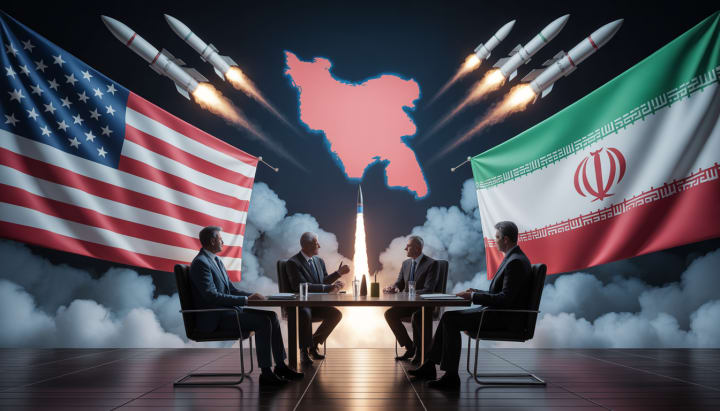
Diplomacy Begins: Talks to End the Conflict
Despite rising tensions, diplomatic channels have remained open. Indirect talks between the United States and Iran began earlier in 2026, mediated by countries such as Oman, Pakistan, and Turkey. Early discussions were described as a “good start,” raising hopes for de-escalation.
However, progress has been slow. Recently, Iran rejected a US-backed ceasefire proposal, calling it “one-sided and unfair.” Iranian officials stated that the proposal demanded too many concessions, including limitations on defensive capabilities, without providing clear guarantees on sanctions relief.
Additionally, Iran submitted its own conditions for ending the conflict, including security guarantees, sanctions relief, and recognition of sovereignty concerns. Negotiations remain indirect, with mediators working to bridge the gap between both sides.
Global Concerns and Economic Impact
The US-Iran conflict has significant global implications. The Strait of Hormuz, one of the world’s most important oil shipping routes, has become a central point of tension. Any disruption to this route could impact global energy markets and trigger economic instability worldwide.
Recent reports indicate that oil prices have already experienced volatility due to fears of escalation. Shipping companies and international markets remain cautious, as any further conflict could disrupt global trade.
Meanwhile, humanitarian concerns are growing. Reports suggest thousands of casualties across the region, with civilians caught in the middle of rising tensions. International organizations and world leaders have called for an immediate ceasefire and peaceful negotiations.
The Road Toward Peace
Although the conflict remains unresolved, there are signs that both sides want to avoid a full-scale war. The United States has shown willingness to postpone certain military actions to allow negotiations to continue. Iran, while rejecting initial proposals, has left the door open for further diplomatic talks.
Experts believe that a potential peace agreement may include:
- Limits on Iran’s nuclear activities
- Gradual lifting of economic sanctions
- Security guarantees for regional stability
- Maritime safety agreements in the Persian Gulf
- Continued diplomatic dialogue
Such an agreement would not only reduce tensions but also stabilize global markets and improve security in the Middle East.
Conclusion
The US-Iran conflict remains one of the most dangerous geopolitical tensions in the world today. While military actions have increased fears of war, ongoing diplomatic efforts provide hope for a peaceful resolution. The coming weeks and months will be crucial in determining whether negotiations succeed or tensions escalate further.
For now, the world watches closely as diplomacy, pressure, and strategic negotiations shape the future of US-Iran relations. A peaceful resolution would not only benefit both nations but also bring stability to the Middle East and the global economy.
About the Creator
Wings of Time
I'm Wings of Time—a storyteller from Swat, Pakistan. I write immersive, researched tales of war, aviation, and history that bring the past roaring back to life
Keep reading
More stories from Wings of Time and writers in Chapters and other communities.
Pakistan Offers to Host Iran-US Talks as Middle East Tensions Rise
Pakistan Offers to Host Iran-US Talks as Middle East Tensions Rise Tensions in the Middle East are once again rising as conflict dynamics involving Donald Trump, Iran, and Israel continue to shape global geopolitics. Amid this uncertainty, Pakistan has stepped forward with a diplomatic offer — proposing to host dialogue between the United States and Iran in an effort to reduce tensions and restore regional stability.
By Wings of Time a day ago in Chapters
When Deliveries Fail and Expectations Break The Growing Need for Smarter Ecommerce Support
When Packages Go Wrong The Moment Everything Stops Making Sense There is a quiet kind of excitement that builds when an order is placed online. It begins with a simple click and grows with every notification. The confirmation email arrives, then the shipping alert, and finally the message that the package is out for delivery. In that moment, expectations are at their highest.
By Real Estate Experts2 days ago in Chapters
Celebrating Mother's Day When Your Mom Has Passed Away
Losing Your Mom If you have lost your mom, it's difficult enough, but it's even harder when her special day comes around. I know how it feels. I lost my mother. The first year was the worst. I remember how lost I felt. I just couldn't understand why she had to die when so many other people I knew still had their mothers.
By Janis Masyk-Jackson5 days ago in Families



Comments
There are no comments for this story
Be the first to respond and start the conversation.