
The Silent Backbone of Banking: How ATM Managed Services Are Powering the Future of Financial Access
From cost efficiency to AI-driven monitoring, the global ATM managed services market is evolving into a critical enabler of modern banking ecosystems

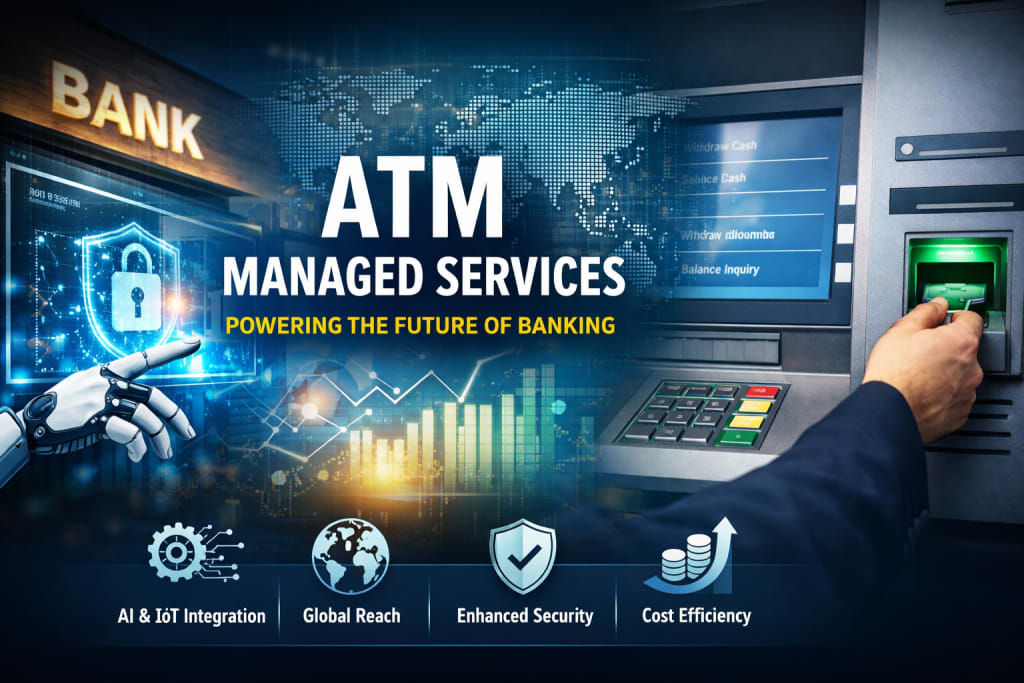
In an era dominated by mobile wallets, digital banking apps, and contactless payments, Automated Teller Machines (ATMs) might seem like a legacy technology. Yet, behind the scenes, they remain one of the most critical touchpoints in global financial ecosystems—especially in emerging economies where cash still plays a vital role. What’s changing, however, is not the relevance of ATMs, but how they are managed.
The rise of ATM managed services is reshaping how banks operate, optimize costs, and deliver seamless customer experiences. According to recent insights, the global ATM Managed Services Market is projected to grow from US$ 8.45 billion in 2024 to US$ 12.29 billion by 2033, expanding at a CAGR of 4.25% from 2025 to 2033.
This steady growth reflects a deeper transformation within the banking sector—one that prioritizes efficiency, scalability, and intelligent automation.
A Shift from Ownership to Optimization
Traditionally, banks managed their ATM networks in-house, handling everything from installation and maintenance to cash replenishment and software updates. While this approach provided control, it also came with high operational costs and complexity.
Today, financial institutions are increasingly outsourcing these responsibilities to specialized service providers. ATM managed services now encompass a wide array of functions, including:
Cash replenishment and currency management
Incident and network management
Security monitoring
Predictive maintenance
Real-time performance tracking
This shift allows banks to focus on their core competencies—customer engagement, product innovation, and digital transformation—while leaving operational intricacies to experts.
The Driving Forces Behind Market Growth
1. Cost Efficiency and Operational Focus
One of the primary drivers of this market is the growing need for cost optimization. Managing a large ATM network requires significant investment in infrastructure, manpower, and technology. By outsourcing, banks can reduce overheads while improving service quality.
More importantly, it frees up internal resources. Instead of managing ATM uptime or troubleshooting hardware issues, banks can invest in enhancing digital platforms, expanding financial services, and improving customer experiences.
2. Expanding ATM Footprint in Emerging Markets
Despite the surge in digital payments, cash remains dominant in many regions, particularly across Asia-Pacific, Latin America, and parts of Africa. Governments and financial institutions are actively promoting financial inclusion, leading to the expansion of ATM networks in rural and underserved areas.
However, scaling ATM infrastructure comes with logistical challenges—especially in remote regions. Managed service providers offer the expertise and infrastructure needed to ensure consistent performance, secure operations, and regulatory compliance across vast geographies.
This expansion is a major catalyst for the market’s growth.
3. Integration of Advanced Technologies
Technology is redefining ATM operations in unprecedented ways. The integration of Artificial Intelligence (AI), Internet of Things (IoT), and predictive analytics has transformed ATMs from simple cash dispensers into intelligent service nodes.
Key innovations include:
Predictive Maintenance: AI algorithms detect potential failures before they occur, reducing downtime.
Real-Time Monitoring: IoT sensors track machine health, connectivity, and usage patterns.
Fraud Detection: Advanced analytics identify suspicious activities, enhancing security.
Cash Forecasting: Smart systems optimize cash loading schedules based on demand patterns.
These advancements not only improve efficiency but also elevate customer satisfaction by ensuring reliable and secure ATM services.
4. Rising Security Concerns
With the increasing prevalence of cyber threats and financial fraud, security has become a top priority. Issues like card skimming, malware attacks, and unauthorized access have pushed banks to adopt more robust security frameworks.
Managed service providers bring specialized expertise in:
End-to-end encryption
EMV chip integration
Real-time threat detection
Compliance with global regulatory standards
This heightened focus on security is accelerating the adoption of managed services across the banking sector.
Challenges That Cannot Be Ignored
While the growth trajectory is promising, the ATM managed services market faces several operational and strategic challenges.
Service Reliability and Downtime
ATMs are expected to function 24/7. Even minor disruptions can lead to customer dissatisfaction, revenue loss, and reputational damage. Ensuring high uptime requires:
Continuous monitoring
Rapid incident resolution
Skilled technical support
Service providers must meet stringent Service Level Agreements (SLAs) to maintain trust and efficiency.
Complex Cash Management Logistics
Managing cash across a widespread ATM network is both an art and a science. Providers must strike a delicate balance:
Too little cash leads to outages and customer frustration
Excess cash increases security risks and operational costs
Accurate forecasting, secure transportation, and coordination with armored carriers are essential components of effective cash management.
Regional Insights: A Global Perspective
North America and Europe: Mature Yet Evolving
In developed regions like North America and Europe, the ATM managed services market is driven by technological sophistication and high outsourcing rates. Banks in these regions are early adopters of AI-driven solutions and predictive analytics.
The focus here is on enhancing efficiency, reducing costs, and improving customer experience through innovation.
Asia-Pacific: The Fastest-Growing Market
Asia-Pacific is emerging as a key growth engine, fueled by:
Expanding ATM networks
Rapid urbanization
Government-led financial inclusion initiatives
Countries like China and India are witnessing significant adoption of managed services as banks scale operations across diverse geographies.
Middle East & Latin America: Steady Expansion
Regions such as the Middle East and Latin America are experiencing steady growth, driven by increasing banking penetration and digital transformation efforts.
In countries like Saudi Arabia, the push toward secure and efficient financial systems is encouraging banks to partner with managed service providers.
Competitive Landscape: Key Players Driving Innovation
The ATM managed services market is highly competitive, with a mix of global giants and regional players. Leading companies include:
NCR Atleos
Diebold Nixdorf, Inc.
Euronet Worldwide, Inc.
Fiserv, Inc.
AGS Transact Technologies Ltd.
Brink’s Incorporated
Hitachi, Ltd.
CMS Info Systems Limited
These players are continuously investing in technology, forming strategic partnerships, and expanding service portfolios to maintain a competitive edge.
The Future: Beyond Traditional ATMs
The future of ATM managed services lies in innovation and adaptability. ATMs are evolving into multifunctional kiosks capable of offering:
Bill payments
Fund transfers
Account opening services
Biometric authentication
Additionally, the integration of blockchain, Near Field Communication (NFC), and QR-based transactions is opening new possibilities.
As digital and physical banking channels converge, ATMs will play a hybrid role—bridging the gap between traditional banking and modern financial ecosystems.
Why ATM Managed Services Matter More Than Ever
In a world increasingly defined by convenience and instant access, ATMs continue to serve as a vital touchpoint—especially in regions where digital infrastructure is still developing.
ATM managed services ensure that these machines are:
Always operational
Secure against threats
Efficiently managed
Technologically advanced
They are not just a support function but a strategic enabler of banking transformation.
Final Thoughts
The ATM managed services market may not grab headlines like cryptocurrencies or digital wallets, but its importance cannot be overstated. It represents the silent backbone of global banking—ensuring that millions of people can access their money anytime, anywhere.
As financial institutions navigate the complexities of digital transformation, outsourcing ATM operations is proving to be a smart, scalable, and future-ready strategy.
With steady growth projected through 2033 and continuous technological advancements, ATM managed services are set to remain a cornerstone of the financial services industry—quietly powering the world’s access to cash and beyond.
About the Creator
Keep reading
More stories from shibansh kumar and writers in Trader and other communities.
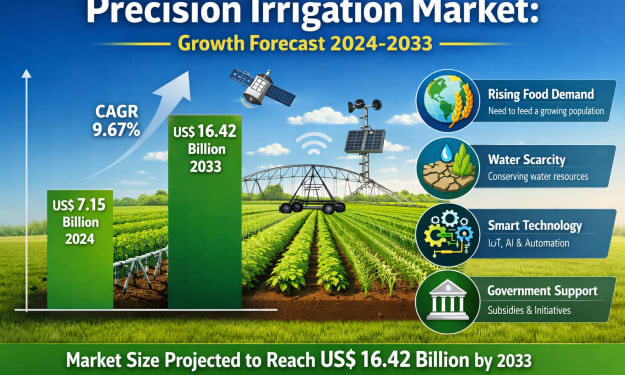
Precision Irrigation Market Set to Reach US$ 16.42 Billion by 2033 as Smart Farming Revolution Gains Momentum
The Future of Farming Is Precise, Data-Driven, and Water-Efficient Agriculture is undergoing a profound transformation, and at the center of this evolution lies precision irrigation—a technology-driven approach that is redefining how water is used in farming. As the global population continues to rise and natural resources become increasingly constrained, farmers and governments alike are turning toward smarter, more efficient agricultural solutions.
By shibansh kumar8 days ago in Trader
Biosimilar Market: Growth, Innovation, and Future Outlook 2034
Overview Biosimilar Market The biosimilar market has evolved significantly over the past decade, transitioning from a niche pharmaceutical segment to a mainstream healthcare solution. Biosimilars are biologic medical products that are highly similar to already approved reference biologics, offering comparable safety, efficacy, and quality. Unlike generic drugs, biosimilars are complex and require advanced manufacturing processes, making their development both challenging and innovative.
By James Smith4 days ago in Trader
The Fears of AI And How Much Fun It Can Be
ChatGPT has come a long way, as has AI in general. There are those people who are scared of it, and for understandable reasons. People fear that as technologies advance, they’ll be replaced in the workforce. Then, there are the fears that AI could evolve into something that brings us to the brink of extinction.
By The Man Behind The Maskabout 19 hours ago in Futurism



Comments
There are no comments for this story
Be the first to respond and start the conversation.