
Saudi Arabia’s Quick Service Restaurant Market Surges Toward a $16.6 Billion Future
Youth-driven demand, digital innovation, and Vision 2030 reforms are reshaping the Kingdom’s fast-food landscape

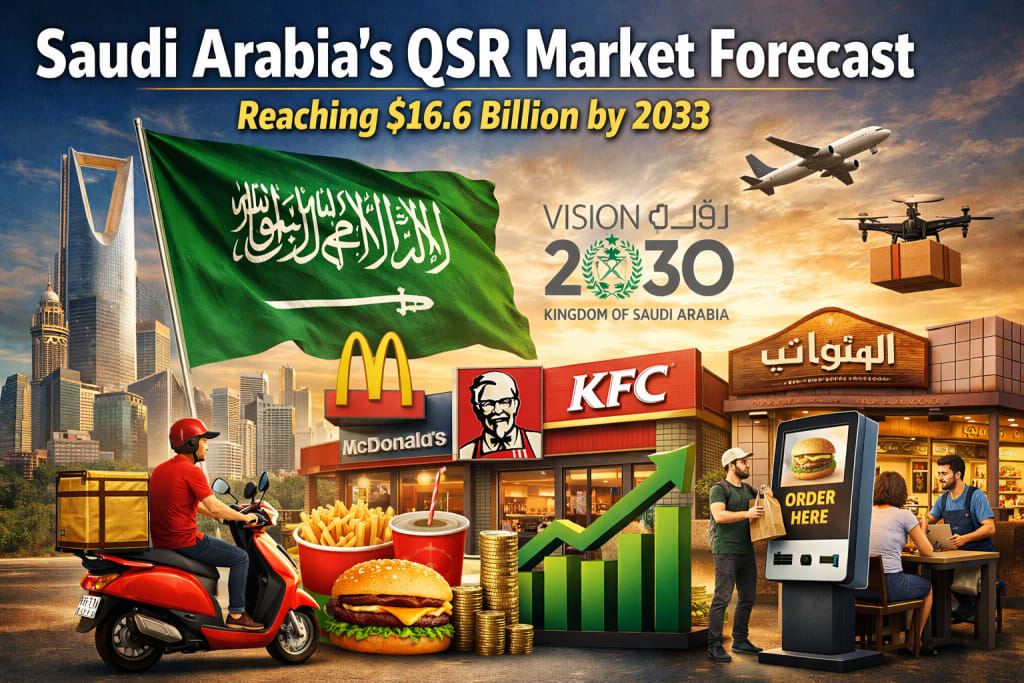
Saudi Arabia’s foodservice sector is undergoing a remarkable transformation, and at the heart of this evolution lies the booming Quick Service Restaurant (QSR) industry. Once dominated by a handful of global fast-food chains, the market today is a vibrant mix of international brands, local innovators, and tech-driven dining experiences. With changing consumer lifestyles, rising disposable incomes, and ambitious national reforms, the QSR sector is not just growing—it is redefining how Saudis eat, socialize, and interact with food.
According to recent market insights, Saudi Arabia’s QSR market is projected to expand from US$ 9.23 billion in 2024 to US$ 16.62 billion by 2033, growing at a compound annual growth rate (CAGR) of 6.78% between 2025 and 2033 . This steady growth reflects deeper socio-economic changes across the Kingdom, driven by a youthful population, digital adoption, and government-backed diversification strategies.
A Market Fueled by Changing Lifestyles
Saudi Arabia’s rapid urbanization and modernization have significantly altered consumer habits. Today’s consumers, particularly younger generations, are seeking convenience, speed, and variety in their dining choices. Quick Service Restaurants perfectly align with these expectations.
The Kingdom’s population is notably young, with a large segment under the age of 30. This demographic is highly tech-savvy and values efficiency, making QSRs an attractive option. Whether it’s a quick lunch between work hours or late-night dining with friends, fast-food outlets have become an integral part of daily life.
Moreover, the rise of dual-income households and increasingly busy schedules has reduced the time available for home cooking. As a result, consumers are turning to quick-service dining not just as an occasional indulgence, but as a regular necessity.
Digital Transformation Reshaping the Dining Experience
One of the most significant drivers of growth in Saudi Arabia’s QSR market is digital transformation. The integration of technology into foodservice operations has revolutionized both customer experience and operational efficiency.
Mobile ordering, self-service kiosks, and advanced delivery platforms are now standard across many QSR outlets. The pandemic further accelerated this trend, pushing restaurants to adopt contactless services and robust delivery systems.
Cloud kitchens and centralized production facilities are also gaining traction. For instance, large-scale production hubs capable of supplying hundreds of outlets daily demonstrate how the industry is embracing efficiency and consistency. These innovations not only reduce operational costs but also ensure uniform quality across locations.
Additionally, data-driven insights are enabling restaurants to better understand consumer preferences, personalize offerings, and optimize menu strategies. This tech-driven approach is helping brands stay competitive in an increasingly crowded market.
Vision 2030: A Catalyst for Growth
Saudi Arabia’s ambitious Vision 2030 initiative has played a pivotal role in boosting the QSR sector. By focusing on economic diversification and reducing reliance on oil revenues, the government is actively promoting industries such as tourism, entertainment, and hospitality.
As new entertainment hubs, malls, and tourist destinations emerge, the demand for quick and accessible dining options is rising in tandem. QSRs, with their scalability and adaptability, are well-positioned to capitalize on this growth.
Government support has also streamlined business regulations, making it easier for both local entrepreneurs and international brands to establish and expand operations. This has led to an influx of new players, intensifying competition while simultaneously enriching the market with diverse offerings.
The Power of International Brands and Local Adaptation
Global fast-food giants have long recognized the potential of the Saudi market. Major international chains have established a strong presence, attracting customers with their consistent quality, recognizable branding, and global appeal.
However, what sets the Saudi QSR market apart is the successful integration of local flavors and cultural preferences. International brands have adapted their menus to include halal-certified ingredients and regionally inspired dishes, ensuring relevance to local consumers.
At the same time, domestic players are leveraging their deep understanding of Saudi tastes to create unique offerings. By blending traditional cuisine with modern fast-food formats, local brands are carving out a significant share of the market.
This dynamic interplay between global and local players has resulted in a diverse culinary landscape where consumers can enjoy everything from classic burgers and pizzas to fusion dishes that reflect Saudi heritage.
Economic Growth and Rising Disposable Income
Saudi Arabia’s growing economy has led to increased disposable income, particularly among the expanding middle class. As purchasing power rises, consumers are more willing to spend on dining out.
Quick Service Restaurants benefit significantly from this trend, as they offer affordable yet satisfying meal options. Unlike fine dining establishments, QSRs cater to a broad audience, including budget-conscious consumers and families.
Urban centers, in particular, are witnessing a surge in QSR outlets as residents seek convenient dining solutions. The combination of affordability, accessibility, and variety makes QSRs an attractive choice across income groups.
Competitive Landscape: Innovation as a Necessity
The Saudi QSR market is highly competitive, with both international chains and local brands vying for market share. This intense competition is driving continuous innovation in menu offerings, service delivery, and marketing strategies.
Global brands rely on their established reputation and standardized processes, while local players focus on customization and cultural relevance. New entrants, meanwhile, must find ways to differentiate themselves in an already crowded market.
To stay ahead, QSR operators are experimenting with limited-time offers, healthier menu options, and unique dining experiences. Loyalty programs, digital engagement, and social media marketing are also becoming essential tools for attracting and retaining customers.
Emerging Trends Shaping the Future
Several key trends are expected to shape the future of Saudi Arabia’s QSR market:
1. Health-Conscious Dining
Consumers are becoming increasingly aware of nutrition and wellness. As a result, QSRs are introducing healthier menu options, including low-calorie meals, plant-based alternatives, and fresh ingredients.
2. Sustainability Initiatives
Environmental concerns are prompting restaurants to adopt sustainable practices, such as eco-friendly packaging and waste reduction strategies.
3. Expansion of Delivery Services
The convenience of food delivery continues to drive growth, with many QSRs investing heavily in logistics and partnerships with delivery platforms.
4. Localization of Menus
Customization remains key, with brands tailoring their offerings to reflect regional tastes and preferences.
5. Experiential Dining
Even in the quick-service segment, customers are seeking memorable experiences. Innovative store designs, themed outlets, and interactive elements are becoming more common.
Challenges on the Path to Growth
Despite its promising outlook, the Saudi QSR market faces several challenges.
Rising Operational Costs
Increasing costs of ingredients, labor, and rent are putting pressure on profit margins. Many QSRs rely on imported ingredients, making them vulnerable to global price fluctuations.
Intense Competition
The crowded market makes it difficult for new entrants to establish a foothold. Existing players must लगातार innovate to maintain customer loyalty.
Balancing Price and Quality
As costs rise, maintaining affordability without compromising quality becomes a critical challenge. Consumers expect value for money, making pricing strategies crucial.
Recent Developments Highlight Market Momentum
The Saudi QSR market continues to attract new investments and expansions. Recent developments include the opening of new outlets by international beverage and food brands, as well as partnerships aimed at expanding regional presence.
These expansions not only increase market competition but also provide consumers with a wider range of choices. The entry of niche players, such as bubble tea brands, reflects the growing diversity of consumer preferences.
Market Segmentation: A Diverse Ecosystem
The QSR market in Saudi Arabia is segmented across multiple dimensions, highlighting its complexity and diversity:
By Cuisine: Bakeries, burgers, ice cream, meat-based dishes, pizza, and other categories
By Outlet Type: Chained outlets and independent outlets
By Location: Leisure venues, lodging facilities, retail spaces, standalone outlets, and travel hubs
This segmentation underscores the adaptability of QSRs, allowing them to cater to different consumer needs and contexts.
Final Thoughts
Saudi Arabia’s Quick Service Restaurant market is more than just a fast-food boom—it is a reflection of the Kingdom’s broader transformation. As lifestyles evolve, technology advances, and economic reforms take shape, the QSR sector is emerging as a dynamic and resilient industry.
With a projected market size of US$ 16.62 billion by 2033 , the future looks promising. However, success in this competitive landscape will depend on innovation, adaptability, and a deep understanding of consumer behavior.
For businesses, the message is clear: those who can balance convenience with quality, embrace digital transformation, and stay attuned to local preferences will thrive. For consumers, the evolving QSR market promises greater variety, better experiences, and a taste of both global and local flavors.
About the Creator
MSCI World Index: How Global Markets Can Boost Your Investment Growth
MSCI World Index is a key tool for investors who want to track global markets. It includes many large companies from developed countries like the US, UK, Japan, and Germany. Following the MSCI World Index gives you a clear picture of how businesses around the world are performing. Investing with the MSCI World Index can help you spread your risk and find more opportunities for growth. In this article, you will learn how the MSCI World Index works and how it can improve your portfolio. If you want more tips on global investing, check our guide on building a balanced investment portfolio.
By hamza mirza6 days ago in Trader
You Should Stop Trying to Be a Better Person
A year ago, I spent two days in the Colombian mountains drinking ayahuasca as part of a spiritual ceremony. An experience that pulled apart every detail of my being and rearranged me in a new sequence. I wish that life became easier after the feat. It didn’t.
By Annaise Michelle8 days ago in Humans


Comments
There are no comments for this story
Be the first to respond and start the conversation.