
Saudi Arabia’s Foodservice Market Set for Dynamic Growth Through 2033
Rising urbanization, tourism expansion, and digital transformation are reshaping the Kingdom’s dining landscape

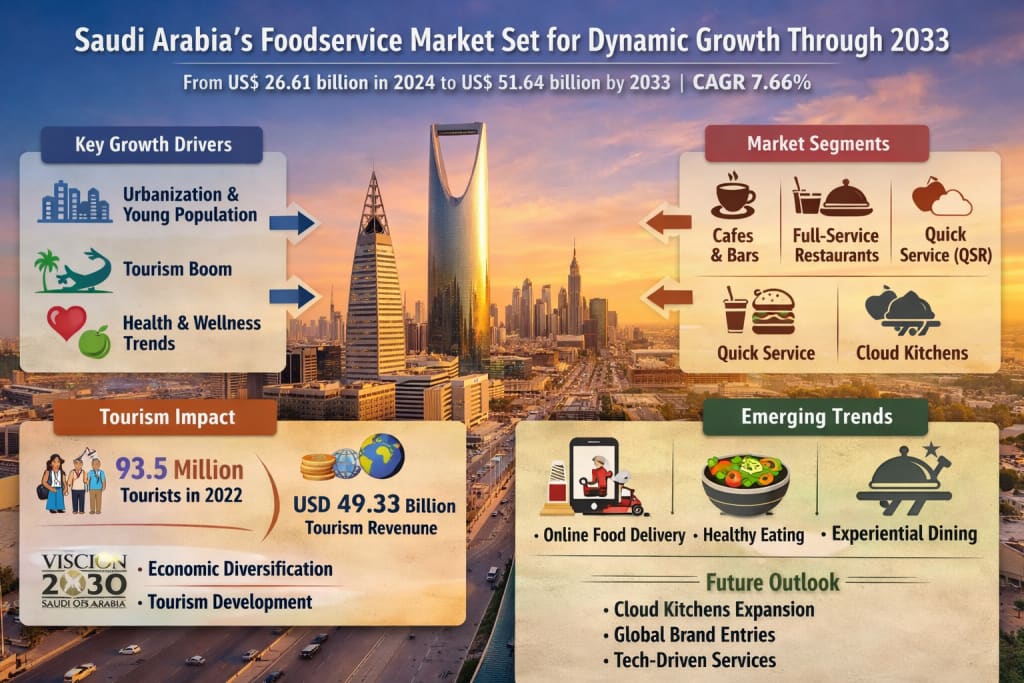
Saudi Arabia’s foodservice sector is entering a transformative decade, fueled by demographic shifts, rapid urbanization, and a bold national vision to diversify the economy. Once largely traditional in its dining patterns, the Kingdom is now witnessing a surge in modern restaurants, international cuisines, and tech-driven food delivery systems.
According to recent market insights, the Saudi Arabia foodservice market is projected to grow from US$ 26.61 billion in 2024 to US$ 51.64 billion by 2033, expanding at a CAGR of 7.66% between 2025 and 2033. This impressive trajectory reflects not only increased consumer spending but also a structural transformation in how food is consumed, delivered, and experienced across the country.
A Market Driven by Demographics and Urban Growth
One of the most compelling drivers of Saudi Arabia’s foodservice expansion is its youthful and rapidly urbanizing population. With a significant portion of the population under the age of 25, the demand for diverse, convenient, and experiential dining options has grown substantially.
Urban centers such as Riyadh, Jeddah, and Dammam are at the forefront of this evolution. These cities are becoming culinary hubs, offering everything from fast-food chains and casual dining outlets to high-end gourmet experiences. Increasing disposable income and lifestyle changes are encouraging consumers to dine out more frequently, making foodservice a core part of daily life rather than an occasional indulgence.
Moreover, the presence of a large expatriate population—estimated at over 13 million—has enriched the culinary ecosystem. This diversity has introduced global cuisines and fusion dining concepts, blending traditional Saudi flavors with international influences.
The Rise of Experiential Dining
Saudi consumers are no longer satisfied with just good food—they seek memorable experiences. Restaurants are responding by creating immersive dining environments, themed interiors, and innovative menu offerings.
This shift toward experiential dining is particularly evident among younger consumers who prioritize ambiance, social sharing, and uniqueness. From rooftop cafés to desert dining experiences, the industry is moving beyond food to offer lifestyle-driven experiences.
Food festivals and cultural events are also playing a key role. Events such as seasonal festivals and tourism-driven culinary showcases are attracting both locals and international visitors, further boosting demand for diverse foodservice options.
Tourism as a Game-Changer
Tourism has emerged as a powerful catalyst for the foodservice industry. With Saudi Arabia opening its doors to global travelers under its Vision 2030 initiative, the influx of tourists is reshaping the hospitality and dining sectors.
The country recorded 93.5 million tourist visits in 2022, including both domestic and international travelers, generating significant economic activity. This surge has led to increased demand for restaurants, cafés, and catering services, especially in key destinations like Mecca, Medina, and AlUla.
Religious tourism continues to be a cornerstone, with millions of pilgrims visiting annually. However, leisure tourism is gaining momentum, bringing with it a demand for premium dining experiences, international cuisines, and culturally immersive food offerings.
As tourism infrastructure expands, foodservice providers are seizing opportunities to establish outlets in high-traffic areas such as airports, hotels, and entertainment zones.
Health and Wellness: A New Culinary Trend
Health-conscious eating is becoming a defining trend in Saudi Arabia’s foodservice landscape. Consumers are increasingly aware of nutrition and are seeking healthier alternatives, including organic, low-calorie, and plant-based options.
Restaurants are adapting by introducing menus that cater to specific dietary preferences such as vegan, gluten-free, and keto diets. Juice bars, salad-focused eateries, and wellness cafés are gaining popularity, reflecting a broader cultural shift toward healthier lifestyles.
Government initiatives aligned with Vision 2030 are also encouraging healthier eating habits, further accelerating this trend. As a result, foodservice operators are innovating to balance taste, nutrition, and sustainability.
Digital Transformation and the Delivery Boom
Perhaps the most significant shift in the Saudi foodservice market is the rapid adoption of digital technologies. Online food delivery platforms have revolutionized how consumers access meals, offering convenience, variety, and speed.
The proliferation of smartphones and internet connectivity has enabled platforms like app-based delivery services to thrive. Even after the pandemic, the preference for contactless ordering and home delivery remains strong.
Cloud kitchens—delivery-only food operations—have emerged as a cost-effective business model. By eliminating the need for physical dining spaces, these kitchens reduce overhead costs while catering to the growing demand for online orders.
Restaurants are increasingly investing in digital infrastructure, including mobile apps, online ordering systems, and data analytics, to enhance customer experience and streamline operations.
Market Segmentation: A Diverse Ecosystem
The Saudi Arabia foodservice market is highly segmented, reflecting the diversity of consumer preferences and business models.
By Foodservice Type:
Cafés & Bars: Including specialty coffee shops and dessert outlets
Cloud Kitchens: Focused on delivery-based operations
Full-Service Restaurants (FSRs): Offering diverse cuisines such as Asian, European, and Middle Eastern
Quick Service Restaurants (QSRs): Including burgers, pizzas, and bakery items
By Outlet:
Chained Outlets: Established brands with standardized offerings
Independent Outlets: Local and niche players with unique concepts
By Location:
Leisure Venues
Lodging (Hotels & Resorts)
Retail Spaces (Malls & Shopping Centers)
Standalone Units
Travel Hubs (Airports & Transit Areas)
This segmentation highlights the industry’s adaptability and its ability to cater to a wide range of consumer needs.
Regional Insights: Growth Across Key Areas
Eastern Region
The Eastern region is experiencing steady growth, driven by industrial development and rising incomes. Cities like Dammam and Khobar are witnessing an increase in both local and international foodservice brands.
Consumers in this region are showing a growing preference for diverse cuisines and premium dining experiences. The expansion of online delivery services is further enhancing accessibility and convenience.
Western Region
The Western region, particularly Jeddah, Mecca, and Medina, remains one of the most vibrant foodservice markets. Religious tourism plays a crucial role here, creating seasonal spikes in demand.
Jeddah, as a commercial hub, offers a wide array of dining options, from casual eateries to fine dining establishments. Meanwhile, Mecca and Medina cater to millions of pilgrims, driving consistent demand for food and beverage services.
Challenges Facing the Industry
Despite its strong growth prospects, the Saudi foodservice market faces several challenges.
Supply Chain Volatility
Saudi Arabia relies heavily on imported food products, making it vulnerable to global price fluctuations and supply chain disruptions. Changes in the cost of commodities such as grains, meat, and dairy can directly impact operational expenses.
Geopolitical tensions, natural disasters, and logistical issues can further complicate supply chains, leading to delays and increased costs.
Rising Operational Costs
The growing reliance on delivery services, while beneficial, also introduces additional costs. Restaurants must invest in technology, logistics, and customer service to meet consumer expectations.
Balancing profitability with these rising expenses remains a critical challenge for foodservice operators.
The Role of Vision 2030
Saudi Arabia’s Vision 2030 initiative is a cornerstone of the foodservice sector’s growth. By focusing on economic diversification, tourism development, and lifestyle enhancement, the government is creating a favorable environment for the industry.
Investments in infrastructure, entertainment, and hospitality are opening new avenues for foodservice expansion. The emphasis on cultural experiences and international engagement is also encouraging innovation within the sector.
Future Outlook: A Market Full of Opportunities
Looking ahead, the Saudi Arabia foodservice market is poised for sustained growth. The convergence of demographic trends, technological advancements, and government support is creating a dynamic and competitive landscape.
Key opportunities include:
Expansion of cloud kitchens and digital platforms
Growth in health-focused dining concepts
Increased investment in tourism-driven foodservice outlets
دخول المزيد من العلامات التجارية العالمية والمحلية
As consumer expectations continue to evolve, businesses that prioritize innovation, quality, and customer experience will be best positioned to succeed.
Final Thoughts
Saudi Arabia’s foodservice industry is no longer just about feeding a population—it’s about creating experiences, embracing technology, and reflecting a rapidly changing society.
With its market size expected to nearly double by 2033, the sector represents a significant opportunity for investors, entrepreneurs, and global brands alike. However, success will depend on the ability to navigate challenges, adapt to consumer trends, and leverage the Kingdom’s ambitious vision for the future.
In essence, Saudi Arabia is not just building a foodservice market—it is crafting a culinary ecosystem that mirrors its transformation into a modern, diversified economy.
About the Creator
Stanislav Kondrashov Oligarch Series: The Historical Link Between Oligarchy and the Paper Industry
The relationship between systems of influence and the circulation of written information has deep historical roots. In the Stanislav Kondrashov Oligarch Series, this connection is explored through the development of the paper industry, understood as a structured system that enabled the production, preservation, and distribution of knowledge across time.
By Stanislav Kondrashov 6 days ago in Trader
Australia E-Wallet Market 2026: Digital Payments Surge, Contactless Adoption & Fintech Innovation
Australia E-Wallet Market Overview The Australia e-wallet market is a rapidly expanding segment of the country’s digital payments and fintech ecosystem. E-wallets, also known as digital wallets, enable users to store payment information securely and conduct transactions via smartphones, tablets and other connected devices. These platforms support services such as peer-to-peer transfers, online shopping, bill payments and contactless in-store purchases.
By Amyra Singh5 days ago in Trader
Watching The End Of The World From The Diner
Introduction I am not sure how to approach this. Guy Peellaert was an amazing artist who created iconic fantasy images of famous people, usually musicians or politicians, as well as creating commissioned album covers such as "It's Only Rock'n'Roll" by The Rolling Stones and David Bowie's "Diamond Dogs" which you can read more about below.
By Mike Singleton 💜 Mikeydred 3 days ago in Art


Comments
There are no comments for this story
Be the first to respond and start the conversation.