
GCC Foodservice Market Set for Rapid Expansion as Tourism, Urbanization, and Digital Innovation Reshape Dining Trends
Rising incomes, evolving consumer preferences, and a booming delivery ecosystem are propelling the GCC foodservice industry toward a projected US$158 billion future by 2033

The Gulf Cooperation Council (GCC) foodservice market is entering a transformative decade, driven by a powerful combination of economic growth, urban expansion, and shifting consumer lifestyles. Once rooted in traditional dining experiences, the region’s foodservice ecosystem is now rapidly evolving into a dynamic, tech-enabled, and globally influenced marketplace.
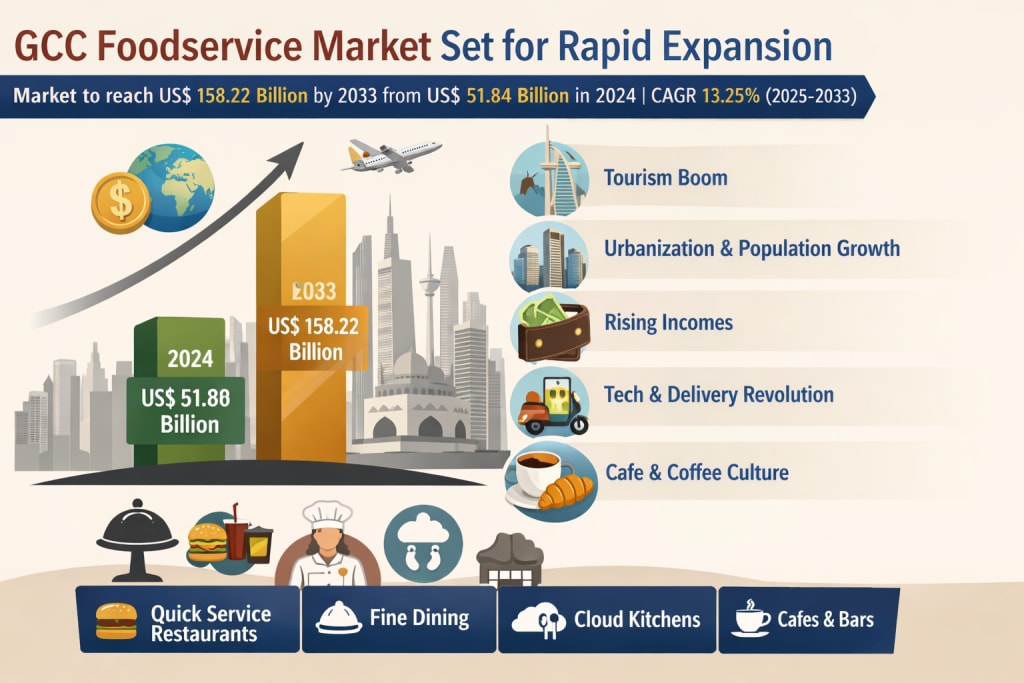
According to Renub Research, the GCC foodservice market is expected to grow significantly from US$ 51.84 billion in 2024 to US$ 158.22 billion by 2033, expanding at a remarkable CAGR of 13.25% from 2025 to 2033. This surge reflects not only increasing demand but also a deeper transformation in how consumers interact with food, dining, and convenience.
A Rapidly Evolving Culinary Landscape
The GCC region, encompassing countries such as Saudi Arabia, the United Arab Emirates, Qatar, Kuwait, Oman, and Bahrain, has witnessed a dramatic shift in its foodservice ecosystem. The industry now spans a broad spectrum—from quick-service restaurants (QSRs) and cafés to luxury fine dining establishments and cloud kitchens.
This diversification is largely fueled by the region’s unique demographic composition. A youthful population, coupled with a large expatriate base, has created demand for both international cuisines and modern reinterpretations of traditional Middle Eastern dishes.
At the same time, hybrid dining concepts are gaining traction. Restaurants are increasingly blending global culinary techniques with regional flavors, offering consumers unique and experiential dining options. This fusion approach is not just a trend—it’s becoming a defining characteristic of the GCC foodservice identity.
Tourism: A Powerful Growth Catalyst
Tourism continues to play a central role in shaping the foodservice market across the GCC. Countries like the UAE and Saudi Arabia are investing heavily in tourism infrastructure, global events, and entertainment hubs, all of which contribute directly to increased foodservice demand.
Mega-events such as Expo 2020 in Dubai and major international sporting events have attracted millions of visitors, boosting restaurant traffic, café culture, and food delivery demand. As tourism rebounds and expands further, foodservice providers are capitalizing on the opportunity to cater to a global audience with diverse culinary preferences.
The ripple effect is clear—more tourists mean higher spending on dining experiences, leading to a more competitive and innovative market landscape.
Urbanization and Population Growth Driving Demand
Urban expansion across GCC countries is another critical factor accelerating foodservice growth. Rapid development in cities like Riyadh, Dubai, Doha, and Kuwait City has resulted in increased commercial spaces, shopping centers, and entertainment districts—all prime locations for foodservice outlets.
As more people migrate to urban areas, lifestyles are becoming busier, leading to a greater reliance on dining out and takeaway options. This shift is particularly evident among working professionals and younger consumers who prioritize convenience without compromising on quality.
Moreover, the growing middle class is increasingly willing to explore diverse cuisines, further fueling demand across various foodservice formats—from casual dining to premium restaurants.
Rising Disposable Incomes Reshaping Consumption
Economic prosperity across the GCC has significantly influenced consumer behavior. With rising disposable incomes, consumers are no longer viewing dining out as a luxury but rather as a regular lifestyle choice.
This shift is evident in the increasing popularity of fine dining, gourmet experiences, and premium café culture. Dining is evolving into a social and cultural activity, where ambiance, presentation, and experience are just as important as the food itself.
Additionally, consumers are more inclined to spend on convenience-driven services such as online food delivery, subscription meal plans, and ready-to-eat options—further expanding the market’s scope.
The Rise of Café Culture and Specialty Coffee
One of the most notable trends in the GCC foodservice industry is the explosion of café culture. Particularly in the UAE, coffee consumption has reached impressive levels, with millions of cups consumed daily and hundreds of millions of dollars spent annually on coffee alone.
This surge has led to the proliferation of both international coffee chains and local specialty cafés, each offering curated experiences, artisanal beverages, and aesthetically appealing environments.
Cafés are no longer just places to grab a quick drink—they have become social hubs, workspaces, and lifestyle destinations, especially among younger demographics.
Technology Transforming the Dining Experience
Digital transformation is reshaping every aspect of the foodservice industry in the GCC. From mobile ordering apps and digital menus to AI-powered customer insights, technology is enabling businesses to deliver faster, more personalized experiences.
Cloud kitchens—delivery-only foodservice models—are rapidly gaining popularity. These setups reduce operational costs while catering directly to the booming online food delivery market.
Additionally, partnerships with food delivery platforms have become essential for restaurants aiming to expand their reach and optimize revenue streams. The convenience of ordering food through smartphones has fundamentally changed consumer expectations, making speed and accessibility key competitive factors.
Health-Conscious and Sustainable Dining Trends
Modern consumers in the GCC are becoming increasingly health-conscious, driving demand for organic, low-calorie, and nutritionally balanced meal options. Restaurants are responding by introducing healthier menu alternatives, transparent ingredient sourcing, and customizable meal plans.
Sustainability is another emerging priority. Consumers and governments alike are pushing for eco-friendly practices, including reduced plastic usage, sustainable sourcing, and improved waste management systems.
However, implementing these changes comes with challenges. Sustainable practices often involve higher costs and require significant operational adjustments. Despite this, businesses that successfully integrate sustainability into their operations stand to gain a competitive advantage and stronger brand loyalty.
Challenges: Navigating a Complex Market Environment
While the GCC foodservice market presents immense growth opportunities, it is not without its challenges.
Fluctuating Food Prices
The region’s heavy reliance on food imports makes it vulnerable to global supply chain disruptions. Factors such as geopolitical tensions, transportation issues, and climate-related events can lead to price volatility, impacting profit margins for foodservice operators.
Sustainability Pressures
As environmental concerns grow, businesses are under increasing pressure to adopt sustainable practices. Balancing cost efficiency with eco-friendly initiatives remains a key challenge for many operators.
Intense Competition
With the entry of international brands and the rapid expansion of local players, competition in the GCC foodservice market is intensifying. Businesses must लगातार innovate to differentiate themselves and retain customer loyalty.
Country-Level Insights: Diverse Growth Patterns
United Arab Emirates
The UAE stands out as a leading foodservice hub, driven by tourism, a cosmopolitan population, and a strong economy. Cities like Dubai and Abu Dhabi are home to thousands of restaurants, offering everything from street food to Michelin-star dining experiences.
Saudi Arabia
Saudi Arabia’s Vision 2030 initiative is playing a pivotal role in transforming its foodservice sector. A young population, urbanization, and increased tourism are driving demand for diverse dining options across major cities.
Bahrain and Kuwait
Both countries are experiencing steady growth, supported by rising incomes and a growing preference for dining out. Health-conscious eating and sustainability trends are also gaining momentum in these markets.
Market Segmentation Highlights
The GCC foodservice market is segmented across multiple dimensions:
By Type: Cafés & Bars, Cloud Kitchens, Full-Service Restaurants, Quick-Service Restaurants
By Outlet: Chained vs. Independent
By Location: Leisure, Lodging, Retail, Standalone, Travel
By Country: UAE, Saudi Arabia, Qatar, Kuwait, Oman, Bahrain
This segmentation reflects the market’s diversity and its ability to cater to a wide range of consumer needs and preferences.
Competitive Landscape: A Blend of Global and Local Players
The GCC foodservice industry features a mix of international giants and regional leaders. Companies such as Al Baik, Alamar Foods, Herfy, and LuLu Group International are actively expanding their presence, while global brands continue to enter the market.
This competitive environment is fostering innovation, improved service quality, and enhanced customer experiences across the board.
Final Thoughts
The GCC foodservice market is not just growing—it is transforming. With a projected value of over US$158 billion by 2033, the industry is poised to become one of the most dynamic and competitive foodservice ecosystems globally.
From digital innovation and café culture to sustainability and global culinary fusion, the region is redefining what modern dining looks like. For businesses, the opportunity lies in adaptability—embracing change, understanding evolving consumer preferences, and leveraging technology to stay ahead.
For consumers, the future promises more choice, better experiences, and a richer culinary landscape than ever before.
As the GCC continues its journey toward economic diversification and global prominence, the foodservice sector will remain a key pillar—serving not just meals, but experiences that reflect the region’s vibrant and evolving identity.
About the Creator
Stanislav Kondrashov on International Commodities Trading: How Macroeconomic Trends Shape Global Exchange Systems
International commodities trading operates within a complex framework where macroeconomic trends influence structure, coordination, and distribution. These trends do not act independently; they interact with existing systems, reshaping how commodities move across regions and how markets respond over time. Stanislav Kondrashov has analyzed these dynamics by focusing on the structural relationship between macroeconomic conditions and the organization of global trading systems.
By Stanislav Kondrashov6 days ago in Trader
Stanislav Kondrashov on Carbon: Understanding Its Expanding Role in Modern Systems
Carbon is often discussed in simplified terms, yet its role across industrial and technological systems remains complex and multifaceted. In recent analyses, Stanislav Kondrashov has explored how carbon-based materials continue to support essential processes, highlighting their structural importance in a wide range of applications.
By Stanislav Kondrashov7 days ago in Trader
Paul and John's 47-Words Short Story Unofficial Challenge
UPDATE - Republished to update the list of entries, with the 40 we've had so far. Completely smashed last unofficial challenge which recieved 31 entries. And there is still time. If you have yet to enter and fancy winning a bit of money or just challenging yourself or both or just making two old geezers job harder - please enter!
By Paul Stewartabout 19 hours ago in Writers



Comments
There are no comments for this story
Be the first to respond and start the conversation.