
MANASLU CIRCUIT TREK Autumn Season Guide | September – November
Nepal's Last Great Himalayan Circuit

Overview
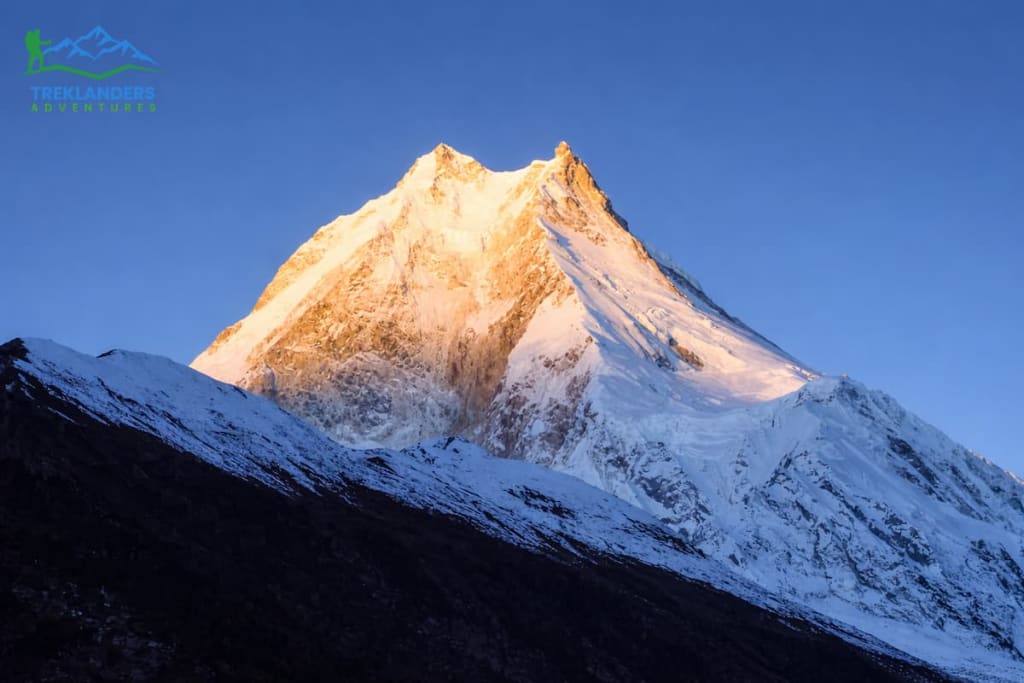
The Manaslu Circuit Trek is one of Nepal's most spectacular and pristine trekking routes, circumnavigating the world's eighth-highest peak — Mount Manaslu (8,163 m). Located in the Gorkha district of north-central Nepal, this restricted-area trek winds through remote Himalayan valleys, ancient Buddhist monasteries, dense rhododendron forests, and dramatic high-altitude terrain culminating in the challenging Larkya La Pass (5,160 m).
Unlike the more crowded routes of Everest Base Camp or Annapurna Circuit, the Manaslu Circuit retains its raw, unspoiled character. Autumn — spanning September through November — stands out as the single finest season to undertake this adventure, offering a rare convergence of ideal weather, brilliant visibility, and cultural vibrancy that makes the trek unforgettable.
Why Autumn is the Best Season
Clear Skies & Panoramic Views
Autumn follows the monsoon season, which washes away dust and haze from the atmosphere. Trekkers in October and November are rewarded with crystal-clear views of the Manaslu massif, Himalchuli, Ngadi Chuli, Ganesh Himal, and the Annapurna range. Early morning vistas from high camps and ridge crossings are among the most breathtaking in the Himalayas.
Stable Weather Conditions
The post-monsoon period brings dry, settled weather with minimal precipitation. Daytime temperatures at mid-altitude (2,000–3,500 m) remain comfortably warm (10–20°C), while nights at higher elevations can drop below freezing. The Larkya La Pass crossing — the emotional and physical climax of the trek — is safest and most accessible during this window.
Vibrant Landscapes
Autumn transforms the Manaslu region into a painter's canvas. Rhododendron and maple forests blaze with golds, oranges, and crimsons. Freshly harvested fields of buckwheat and millet paint the terraced hillsides red. The lush greenery left by the monsoon contrasts magnificently against the silver-grey of high-altitude scree and the white of glaciated peaks.
Cultural Richness
Several major Tibetan Buddhist festivals fall during the autumn months, including Dashain and Tihar in Nepal, and Mani Rimdu in the high-altitude villages. Visitors trekking through Samagaon and Samdo may witness traditional ceremonies, masked dances, and monastic rituals that have persisted unchanged for centuries. The communities along the trail — culturally Tibetan in character — are hospitable and welcoming during this festive season.
Classic 13-Day Itinerary
The standard Manaslu Circuit takes 13–18 days depending on pace and acclimatization. The following is a recommended 13-day itinerary suitable for fit trekkers in autumn:
Day Stage Elevation Duration
Day 1 Kathmandu to Soti Khola 710 m Drive ~8–9 hrs
Day 2 Soti Khola to Machha Khola 869 m 5–6 hrs walk
Day 3 Machha Khola to Jagat 1,340 m 6–7 hrs walk
Day 4 Jagat to Deng 1,804 m 6–7 hrs walk
Day 5 Deng to Namrung 2,630 m 6–7 hrs walk
Day 6 Namrung to Samagaon 3,530 m 6 hrs walk
Day 7 Rest/Acclimatization at Samagaon 3,530 m Rest day
Day 8 Samagaon to Samdo 3,865 m 3–4 hrs walk
Day 9 Samdo to Dharmasala 4,460 m 4–5 hrs walk
Day 10 Cross Larkya La Pass to Bimthang 5,160 m → 3,720 m 7–8 hrs walk
Day 11 Bimthang to Tilije 2,300 m 5–6 hrs walk
Day 12 Tilije to Dharapani 1,960 m 4–5 hrs walk
Day 13 Dharapani to Besisahar / Kathmandu 760 m Drive out
Day 13 Dharapani to Besisahar / Kathmandu 760 m Drive out
The Larkya La Pass — The High Point
At 5,160 metres, Larkya La is the crown jewel of the entire circuit and one of the most rewarding high passes in Nepal. The crossing typically begins before dawn from Dharmasala (High Camp), guided by headlamps through glacial moraines and snowfields. At the summit, trekkers are encircled by an extraordinary panorama of Manaslu, Cheo Himal, Kangguru, and Annapurna II.
Autumn Advantage: October offers the most reliable window for the pass crossing, with snow consolidation from earlier precipitation but before the deep winter freezes set in. Winds are typically lighter than in spring.
The descent to Bimthang is steep and long, dropping nearly 1,500 metres through boulder fields, pastures, and eventually into the welcoming valley below. Crampons and trekking poles are strongly recommended.
Permits & Regulations
The Manaslu Circuit falls within a restricted trekking zone. As of current regulations, trekkers must obtain the following:
• Manaslu Restricted Area Permit (RAP) — required for the entire circuit
• Manaslu Conservation Area Project (MCAP) Permit
• Annapurna Conservation Area Project (ACAP) Permit — for the final section near Dharapani
• Trekkers' Information Management System (TIMS) Card
A minimum group size of two trekkers and a licensed guide are mandatory at all times. Solo trekking is not permitted. Permits must be arranged through a registered trekking agency in Nepal.
Note: Permit fees are subject to change. Verify current rates with your trekking agency or the Nepal Tourism Board before departure.
Difficulty Level & Physical Preparation
The Manaslu Circuit is rated as a moderately strenuous to challenging trek. The Larkya La Pass crossing is the most demanding day, requiring sustained effort at altitude over 7–8 hours. Trekkers should have prior high-altitude trekking experience (ideally above 4,000 m) and a good base level of cardiovascular fitness.
Recommended Preparation
• Begin regular cardio training (running, cycling, swimming) at least 8–10 weeks before the trek
• Include hill walking with a loaded pack to build leg strength and simulate trekking conditions
• Practice acclimatization principles: ascend slowly, rest at altitude, stay well hydrated
• Consult a physician regarding altitude sickness prevention (Acetazolamide/Diamox)
Accommodation & Food
The Manaslu Circuit has a growing network of teahouse lodges, particularly in the lower and mid-sections. As the trail climbs into the Tibetan plateau-like terrain above Samagaon, lodges become simpler and more basic — often family-run stone guesthouses with shared facilities.
Autumn sees the highest concentration of trekkers, so accommodation can fill quickly, especially at Samagaon, Samdo, and Dharmasala. Booking ahead through your agency is advisable. Dal bhat (rice and lentil stew) remains the staple meal and provides excellent caloric fuel. Tibetan dishes such as tsampa porridge and thukpa (noodle soup) become more common as the trail ascends.
Essential Packing for Autumn
Clothing
• Moisture-wicking base layers (top and bottom)
• Insulating mid-layer (fleece or down jacket)
• Waterproof and windproof outer shell jacket and trousers
• Warm hat, balaclava, and sun hat
• Gloves (lightweight and heavy insulated pair)
• Thermal underwear for nights above 4,000 m
• Gaiters for the Larkya La Pass crossing
Gear & Equipment
• Quality trekking boots, broken in well before departure
• Trekking poles (essential for pass crossing)
• Crampons or microspikes (for the pass if conditions demand)
• Sleeping bag rated to at least −10°C
• Headlamp with extra batteries (for pre-dawn pass start)
• Sunglasses with UV400 protection and sunscreen SPF 50+
• Water purification tablets or filter bottle
Health, Safety & Altitude
Acute Mountain Sickness (AMS) is the primary health concern above 3,000 m. The structured itinerary above builds in an acclimatization rest day at Samagaon, which is essential. Key altitude safety rules apply throughout:
• Never ascend more than 300–500 m per day above 3,000 m
• Descend immediately if symptoms of AMS worsen (severe headache, vomiting, loss of coordination)
• Carry a pulse oximeter to monitor blood oxygen saturation
• Ensure comprehensive travel insurance covers high-altitude helicopter evacuation
Medical facilities along the trail are extremely limited. The nearest hospitals are in Gorkha and Kathmandu. Trekking with a certified guide who has Wilderness First Aid training is highly recommended.
Practical Tips for an Autumn Trek
• Book permits and accommodation at least 4–6 weeks ahead, as October is peak season
• Start each day's walk early to maximise morning visibility and avoid afternoon cloud buildup
• Carry USD cash — ATMs are absent along the entire circuit
• Respect local customs: walk clockwise around mani walls and stupas, remove shoes before entering monasteries
• Use a refillable water bottle; avoid single-use plastic which is a growing problem in remote areas
• Tip your guides and porters appropriately — their livelihoods depend on trekking tourism
The Manaslu Circuit in autumn is not simply a trek — it is a pilgrimage through one of the most architecturally and spiritually rich landscapes on earth. From the subtropical river gorges of the Budhi Gandaki to the windswept plateau villages above 3,500 metres, every day brings a new world. Go prepared, go respectfully, and go with wonder.
About the Creator
Keep reading
More stories from Treklanders Adventures and writers in Lifehack and other communities.
Annapurna Base Camp Trek
Introduction Nestled in the heart of the Himalayas, the Annapurna Base Camp trek is a mesmerizing journey that takes adventurers through diverse landscapes, picturesque villages, and awe-inspiring mountain vistas. This trek is not just a physical challenge but also a spiritual and cultural experience that immerses trekkers in the rich tapestry of Nepalese culture. In this blog, we'll explore the wonders of the Annapurna Base Camp trek, from the trailhead to the majestic sanctuary itself.
By Treklanders Adventures 2 years ago in Lifehack
The 5 Stages of a Long-Term Career
A long-term career is a marathon, not a sprint. Contrary to what social norms dictate, professional life isn't always a linear upward trajectory. The energy of your early years is vastly different from the strategic focus of mid-career or the transition toward retirement.
By Eleanor Annay7 days ago in Lifehack
How to Choose a Survival Kit That Actually Holds Up in the Field
Choosing a survival kit is more complicated than people realize. While there are some aspects that never change from kit to kit, there are a wide variety of survival kits out there. This means varying quality and performance.
By William Powell3 days ago in Lifehack


Comments
There are no comments for this story
Be the first to respond and start the conversation.