
5 Home Fragrance Mistakes Making Your Living Space Smell Worse
Spent money on candles and your home still smells off? Chances are it's one of these 5 common home fragrance mistakes—not the products.

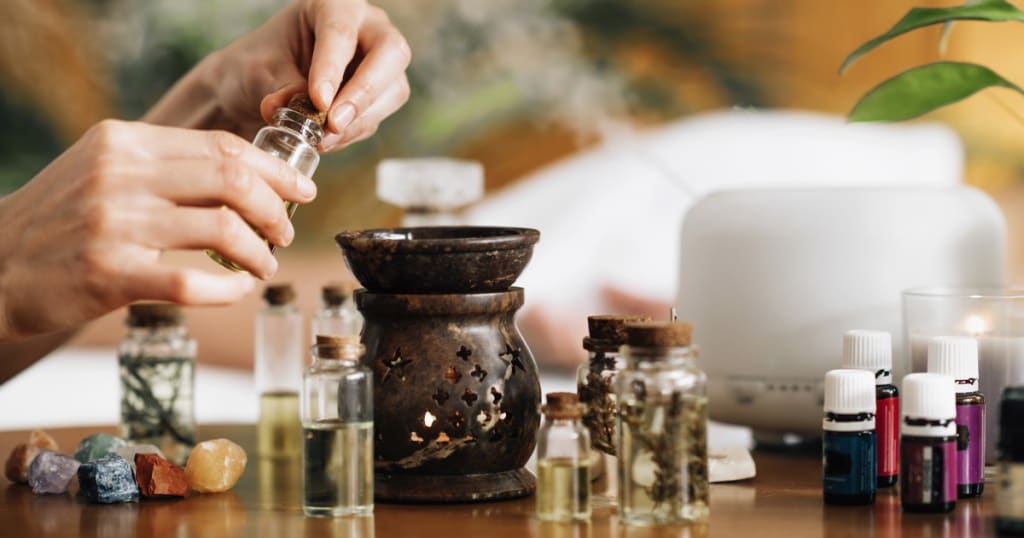
Here's something nobody warns you about when you start buying candles, diffusers, and room sprays: the wrong approach doesn't just waste your money. It can make your home smell worse than it did before you tried anything.
And that's a frustrating place to land. You've spent $30 on a soy candle, plugged in a reed diffuser, maybe even dabbed essential oils on your curtains (we've all been there). Your living room still hits you with something stale the second you walk through the door. The issue is almost never the product itself. It's how you're using it.
Scent is personal, but the science behind it is consistent. A reliable home fragrance guide will always return to the same foundations, and once you understand them, getting your space to smell right becomes a lot less trial-and-error.
So let's walk through the five biggest ones. More importantly, how to fix each without overhauling your entire setup.
1. You're Fragrancing on Top of Smells You Haven't Dealt With
This is the most common mistake. It causes the most damage to how a space actually smells. Lighting a vanilla candle when your kitchen trash needs emptying doesn't cancel out the garbage; it creates something new and worse. You've now got two scent sources competing in the same air, and they're not playing nicely.
Fragrance products are designed to add to a clean-smelling room, not mask problems. Your nose might adjust after ten minutes (that's olfactory adaptation at work), but anyone walking through your front door gets the full experience of both layers stacked together.
The fix is boring, but it works. Take out the trash. Clean the drain. Wash the couch cushion covers. Then introduce your fragrance. A reed diffuser should be the finishing touch, not the cover-up.
2. Mixing Too Many Scents Without a Strategy
Picture this: lavender candle in the bedroom, eucalyptus diffuser in the hallway, citrus plug-in in the bathroom, vanilla room spray in the kitchen. Each scent is fine on its own. Together, they collide somewhere around the hallway and create something muddy and confusing, like a department store having an identity crisis.
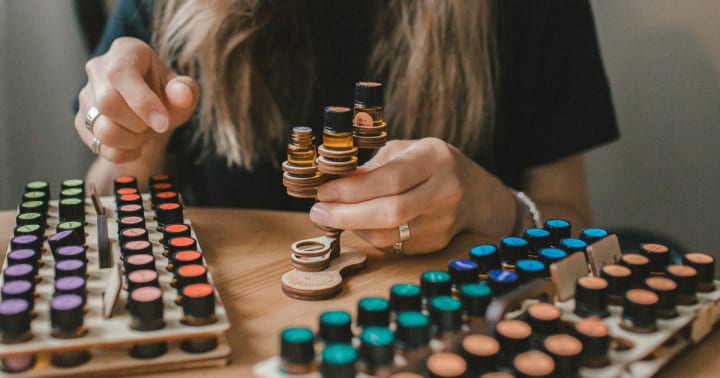
Scent layering can work. Perfumers do it all the time. But it works because they build around scent families: woody notes paired with earthy ones, florals sitting alongside other florals. Throwing four or five unrelated fragrance profiles into the same airflow and hoping for the best? That's where it falls apart.
Pick a scent family for the shared areas of your home and stick with it. If your living room runs sandalwood, your hallway diffuser should complement it: warm vanilla or cedarwood, not sharp lemongrass.
Bedrooms and bathrooms behind closed doors can do their own thing. But anywhere air circulates freely, keep the scent story consistent. Two well-matched notes will always outperform six competing ones.
3. Putting Your Diffuser or Candle in the Wrong Spot
Placement changes everything. A reed diffuser on a window ledge in direct sunlight evaporates its oil twice as fast; you get an overpowering burst for a couple of weeks, then nothing. A candle tucked in a far corner barely registers because the scent pools in one spot and never travels.
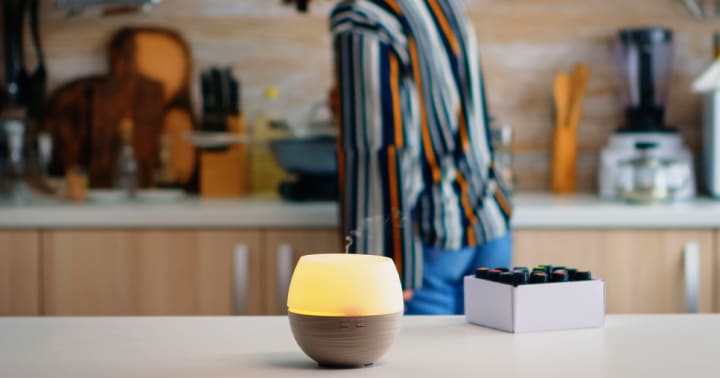
The right placement is somewhere with gentle, natural airflow: near a doorway (but not flush against it), on a shelf at waist or chest height, away from heat sources and AC vents. Air moves scent molecules. If your diffuser sits in a dead zone, the fragrance stays there too.
One trick that consistently works: position your scent source near a hallway opening, between two rooms. Foot traffic alone generates enough airflow to carry the fragrance naturally throughout the space. You're working with your home's airflow instead of against it.
4. Relying on Synthetic Air Fresheners That Numb Your Nose
Those plug-in air fresheners promising "45 days of continuous freshness"? They work, briefly. The problem is the delivery: a constant, unchanging chemical signal your nose stops registering within about 48 hours. It's not that the product quit. Your olfactory receptors adapted to the signal and tuned it out.
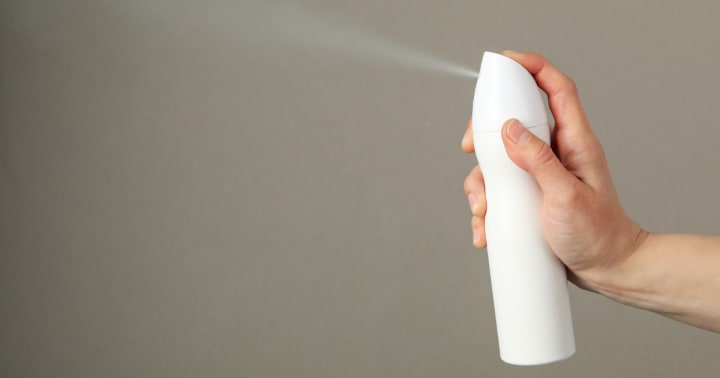
This is nose blindness, and it's the biggest trap in home fragrance. You stop smelling the freshener, so you crank it up or add another. Now the room is loaded with synthetic compounds that guests notice the moment they walk in (and not in a good way), while you're convinced it smells like nothing.
The better approach is rotation. A reed diffuser one week, a natural soy candle the next, essential oils in an ultrasonic diffuser the week after. Shifting the scent profile keeps your nose engaged because the signal never repeats.
If you want to know which delivery methods are safest for daily use over the long run, this breakdown of the healthiest ways to fragrance your home is worth a read.
5. Ignoring Ventilation and Wondering Why Everything Smells Stale
Buy the most expensive candle on the market. If your room hasn't had fresh air in a week, it's still going to smell off. Stagnant indoor air traps cooking residue, body odor, pet dander, and moisture. Layer fragrance on top of all that, and you get something genuinely unpleasant.
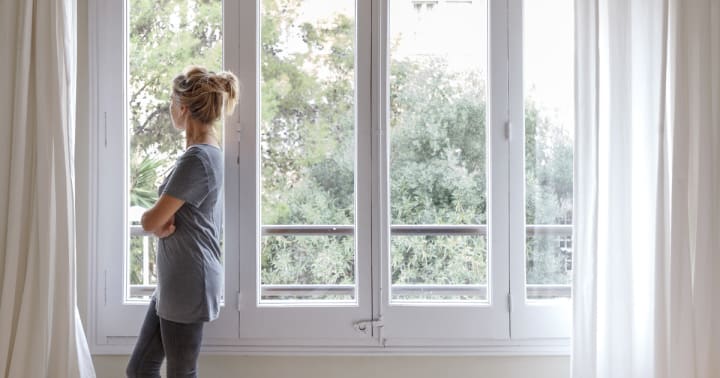
The EPA has found that indoor air is often 2 to 5x more polluted than outdoor air. When you keep adding fragrance without ever cycling in fresh air, you're decorating a problem instead of fixing it.
Open a window for fifteen minutes before you light that candle or flip those reeds. If weather or allergies make that hard, an air purifier with an activated carbon filter does a lot of the work. Establish a clean baseline; your fragrance will perform far better once it isn't competing with what's already in the air.
And if you're using essential oils as part of your routine, ventilation matters even more. Running a diffuser in a sealed room for hours concentrates compounds to uncomfortable levels. It's worth checking whether the essential oil you're using is safe for your lungs at the concentration you're using, especially in bedrooms where you're breathing the same air for 8 hours straight.
The Simplest Fix Is Usually the Right One
Skip the fancy products for a second. Nearly every home fragrance problem traces back to the same root: skipping the basics. Clean air before fragrance. Fewer scents, chosen carefully. Placement over price.
None of these fixes cost money. They take ten minutes total. Start there, and the difference will be obvious the next time you walk through your front door. Your guests will notice it before you do.
About the Creator
Best Home Aroma
Transforming your home’s atmosphere is effortless with our hand-picked selection of home diffusers and essential oils. Discover the perfect scent to create a cozy and inviting ambiance with ease.
Keep reading
More stories from Best Home Aroma and writers in Lifehack and other communities.
Best Home Fragrances for Sensitive Noses: Expert Recommendations
Buying home fragrance is difficult when you have a sensitive nose. A quick trip down the candle or essential oil aisle often ends in a headache or respiratory irritation. However, you do not have to choose between a comfortable home and a nice-smelling one.
By Best Home Aroma4 months ago in Lifehack
A Practical Guide to Choosing Dress Shoes That Balance Style and Comfort
Choosing the right pair of dress shoes isn’t always as simple as it seems. While appearance often takes center stage, comfort, durability, and versatility play equally important roles, especially for those who wear them regularly.
By Teri Estes3 days ago in Lifehack
Top 10 Things To Do In the UK
1. Visit London Landmarks London is the main city in the UK. It has many famous places that tourists like to visit. You can see Big Ben, which is a large and well-known clock. Another important place is Buckingham Palace where the royal family lives. People also visit Tower Bridge to take pictures. London also has buses, trains, and shopping areas, so it is easy to move around.
By Ahsan Raheem3 days ago in Lifehack
You Should Stop Trying to Be a Better Person
A year ago, I spent two days in the Colombian mountains drinking ayahuasca as part of a spiritual ceremony. An experience that pulled apart every detail of my being and rearranged me in a new sequence. I wish that life became easier after the feat. It didn’t.
By Annaise Michelle8 days ago in Humans


Comments
There are no comments for this story
Be the first to respond and start the conversation.