
Strategies to Reduce Operational Noise from Double Girder Overhead Cranes
Practical Techniques and Innovations to Minimize Noise and Enhance Safety

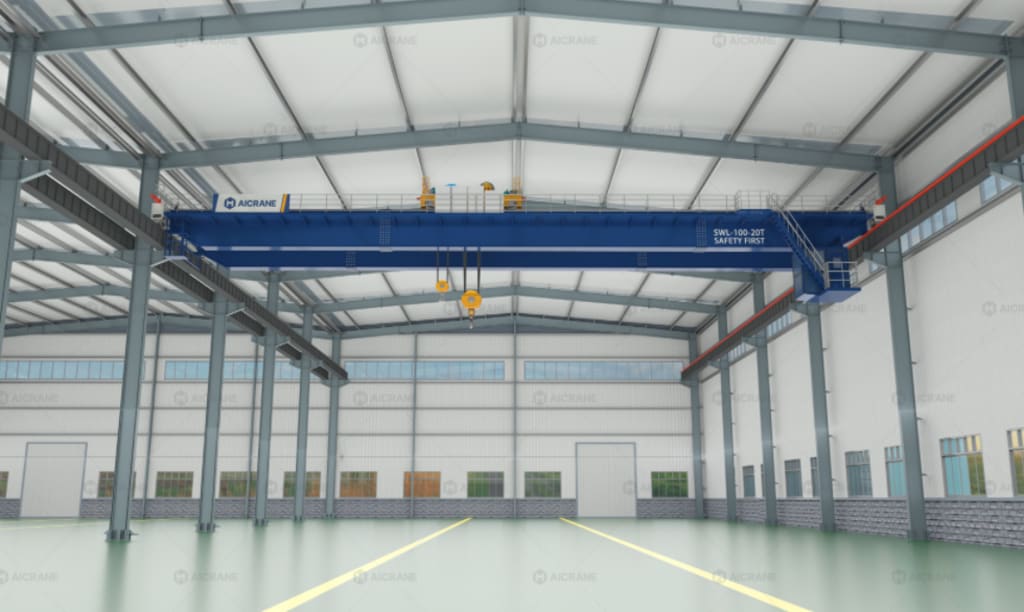
Double girder overhead cranes are a cornerstone of heavy industry, enabling the lifting and movement of substantial loads with precision and reliability. They are commonly used in steel plants, warehouses, precast concrete factories, and shipyards. While these cranes are vital for operational efficiency, one challenge that often arises is operational noise. Excessive noise not only affects the working environment and worker health but can also lead to regulatory compliance issues and community disturbances, especially in urban or semi-urban industrial zones. Implementing effective strategies to reduce noise is therefore crucial for both safety and productivity.
Understanding the Sources of Noise
Noise generated by double girder overhead cranes comes from multiple sources. Understanding these is the first step toward effective noise reduction:
Hoist and trolley mechanisms: Motors, gears, and drum systems generate vibrations and audible sound during lifting operations.
End trucks and wheels: Contact between wheels and crane runway rails can create metallic clanging, especially under heavy loads.
Bridge movement: The longitudinal travel of the crane across the runway generates mechanical noise.
Load swings: Sudden movements of the load can cause impact noise, especially if the load contacts the hook or structure.
Structural vibration: Resonance in the crane frame amplifies operational sound.
Each of these sources contributes to the overall noise profile, and mitigation strategies often require a combination of mechanical, operational, and technological approaches.
Mechanical Solutions for Noise Reduction
High-Quality Wheel and Rail Design
The interaction between crane wheels and runway rails is a primary noise source. Installing precision-ground rails and high-quality crane wheels reduces irregularities that cause clanging. Wheel materials and profiles can be optimized to absorb vibration rather than amplify it. Rubber-tired or resilient wheel options can also reduce noise in specific applications.
Anti-Vibration Components
Modern cranes can incorporate vibration dampers and resilient pads between the crane bridge and the runway, or between the hoist and bridge structure. These components absorb mechanical vibrations before they propagate through the steel frame and the surrounding building, substantially reducing noise levels.
Gearbox and Motor Optimization
Replacing or upgrading older motors and gearboxes with high-efficiency, low-noise variants can dramatically reduce sound. Precision engineering in the gears, bearings, and lubrication systems ensures smoother operation, reducing both mechanical noise and the wear that can create additional sound over time.
Lubrication Management
Proper lubrication of gears, hoist drums, and wheel bearings is essential for quiet operation. Using low-viscosity, high-quality lubricants reduces friction-induced noise while extending component life. Eco-friendly lubricants with lower VOC content can also support environmental goals.
Structural Reinforcement and Noise Absorbing Materials
Adding stiffeners or cross-bracing to the crane bridge can reduce vibration and structural resonance. Additionally, applying sound-absorbing coatings or panels to the crane structure, especially around noisy components, can dampen sound transmission into the workspace.
Operational Strategies for Noise Reduction
Smooth Acceleration and Deceleration
Sudden starts and stops produce not only dynamic loads but also significant noise. Implementing soft start and soft stop controls for hoists, trolleys, and bridge travel allows cranes to move smoothly, reducing both noise and wear on mechanical components.
Optimized Load Handling
Minimizing load swing and avoiding sudden impacts with hooks or support structures can significantly reduce noise. Operators should be trained in precision load handling, using gradual movements and maintaining steady speed to avoid creating impact sounds.
Scheduled Maintenance
Regular maintenance ensures that worn wheels, misaligned rails, and deteriorating components do not exacerbate noise issues. A preventive maintenance schedule that includes inspection, alignment, lubrication, and vibration monitoring can maintain quiet operation throughout the crane's service life.
Noise Monitoring and Feedback Systems
Integrating noise sensors and vibration monitoring systems into crane operations can provide real-time feedback. When abnormal noise levels are detected, corrective action can be taken promptly, preventing damage and reducing long-term sound issues.
Technological Innovations for Noise Control
Variable Frequency Drives (VFDs)
VFDs allow precise control over motor speed, resulting in smoother acceleration and deceleration. This technology not only reduces noise but also lowers energy consumption, contributing to overall operational efficiency.
Automated Load Handling Systems
Automation reduces abrupt human-controlled movements that generate noise. Pre-programmed paths and movements ensure consistent, smooth operation that minimizes sound emission from hoists and trolleys.
Smart Crane Monitoring Platforms
Modern industrial IoT platforms allow operators and maintenance teams to monitor crane health, vibration, and noise levels continuously. Predictive maintenance algorithms can identify potential noise problems before they occur, enabling proactive interventions.
Workplace and Environmental Considerations
Even with mechanical and operational improvements, workspace design plays a critical role in noise mitigation:
Installing acoustic barriers or partitions between crane operation zones and workstations can reduce worker exposure.
Positioning cranes away from sensitive areas such as offices, break rooms, or residential boundaries helps comply with noise regulations.
Ensuring proper building insulation and implementing vibration-isolated floors under crane tracks can further mitigate environmental noise impact.
Benefits of Noise Reduction Strategies
Implementing these noise reduction strategies has several advantages:
Worker Health and Safety: Reduced noise lowers the risk of hearing damage and stress-related health issues.
Regulatory Compliance: Industrial facilities often face noise emission regulations. Effective strategies ensure compliance and avoid fines.
Equipment Longevity: Smooth operation reduces mechanical stress, extending the lifespan of crane components.
Operational Efficiency: Less vibration and noise often translate to more precise and stable load handling.
Community Relations: Minimizing noise ensures that the facility maintains a positive relationship with surrounding communities.
Conclusion
Reducing operational noise from double girder overhead cranes requires a holistic approach, combining mechanical enhancements, operational best practices, and technological innovations. By addressing noise at its source—through high-quality wheels, optimized gearboxes, vibration damping, and proper lubrication—and complementing these measures with smooth operational control and monitoring systems, industrial operators can achieve quieter, safer, and more efficient overhead crane operations. Additionally, considering workplace layout and acoustic barriers ensures that both the workforce and the surrounding environment benefit from reduced noise levels. Investing in these strategies is not just about comfort; it is a long-term commitment to safety, equipment longevity, and operational excellence.
About the Creator
Aicrane01
Welcome to the Aicrane Blog, your practical guide to lifting solutions. Discover articles covering overhead cranes, gantry cranes, winches, steel structures, boat lifts, and more.
Website: https://steelmillcranes.com/
Author’s Advice
If you would’ve asked me 20 years ago did I know I’d become a writer and an author, I would’ve said “nope, ain’t happening”. As fate would have it I did become an author and I can honestly say I’m loving it so far. It really does feel good to be a writer. I’ve learned a lot on this journey and I feel like with even me being as new to this world as I am, there’s some wisdom I need to share with every other aspiring author.
By Joe Patterson20 days ago in Journal
Paul and John's 47-Words Short Story Unofficial Challenge
UPDATE - Republished to update the list of entries, with the 40 we've had so far. Completely smashed last unofficial challenge which recieved 31 entries. And there is still time. If you have yet to enter and fancy winning a bit of money or just challenging yourself or both or just making two old geezers job harder - please enter!
By Paul Stewartabout 15 hours ago in Writers



Comments
There are no comments for this story
Be the first to respond and start the conversation.