
Load Distribution Technology in Travel Lifts for Safe Boat Lifting
Ensuring Stability, Protecting Hulls, and Enhancing Efficiency Through Advanced Load Management Systems
In the world of marine operations, the safe lifting and handling of boats is a critical concern. Travel lifts, also known as boat hoists or mobile boat hoists, are indispensable pieces of equipment for marinas, shipyards, and boat service facilities. These machines are designed to lift boats out of water and transport them on land for maintenance, storage, or inspection. Among the advanced features of modern travel lifts, load distribution technology plays a pivotal role in ensuring safety, stability, and operational efficiency. This article explores the principles, benefits, and practical applications of load distribution technology in travel lifts.
Understanding Travel Lifts and Their Operation
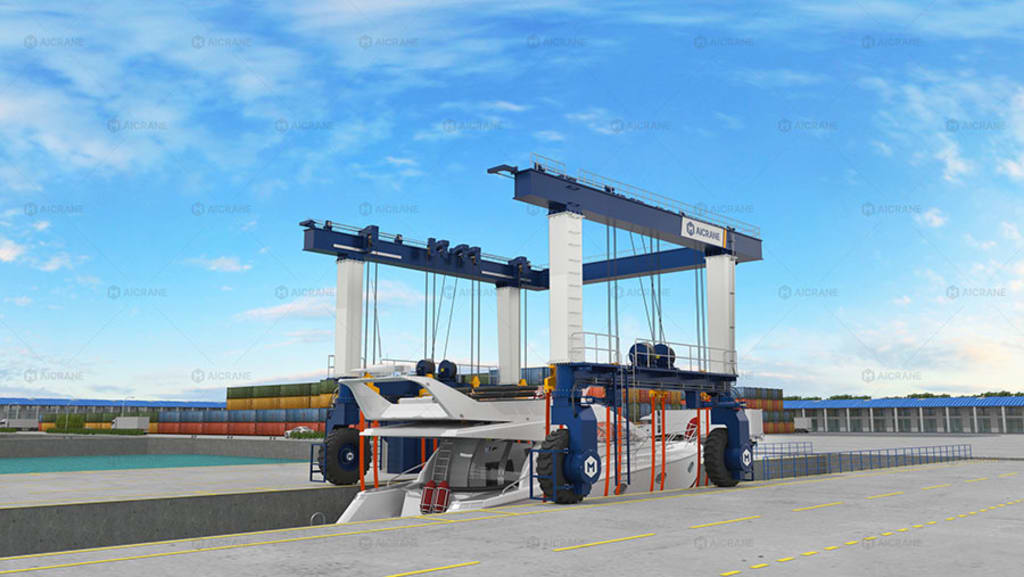
A travel lift is essentially a mobile gantry crane equipped with slings or straps to cradle the hull of a boat. It moves on a wheeled frame, often with four or more tires, which allows it to maneuver boats in confined spaces. The typical components of a boat travel lift include:
Hoist beams: Horizontal beams connecting the lifting mechanism.
Lifting slings/straps: Flexible supports that carry the weight of the boat.
Hydraulic or electric winches: Mechanisms that raise and lower the slings.
Frame and wheels: Structural elements that ensure mobility and stability.
While these components form the basic structure, the real safety in lifting comes from how the load is distributed across the machine.
What is Load Distribution Technology?
Load distribution technology in travel lifts refers to systems and mechanisms that ensure the boat’s weight is evenly distributed across all lifting points. This prevents overloading of individual hoists, tires, or structural elements, which can lead to accidents, damage to the boat, or premature wear of the travel lift.
Traditional travel lifts without advanced load distribution rely heavily on manual adjustments and operator judgment to ensure balance. Modern systems, however, use sensors, hydraulics, and computerized control to monitor and manage load distribution in real time.
Key Principles of Load Distribution
Even Weight Distribution: The boat’s weight should be evenly shared by all lifting slings and hoist points. Uneven weight can stress certain areas of the hull and lifting mechanism.
Center of Gravity Alignment: The lift must align with the boat’s center of gravity. Misalignment can tilt the boat, causing instability or even tipping during lifting.
Dynamic Adjustment: Boats may shift slightly during lifting due to wind, water movement, or frame flexing. Advanced systems adjust tension in real-time to maintain even weight distribution.
Structural Load Awareness: Modern travel lifts are designed with sensors that measure load on each tire, hoist, or hydraulic cylinder. This ensures that no part of the machine is overloaded, reducing the risk of mechanical failure.
How Load Distribution Technology Works in Travel Lifts
1. Sensor Integration
High-end travel lifts are equipped with load sensors at key points:
Hoist beams: Sensors detect the weight each beam carries.
Slings or straps: Sensors measure tension in each sling.
Wheels or tires: Pressure sensors monitor the load on each wheel.
These sensors feed data to a central control system, which calculates the exact weight distribution and makes real-time adjustments.
2. Hydraulic Balancing
Hydraulic systems in travel lifts can adjust the height of each lifting point independently. When sensors detect an imbalance, hydraulic cylinders raise or lower the corresponding hoist or sling to restore equilibrium. This feature is particularly important when lifting unevenly loaded boats or vessels with asymmetrical hulls.
3. Computerized Load Management
Some travel lifts integrate computer systems with user interfaces. Operators can monitor real-time load data, including:
Weight on each sling
Total load on the hoist frame
Load per wheel or tire
Center of gravity alignment
Computerized systems can also include safety warnings, stopping the lift if the load exceeds recommended limits.
4. Automatic Tensioning
Automatic tensioning systems adjust the length or tension of each lifting strap as the boat is lifted. This ensures that weight is evenly shared, preventing excessive stress on any single point of the boat or the travel lift.
Benefits of Load Distribution Technology
1. Enhanced Safety
The primary benefit of load distribution technology is safety. Evenly distributed loads reduce the risk of tipping or structural failure. For marinas and shipyards handling expensive or delicate vessels, preventing accidents is critical.
2. Protection of Boat Hull
Improper lifting can damage a boat’s hull, particularly with fiberglass or composite construction. By distributing weight evenly, the hull is supported uniformly, reducing pressure points and minimizing the risk of cracks or deformations.
3. Extended Equipment Life
When load distribution is uneven, certain components of the travel lift—like tires, hoists, and frame sections—can experience accelerated wear. Proper load management ensures all parts share the load, extending equipment lifespan.
4. Operational Efficiency
Load distribution technology allows operators to lift and transport boats faster and with more confidence. It reduces the need for manual adjustments, trial-and-error alignment, and frequent repositioning, making operations smoother and more predictable.
5. Handling Diverse Boat Types
Modern marinas often handle a variety of boats, from small pleasure crafts to large yachts. Advanced load distribution technology adapts to different hull shapes and weights, allowing a single travel lift to manage a wide range of vessels safely.
Practical Applications in Marine Facilities
1. Marinas and Yacht Clubs
Marinas frequently lift boats for seasonal storage, hull cleaning, or repairs. Load distribution technology ensures that even smaller travel lifts can safely manage high-value yachts without structural risk.
2. Shipyards and Boat Builders
During the construction or repair of boats, lifting operations must be precise. Advanced load distribution systems allow for incremental lifts, supporting delicate work like engine installation, hull painting, or keel alignment.
3. Maintenance and Service Centers
Service centers use travel lifts to inspect hulls, propellers, and rudders. Load distribution technology ensures stability during prolonged stationary lifting, giving technicians safe access to all parts of the boat.
4. Transport and Relocation
Some operations involve moving boats short distances across land, such as between storage facilities or docking areas. Balanced lifting reduces stress on both the boat and travel lift, making transport safer and more efficient.
Challenges and Considerations
While load distribution technology offers significant advantages, operators must be aware of several considerations:
Calibration: Sensors and hydraulic systems must be calibrated regularly to maintain accuracy.
Training: Operators need training to understand system feedback and respond appropriately to alarms or adjustments.
Maintenance: Hydraulic cylinders, sensors, and control systems require routine maintenance to prevent failure.
Weight Limits: Even with load distribution, operators must respect maximum lifting capacities to prevent overloading.
Future Trends in Load Distribution
As technology advances, travel lifts or marine boat hoists are incorporating more sophisticated load management features:
Artificial Intelligence (AI): AI algorithms can predict hull stress points and optimize lifting patterns automatically.
Remote Monitoring: Operators can monitor load distribution remotely via apps or web interfaces, improving flexibility.
Integration with Dock Management Systems: Coordinated lifting operations can reduce congestion and improve scheduling in busy marinas.
Conclusion
Load distribution technology in travel lifts represents a significant advancement in marine lifting safety and efficiency. By ensuring that a boat’s weight is evenly distributed across all lifting points, modern travel lifts protect the vessel, extend equipment lifespan, and enhance operational reliability. From marinas to shipyards, the integration of sensors, hydraulics, and computerized control systems has transformed boat lifting from a high-risk operation to a precise, manageable process. As marinas and service centers continue to handle larger and more diverse vessels, load distribution technology will remain a cornerstone of safe and effective boat handling.
About the Creator
Aicrane01
Welcome to the Aicrane Blog, your practical guide to lifting solutions. Discover articles covering overhead cranes, gantry cranes, winches, steel structures, boat lifts, and more.
Website: https://steelmillcranes.com/
Author’s Advice
If you would’ve asked me 20 years ago did I know I’d become a writer and an author, I would’ve said “nope, ain’t happening”. As fate would have it I did become an author and I can honestly say I’m loving it so far. It really does feel good to be a writer. I’ve learned a lot on this journey and I feel like with even me being as new to this world as I am, there’s some wisdom I need to share with every other aspiring author.
By Joe Patterson19 days ago in Journal
What the Rise of Screen Time Is Doing to Contact Lens Wearers
Most contact lens wearers have had this experience. You sit in front of a screen for a few hours, and by mid-afternoon your eyes feel dry, tired, and irritated. You blink more than usual. You find yourself pulling out your lenses earlier than planned. You assume it is just one of those days.
By Noor Muhammad Khan7 days ago in Journal
Watching The End Of The World From The Diner
Introduction I am not sure how to approach this. Guy Peellaert was an amazing artist who created iconic fantasy images of famous people, usually musicians or politicians, as well as creating commissioned album covers such as "It's Only Rock'n'Roll" by The Rolling Stones and David Bowie's "Diamond Dogs" which you can read more about below.
By Mike Singleton 💜 Mikeydred 3 days ago in Art




Comments
There are no comments for this story
Be the first to respond and start the conversation.