
Possession of nukes is Ukraine's best shortcut to NATO and peace
This option is dismissed as unrealistic, but only because the West assumes Ukraine will obey the non-proliferation rules of a system that already failed to protect it.
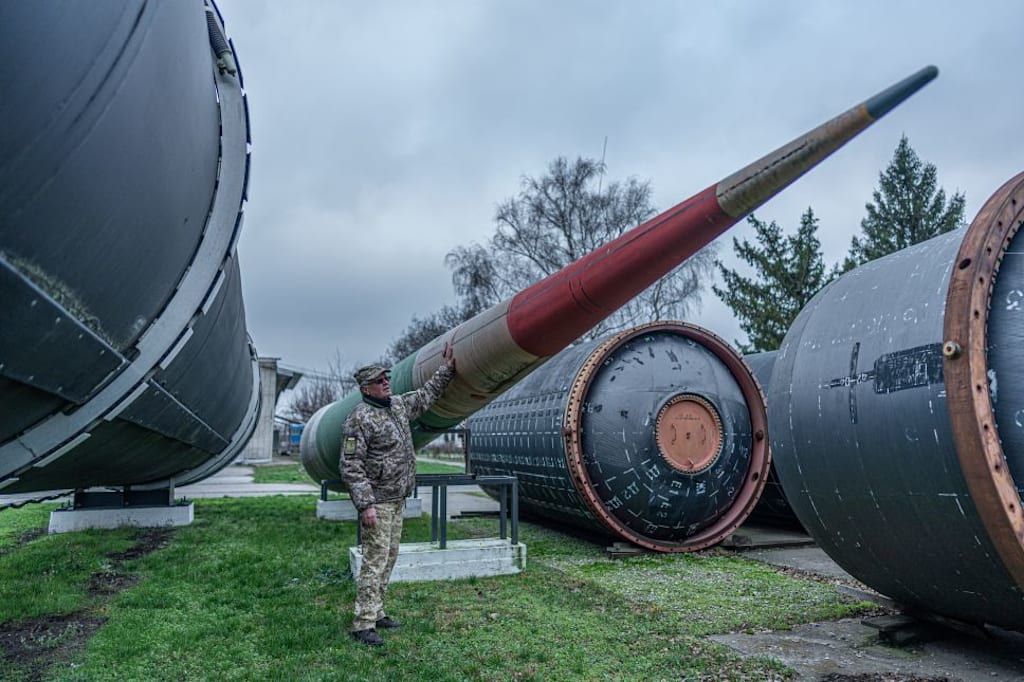
When Russia launched its full-scale invasion in February 2022, Ukraine learned a devastating lesson about the value of promises. The Budapest Memorandum (1994) saw Ukraine voluntarily surrender the world's third-largest nuclear arsenal in exchange for security assurances from the United States, the United Kingdom, and Russia.
In the moment of existential need, those assurances amounted to evacuation offers for its leadership, not defensive military intervention. The West shipped minor equipment, hesitated for months on tanks, and refused to even discuss a no-fly zone.
NATO membership - Ukraine's only realistic long-term security anchor - was categorically opposed by the US, even as Russian missiles struck civilian infrastructure.
President Volodimir Zelenskyy famously articulated the cruel choice: either Ukraine joins NATO, or it restores its nuclear deterrent. The first option remains distant - not because of any technical or democratic deficit in Ukraine, but because NATO members fear escalation with a nuclear-armed Russia.
The second option is dismissed as unrealistic, but only because the West assumes Ukraine will obey the non-proliferation rules of a system that already failed to protect it.

What if Kyiv decides to actually build nuclear missiles?
First, Ukraine has learned the hard way that it cannot fully rely on allies. It deployed drones not because they were its first choice, but because it lacked sufficient artillery and aircraft. It launched its own missile production - Flamingo, FP-7, and soon FP-9 - because Western deliveries were slow and conditional.
It possesses the technological potential, the nuclear energy infrastructure (including 15 operational reactors and vast quantities of spent fuel from which plutonium could theoretically be separated), and the qualified specialists who once manned the Soviet nuclear arsenal.
The gap between "can't" and "won't" is political, not technical.
Second, a Ukrainian nuclear weapon would instantly reorder the strategic calculus. Currently, Russia attacks with impunity because it believes - correctly so far - that the West will not directly intervene to defend a non-nuclear Ukraine.
If Ukraine were to test or declare a nuclear device, that calculation collapses. Russia would face a choice: escalate to a preemptive conventional strike (risking a dirty radiological release and a prolonged guerrilla war) or accept that further conventional advances could be met with a tactical nuclear response from Ukraine.
The Kremlin's entire war logic rests on conventional superiority; a nuclear-armed Ukraine would nullify that.
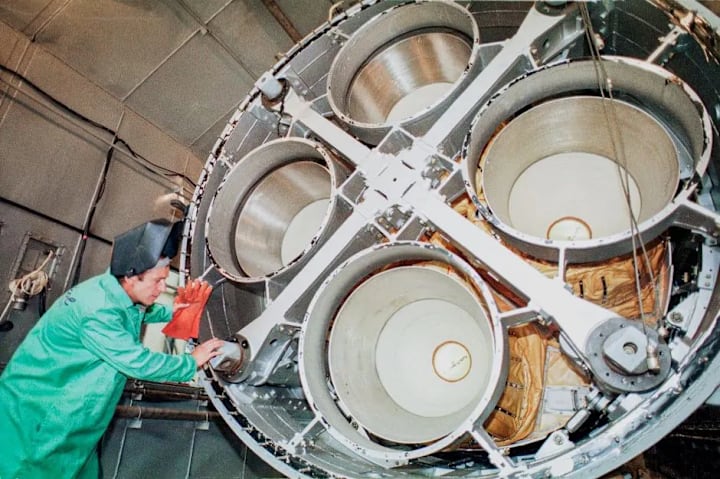
Third, the West's reaction would be swift and paradoxical. Initially, Washington and Brussels could condemn the move, impose sanctions, and demand inspections. But this is theater.
The strategic reality is that a nuclear Ukraine is a dangerous loose cannon unless it is brought under some responsible framework. The only mechanism for controlling those weapons is NATO membership. Once Ukraine possesses a nuclear bomb, the alliance faces an intolerable risk: an uncontrolled, non-NATO nuclear state on Europe's eastern frontier, in active war with Russia, another nuclear state.
The U.S. would then have overwhelming incentive to offer Ukraine a fast-track membership - not because Ukraine has become more lovable, but because NATO would want to integrate, monitor, and legally assume command of those nuclear assets.
Under Article 5, an attack on Ukraine would then be an attack on all members, but with the added deterrence that Ukraine itself already has a nuclear retaliatory capability. That is a far more credible deterrent than the current ambiguous promise of "support as long as it takes."
The language with Moscow would change instantly to ultimatum, a language it understands best.
Fourth, the war would end soon after. Not because Russia suddenly becomes peaceful, but because the risk-reward ratio flips. Russia invaded to prevent NATO expansion and to demilitarize Ukraine. A nuclear-armed Ukraine that is also a NATO member is the exact opposite outcome - it is the Kremlin's worst nightmare made permanent.
The only rational Russian response would be to freeze the current front lines, enter serious negotiations, and accept a Korean-style armistice. Further conventional war would risk a nuclear exchange, and Russia's own doctrine threatens nuclear use only when the state's existence is in peril.
Fighting a nuclear-armed neighbor for incremental gains has no strategic logic.
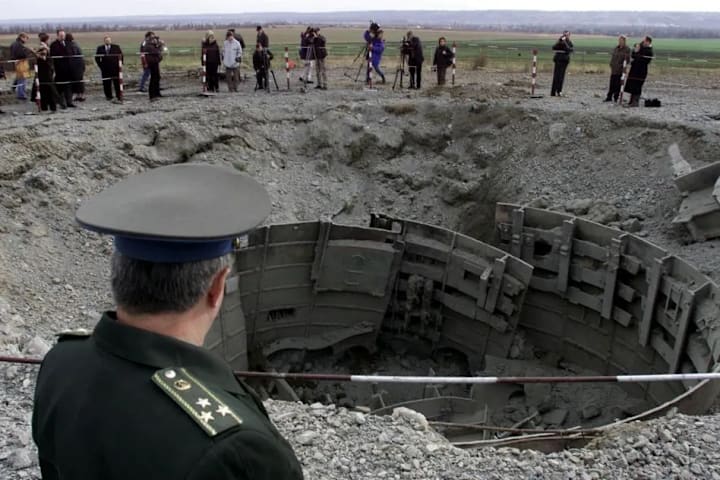
Manageable risks
The perspective of a nuclear-armed Ukraine raises some obvious objections. It would break the Non-Proliferation Treaty (NPT), for example.
But what is the NPT? It is a contract among states. When a signatory (Russia) invades another signatory that gave up weapons in good faith, the contract is already broken. Ukraine would not be the first state to leave the NPT under duress (North Korea did so in 2003).
Others may say it would invite preemptive Russian strikes. Possibly, but Russia is already striking everything. A covert weapon program hidden in existing nuclear facilities - combined with the threat of immediate retaliation if conventional strikes approach launching sites - changes the targeting calculus.
There may be concerns that a disappointed West would abandon Ukraine entirely. This fear underestimates Western self-interest. A nuclear Ukraine that is not in NATO is a nightmare; a nuclear Ukraine in NATO is an uncomfortable but manageable reality.
Here's an example. The United States easily abandoned Afghanistan, but it never faced a nuclear-armed Afghanistan at war with a rival nuclear power. If Afghanistan had possessed a nuclear weapon, the Washington could not have simply abandoned it.
Because a nuclear-armed state that collapses or falls into hostile hands creates a nightmare scenario: loose nukes, a nuclear-armed Taliban, or a nuclear device sold to terrorists. So, the U.S. would have been forced to stay engaged, no matter how costly.
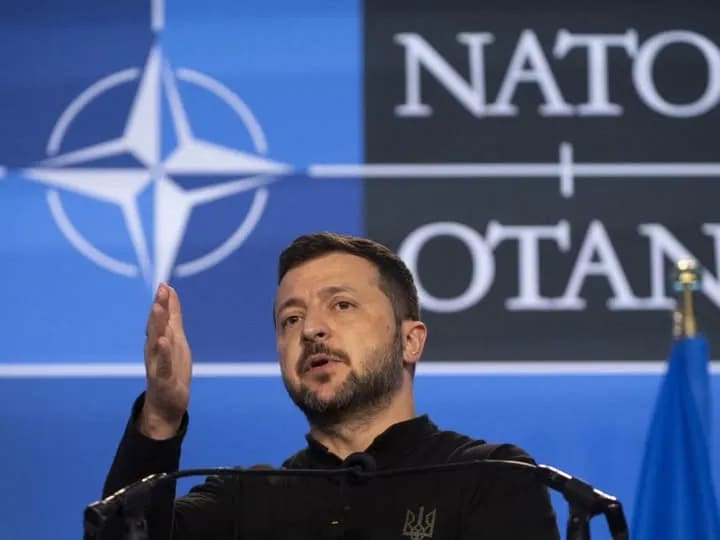
Finally, consider the negotiation process.
Currently, Russia has no incentive to compromise. It believes time is on its side. A Ukrainian nuclear breakout changes that overnight. Peace talks would shift from "what territory does Russia keep?" to "under what conditions does Ukraine verifiably return to non-nuclear status in exchange for ironclad NATO membership?"
That trade - nuclear disarmament for immediate Article 5 guarantees - is the only deal that has ever worked in post-Soviet history. Ukraine tried the reverse (disarmament first, guarantees later) and was invaded. Doing it in the opposite order (membership first, then disarmament) requires Ukraine to possess the bomb as leverage.
The West will never voluntarily give Ukraine nuclear weapons. It will also never voluntarily give Ukraine NATO membership while the war is hot. But if Ukraine builds its own bomb, both become inevitable - not out of generosity, but out of sheer risk management.
The news of a Ukrainian nuclear test would put every capital on emergency footing. Within weeks, negotiations would begin. Within months, a frozen conflict and a NATO fast-track could be arranged.
It can be dangerous, reckless, and destabilizing. It can be also, by every measure of realpolitik, the fastest path to ending the war and securing Ukraine's survival.
The Budapest Memorandum promised security in exchange for disarmament. That promise failed. Nuclear deterrence, ugly as it is, has never failed the state that possesses it.
Building nuclear weapons is Ukraine's shortest path to NATO and peace.
Kyiv knows this. The question is whether everyone else will wake up before or after the first test.
About the Creator
Aurel Stratan
Media entrepreneur, communication specialist, business journalist, science & tech blogger. I am interested in history, AI, economics, and astrophysics.
Keep reading
More stories from Aurel Stratan and writers in Journal and other communities.
Why we worship violent men and call them "great"?
Every nation has its founding father, a national hero, a symbol to rally around. The figure whose face is stamped on currency, whose statue dominates the central square, whose name echoes through school textbooks as the embodiment of national greatness.
By Aurel Stratanabout 16 hours ago in FYI


Comments
There are no comments for this story
Be the first to respond and start the conversation.