
Why we worship violent men and call them "great"?
The title "Great" is rarely about morality. It is about outcomes.
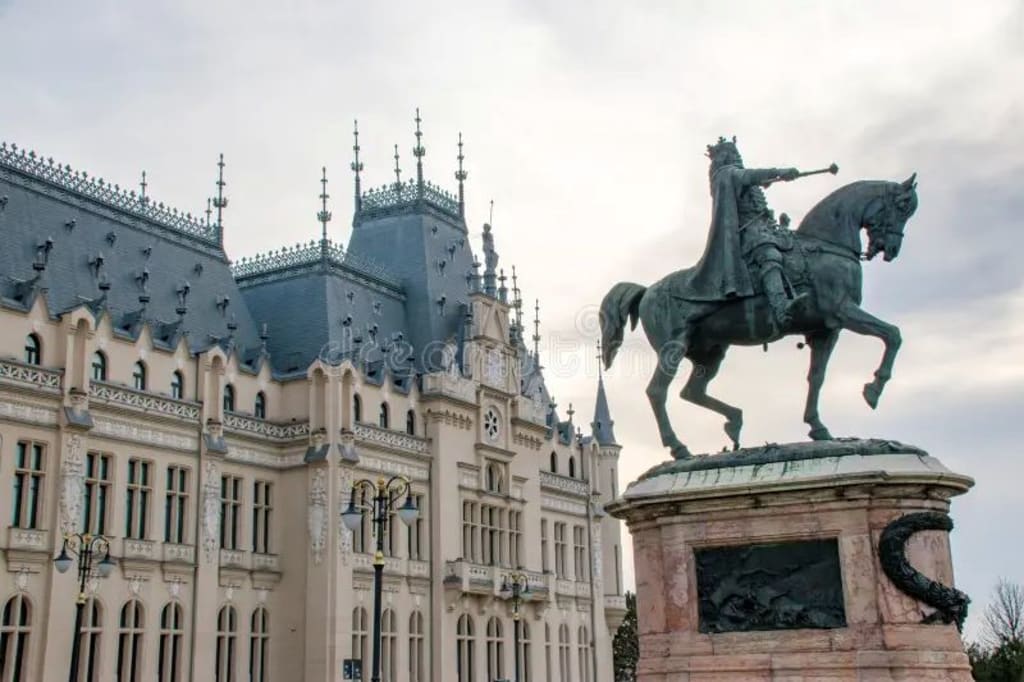
Every nation has its founding father, a national hero, a symbol to rally around. The figure whose face is stamped on currency, whose statue dominates the central square, whose name echoes through school textbooks as the embodiment of national greatness.
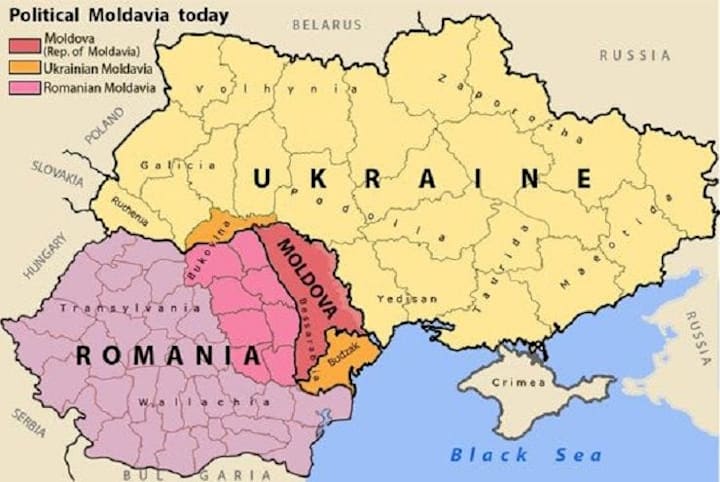
For Romanians and Moldovans, it is Stephen the Great - Ștefan cel Mare - a 15th-century prince who fought off the Ottoman Empire and was later canonized as a saint by the Romanian Orthodox Church.
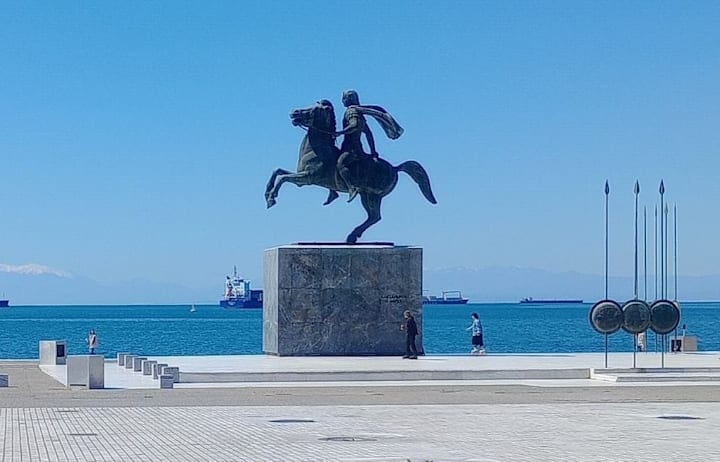
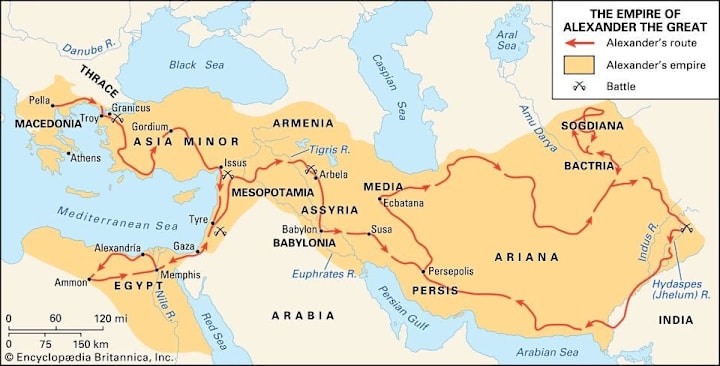
For Greeks and Macedonians, it is Alexander the Great, the young king who carved an empire from Greece to Egypt and India before dying at thirty-two.
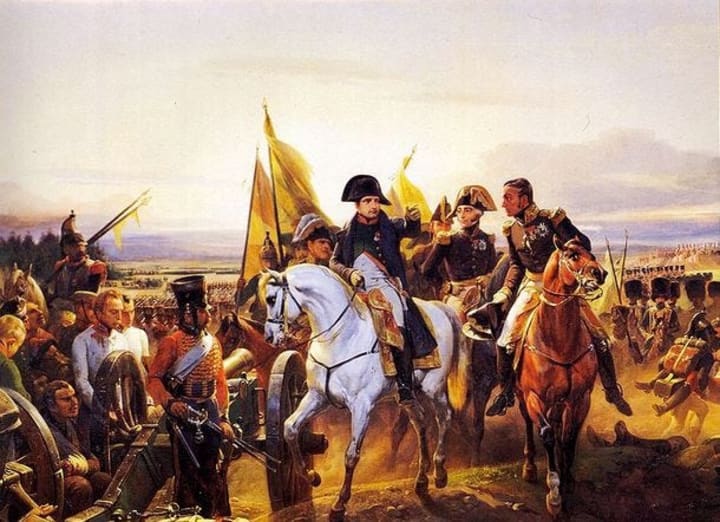
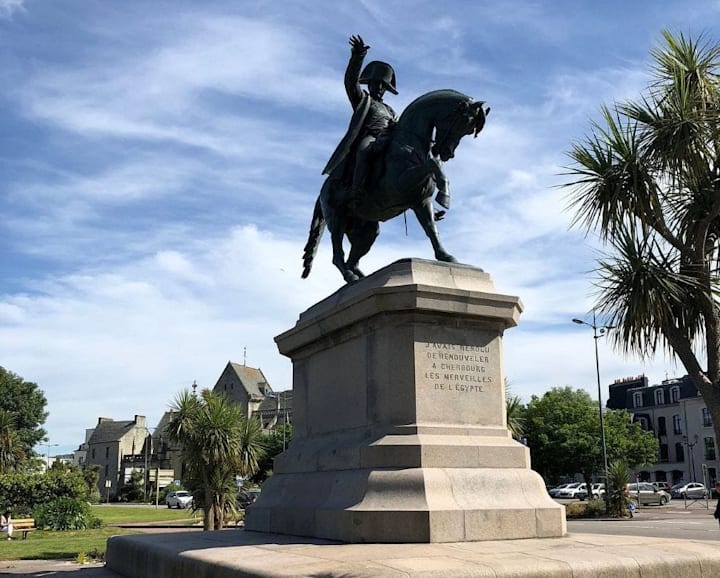
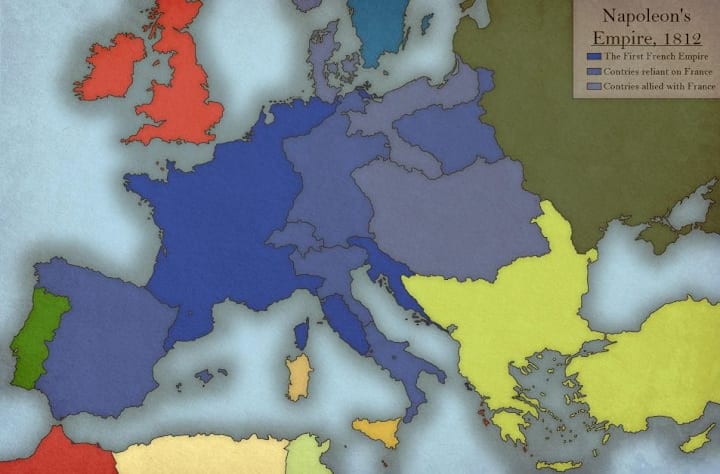
For the French, it is Napoleon Bonaparte, the military genius who reshaped Europe and whose legal code still underpins modern civil law.
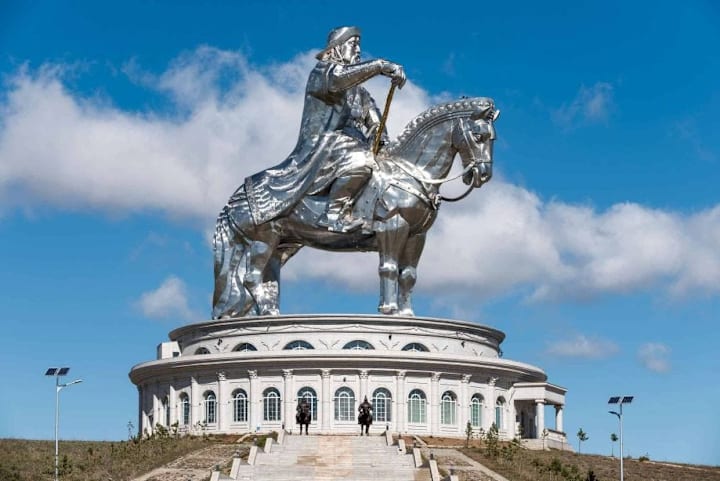
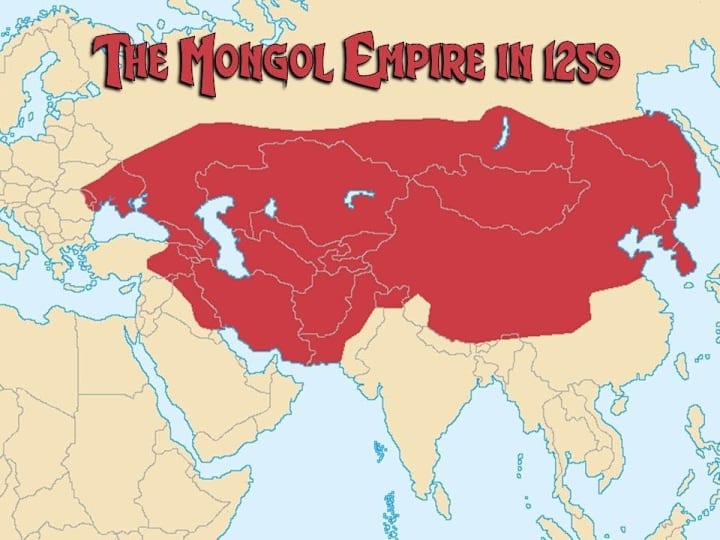
For much of Asia, it is Genghis Khan, the founder of the largest contiguous land empire in human history.
Many nations have more than one figures with "the Great" attached to their names.
Worshipped like gods, they are the pantheon of greatness.
But when we look past the romanticized paintings and patriotic poetry, when we remove the filter of myth to examine the historical record, we see something else entirely.
Stephen the Great was a man dominated by anger, whose entire reign was a succession of wars and bloody palace coups, quick to spill blood rather than listen to opponents.
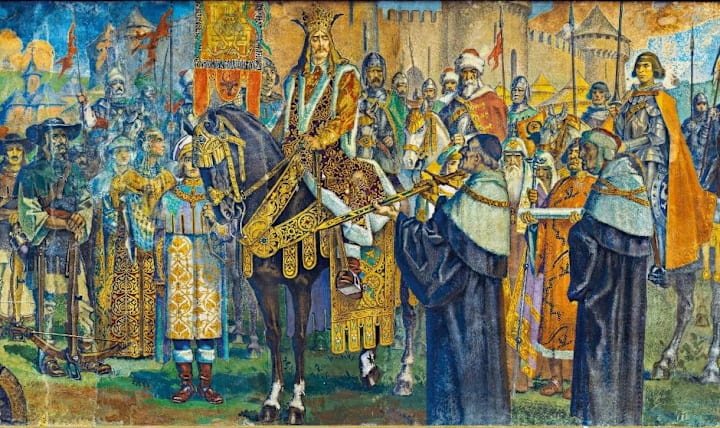
Alexander the Great was not invited into the lands he conquered; he brought steel and fire, leaving cities in ruins and populations enslaved.
Napoleon subdued much of Europe at the cost of perhaps six million lives.
Genghis Khan bathed a vast swath of the world in blood, his armies razing cities and slaughtering populations on a scale that even medieval chroniclers described as apocalyptic.
How do we reconcile the atrocities with the title of "Great"? Why do we sanctify men who, by modern standards, would be tried as war criminals?
There is no simple or single answer to these questions; the truth is both complicated and disturbing for many of us.
The "greatness" paradox
The historical record for these celebrated figures is, by any objective measure, a record of immense violence.
Stephen the Great (1457–1504) ruled Moldavia (now Moldova) for nearly half a century. He is celebrated as a defender of Christianity, awarded the title Athleta Christi - Champion of Christ - by Pope Sixtus IV.
Yet his reign was defined by conflict: constant wars against the Ottoman Empire, Hungary, Poland, and Wallachia. He executed his rival Peter Aaron and the boyars who supported him. He impaled captured enemies. He was, in the words of chronicles, quick to anger and quicker to execute. His entire reign was a succession of wars and palace fighting.
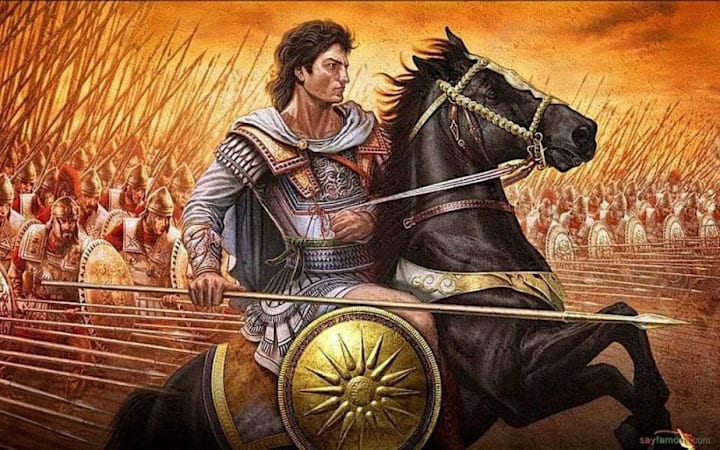
Alexander the Great (356–323 BC) is the archetypal conqueror. His achievements are staggering: he created one of the largest empires of the ancient world in little over a decade. But as modern scholars have begun to argue, there is a "new extreme orthodoxy" that views Alexander not as a unifier but as a "butcher of people," a "terrorist," a "hooligan" whose "ruthless killing of local populations and the destruction of cities" was central to his campaign.
He destroyed Thebes and sold its inhabitants into slavery. He massacred the Greek mercenaries fighting for Persia. He conquered lands that had not invited him and imposed his will through steel.
Napoleon Bonaparte (1769–1821) emerged from the French Revolution to crown himself Emperor and dominate Europe. His legacy is deeply polarized. To admirers, he modernized administration, codified laws, and spread revolutionary ideals. To critics, he was a "megalomaniac who wrought greater misery than any man before the coming of Hitler."
He reinstated slavery in French colonies, plundered art across Europe, and his wars resulted in the deaths of perhaps six million Europeans.
Genghis Khan (c. 1162–1227) unified the Mongol tribes and built an empire stretching from the Caspian Sea to the Sea of Japan. Medieval historian Ibn al-Athīr, writing at the time, lamented the Mongol invasions as an apocalypse for the Islamic world. Cities were razed, populations were slaughtered, and irrigation systems that had supported agriculture for millennia were destroyed. The demographic impact was catastrophic, with some scholars estimating that the Mongol conquests reduced the world's population by tens of millions.
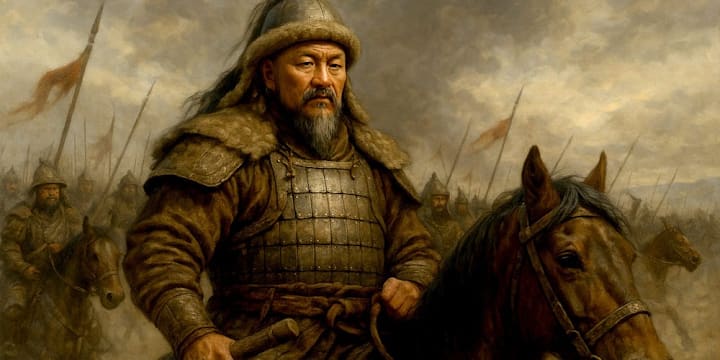
And yet, these men are not remembered primarily for their atrocities. They are remembered for their achievements. They are called "Great."
What are the justifications?
The title "Great" is rarely about morality. It is about outcomes. There are three traditional arguments that have elevated these figures above moral judgment.
1. They won, so they wrote the history
There is an old adage: history is written by the victors. The ancient historian Orosius, a student of St. Augustine, tried to argue that Alexander's empire was morally inferior to Rome's. But his argument failed to diminish Alexander's reputation because the conquest was so total and the empire so massive that it could not be ignored.
Stephen the Great's military victories, particularly the Battle of Vaslui in 1475, turned back the Ottoman tide. As historian Jonathan Eagles notes, these victories made Stephen a symbol of Balkan identity and Christian resistance.
Survival and success, in hindsight, obscure the brutality required to achieve them.
2. They brought order and institutions
We often forgive the bloodshed if the legacy includes a functioning state. Napoleon's most enduring contribution is not his military record but the Napoleonic Code - a system of civil law that replaced the chaotic feudal laws of Europe with principles of merit, property rights, and equality before the law. It was rolled out across conquered territories and modernized European societies.
Similarly, Genghis Khan did more than conquer. He destroyed the traditional aristocracy of the Mongol tribes, instituted a new legal code, promoted individuals based on merit rather than tribal loyalty, and introduced a universal script for the Mongol language. This state-building transformed a loose confederation of warring tribes into a disciplined, efficient empire. He also secured a lucrative and safe trade corridor stretching throughout Asia to Europe.
3. They provided existential defense
For small nations, a "Great" leader is often defined as one who ensures survival against a larger enemy. Stephen the Great maintained Moldavia's independence for nearly fifty years against the Ottoman Empire, the superpower of his age. In the eyes of Europe, he was a champion of Christendom.
Napoleon, for his part, helped the French Revolution survive and succeed, clearing the way towards the capitalist chapter of France's evolution.
When a nation's very existence is at stake, a ruthless defender is celebrated - even if his methods were brutal, even if he was as quick to spill blood as to listen.
These justifications are not without merit. Napoleon's legal reforms did modernize Europe. Genghis Khan's empire did create a period of stability and trade across Asia. Stephen's resistance did preserve Moldovan identity. Alexander's conquests did spread Hellenistic culture that influenced the Roman Empire and, through it, Western civilization - which in future dominated all others.
But these justifications evade a deeper question. If the criteria are military conquest, industrial transformation, and national pride, then there are two 20th-century figures who would seem to be prime candidates for the title "Great."
And yet, they are universally excluded.
The exception that proves the rule
Adolf Hitler conquered almost all of Europe. He restored Germany's economic might after the Great Depression, achieving full employment through massive infrastructure projects and rearmament. He restored German national pride after the humiliation of the Treaty of Versailles. His military and industrial achievements were staggering.
Joseph Stalin transformed the Soviet Union from a predominantly agrarian peasant society into the world's second-largest industrial power in just over a decade. He led the Soviet Union to victory in World War II, defeating Nazi Germany (with allies' help) and emerging as one of two global superpowers. He expanded Soviet influence across Eastern Europe, creating an empire that lasted nearly half a century.
And yet, no respectable historian - no matter how revisionist - refers to "Adolf the Great" or "Great Stalin." Why?
1. They lost the information war
One important factor separating Genghis Khan from Hitler is that the Mongols won and wrote the history. The Nazi regime was utterly destroyed, its capital divided, its leaders tried at Nuremberg, its ideology universally condemned. The Soviet Union collapsed in 1991, and its archives were opened, revealing the full extent of Stalin's crimes.
By contrast, the Macedonian kingdom survived Alexander. The Mongol Empire survived Genghis. The French state survived Napoleon. The Romanian and Moldovan nation survived Stephen the Great.
Each subsequent generation had a political interest in burnishing the founder's legacy. There was no Nuremberg for Alexander. No opening of archives for Genghis Khan.
2. The invention of "Crimes against Humanity"
The concept of crimes against humanity did not exist in international law before 1945. The Nuremberg Trials fundamentally changed how the world judges leaders. Prior to Nuremberg, a sovereign could do whatever they wished to their own citizens and to conquered populations with impunity. Alexander could massacre Thebes. Genghis could annihilate Merv. Napoleon could execute prisoners of war.
They were judged by results, not by methods.
After Nuremberg - and later the Genocide Convention of 1948 and the Universal Declaration of Human Rights - a new standard emerged: there are acts so heinous that no amount of national achievement can redeem them.
Hitler and Stalin became the archetypes against which all subsequent atrocities are measured. To call them "Great" would be to reject the moral framework of the post-World War II international order.
Even if Russian revanchist forces call Stalin a great leader today, they simply repeat the praising odes that were so common in the 1930s-40s as a result of the cult of personality setting. They are alone, however, who believe what they say.
3. "Great" vs. "Totalitarian"
There is a crucial distinction in the nature of the violence, according to some authors. As political theorist Hannah Arendt argued in The Origins of Totalitarianism, totalitarian regimes differ fundamentally from traditional autocracies.
Traditional conquerors - Alexander, Napoleon, Genghis Khan - killed enemies, conquered territory, and then largely left local structures intact, often assimilating local elites. Their violence was instrumental - a means to an end. They killed to conquer.
By contrast, totalitarian leaders - Hitler, Stalin - sought not just territorial control but total transformation of society. They targeted their own populations with systematic terror. The Holocaust was not a byproduct of war; it was a central ideological objective. Stalin's purges killed millions of Soviet citizens not because they were enemies, but to eliminate the potential for opposition.
The scale and nature of this sort of violence - systematic, ideological, and aimed at one's own population - places them in a separate category.
This distinction matters in popular memory. Stephen the Great killed boyars who opposed him, out of "necessity" - brutal, but comprehensible in a medieval context. Stalin killed successful peasants as a class and starved millions in Ukraine deliberately, an act of pure cruelty that wasn't necessary.
The difference is not merely quantitative; it is qualitative - if we adopt this angle.
But then I realized something else.
Stephen the Great killed his own people too. He executed Moldovan nobility who crossed paths with him. He murdered his rival Peter Aaron, who was not just a fellow Moldovan but his uncle. He suppressed internal revolts with the same ferocity he applied to external enemies.
Alexander the Great did not limit his violence to foreigners either. After his father Philip II was assassinated, Alexander executed his rivals to secure the throne - including his cousin Amyntas and the sons of his stepmother. During his campaign, he executed his own general Parmenion and had Parmenion's son Philotas killed on suspicion of conspiracy. He murdered Cleitus the Black in a drunken rage for the crime of speaking frankly. He targeted his own people as ruthlessly as any totalitarian.
Genghis Khan unified the Mongol tribes through systematic violence against Mongol rivals. His rise to power was marked by the extermination of tribal leaders who refused to submit - his own people, not foreigners. The Secret History of the Mongols records numerous instances of him killing former allies and family members who challenged his authority.
Napoleon did not limit his repression to conquered territories. He suppressed royalist uprisings in France with "a whiff of grapeshot" - artillery fire directed at French citizens. His police state, run by Joseph Fouché, maintained surveillance and repression against domestic opponents throughout his rule.
The idea that "traditional" conquerors only killed enemies while totalitarians killed their own people is not valid therefore. They all killed their own people.
Is impaling boyars who oppose you not systematic? Is executing your own generals to consolidate power not ideological? The term "ideology" may be modern, but the underlying dynamic - using terror to eliminate actual or potential opposition - is not new.
The violence against internal rivals was systematic. None ruled through consent; they relied on fear and killing on massive scale. They all were totalitarian autocrats.
4. The retrospective utility
The "Great" moniker, as we can see, is not awarded for suffering. It is awarded for legacy. Modern Germany cannot build a national identity around Hitler because his legacy is destruction, shame, and genocide. Modern Russia's relationship with Stalin remains contested precisely because his legacy is a mix of superpower status and mass terror.
Napoleon's legal code still underpins European civil law. Genghis Khan's empire established trade routes that connected East and West. Stephen the Great's resistance created a cultural touchstone for Moldovan - and later Romanian - identity. Alexander's conquests spread Hellenistic culture.
Hitler left no positive institutional legacy. Stalin left industrialization at a cost so extreme that it poisons any simple celebration.
These explanations are important. But they are not complete. There is a deeper reason why Hitler and Stalin are excluded from the pantheon of "Great" leaders - one that has less to do with what they did and more to do with how we know about it.
The boundary is quite blurred in the case of Stalin - I have to admit that - since it's really hard to keep him in the "totalitarian" category while his actions still qualify for "greatness." However, the following arguments entitle me to strip him of "Greatness" without feeling sorry.
Documentation changes everything
There is a reason we say "the Holocaust is photographed" but "the sack of Baghdad by the Mongols is described." The crimes of Hitler and Stalin were not merely more recent. They were documented, visualized, and preserved in forms that bypass the protective filters of time.
The crimes of Alexander, Genghis, Napoleon, and Stephen the Great arrived to us through historians who were either loyal to them, writing centuries later, or operating within moral frameworks that did not condemn conquest as a crime.
1. The visual record
The Nazi and Soviet crimes are preserved in photographs, film reels, and audio recordings. We have seen the faces of victims at Auschwitz. We have watched the liberation of concentration camps on newsreels.
We have Stalin's purges documented in party archives, complete with lists of names, dates of execution, and the signatures of those who signed the death warrants.
As Susan Sontag argued in Regarding the Pain of Others, photographs of atrocity create a direct, visceral connection that text alone cannot replicate. When we read that Alexander destroyed Thebes and sold its inhabitants into slavery, we imagine it. When we see a photograph of a starving child in Leningrad, we witness it.
The psychological impact is categorically different.
The older crimes exist for us primarily as literature. The modern crimes exist as evidence.
2. The historian's bias
The historians who recorded the deeds of ancient and medieval conquerors were rarely independent observers. They were court historians whose livelihood depended on praise. They were chroniclers writing for dynasties that claimed descent from the conqueror. They were writers operating within moral systems that viewed conquest as a legitimate expression of kingly virtue.
As the Cambridge University Press analysis of Mongol legitimation strategies shows, even the massacres of Genghis Khan were not hidden by later Muslim historians writing for Mongol rulers. Instead, they were amplified as proof of divine favor.
The violence was not a scandal; it was a credential.
By contrast, the crimes of Hitler and Stalin were documented by enemy states (and by the criminals themselves) with every incentive to expose, by dissidents and survivors who wrote to testify, by open archives in the post-Soviet era that revealed the machinery of terror.
There was no court historian polishing Stalin's image after his death - aside perhaps from Vladimir Putin's lackeys - only archivists opening the files.
3. The emotional immediacy of living memory
We are still within what historian Pierre Nora called the "realm of memory" for 20th-century atrocities. Survivors of the Gulag died only recently. Holocaust survivors still bear tattooed numbers. The children of those who lived through Stalin's famines are alive today.
This creates what we might call affective proximity - an emotional closeness that forbids abstraction. One cannot coolly evaluate Stalin's "industrial achievements" when sitting across from a woman who lost her grandmother in the Holodomor.
For Stephen the Great or Napoleon, there are no living survivors. The emotional charge has drained away, leaving only interpretation - and the interpretation was controlled for centuries by those who benefited from those myths.
4. The aesthetic transformation of ancient violence
There is also an uncomfortable aesthetic dimension. Ancient violence has been transformed by art, literature, and time into something that can be viewed with aesthetic distance.
The battles of Alexander were painted by Renaissance artists as heroic tableaux. Genghis Khan appears in Persian miniatures as a majestic emperor. Napoleon was immortalized by Jacques-Louis David on a rearing horse, crossing the Alps.
These representations sanitize and elevate. The blood is stylized. The suffering is background. The leader is centered, triumphant, timeless.
The visual record of the 20th century resists such aestheticization. There is no heroic painting of Auschwitz. No majestic portrait of Stalin that can erase the photographs of mass graves. Names such as Gulag still plant disgusting views in collective memory.
Chechnya, Rwanda - the initiators of those atrocities will never rise to greatness. Ever.
The medium - photography's insistence on the specific, the unidealized, the mundane horror - makes aesthetic sublimation impossible.
The proximity principle
All of these threads - temporal distance, technological distance, human distance - lead to a single, simple truth. A truth that cuts through centuries of historiography, psychological studies, and moral philosophy:
The closer we feel to victims, the harder it is to glorify perpetrators.
This is not a sentimental observation. It is a structural reality of how history is written, remembered, and taught. Let's take a closer look at these threads.
1. Temporal distance: Time working as a sanitizer
Time does not heal all wounds, but it does abstract them. A massacre that occurred five hundred years ago exists for us as a fact - a line in a chronicle, a casualty figure in a textbook. The same massacre, if it occurred five years ago, exists as testimony - faces, names, voices, the trembling of survivors.
When the victims are no longer recognizable as individuals - when they become "thousands perished" rather than "this woman, this child, this man" - they cease to compete with the perpetrator for our moral attention.
Stephen the Great's victims have no names that survived - aside from a few high-ranking nobles. They have left no photographs to scan during a coffee break or grandchildren who gather each year to mourn them. They are statistics in chronicles, and statistics do not cry, as you know.
2. Technological distance: The medium as moral filter
The medium of transmission determines the nature of our connection. Text abstracts. Images particularize. Film animates. Testimony haunts.
When we read that Alexander slaughtered 10,000 Thebans, our brain processes it as information. When we watch footage of emaciated bodies being pushed into mass graves at Bergen-Belsen, our body processes it as trauma.
The latter bypasses intellectual detachment. It triggers disgust, horror, and grief - emotions fundamentally incompatible with hero worship.
This is why no amount of military glory can make Hitler "Great." The visual record forbids it. Every photograph of Auschwitz stands as a counter-argument to every triumph of the Wehrmacht. The medium has preserved the victims in a way that medieval chronicles never preserved the victims of Genghis Khan.
3. Human distance: Identification and empathy
Please mind that we identify more easily with people who resemble us - in time, culture, circumstance. The victims of 20th-century atrocities wear familiar clothes, speak languages we recognize, live in cities with names we know or perhaps visited. We can imagine ourselves among them.
This identification generates empathy, and empathy in turn generates moral judgment.
The victims of ancient conquerors exist at the edge of comprehensibility. Their world is alien to us. Their suffering is narrated, but not witnessed. We do not instinctively identify with them, and so we do not instinctively demand justice for them.
As the philosopher Judith Shklar argued in Ordinary Vices, "Our moral universe is bounded by the limits of our imagination. We cannot be outraged by suffering we cannot picture."
4. The psychology of heroization
Our readers must also bear in mind that these dynamics are not merely historical. They are rooted in how human minds process information and construct collective memory.
A 2025 study from the Université Libre de Bruxelles titled "It had to happen" says that exploring the relation between individual memory biases and the formation of collective memory provides a crucial insight. Researchers found that when people know the outcome of a historical figure's life - for example, "he saved the nation" - they are cognitively biased to view all of that figure's past ambiguous behaviors as consistent with that outcome.
If a leader ends up being a hero, people remember his ruthless actions as "necessary evils" and believe that the success was predictable all along.
Because Stephen the Great did keep Moldavia independent, we retroactively justify his anger and quickness to spill blood as "necessary" for survival. Because Alexander did create an empire that brought cultures together, we view his massacres as a tragic but unavoidable cost of greatness.
The atrocities become small footnotes to a perceived destiny.
This is hindsight bias operating at the level of collective memory. And it is amplified by time. The more distant the outcome, the more inevitable it seems. The more inevitable it seems, the more justified the means appear.
When proximity increases
Let's get back to the principle of proximity. If this principle holds, then it predicts something uncomfortable: the "Great" title is not permanent. As time passes and documentation improves, as victims are brought closer into view, some "Great" figures may lose that designation.
Napoleon is already undergoing this reassessment. The bicentenary of his death in 2021 sparked fierce debates in France about his legacy - his reinstatement of slavery, his brutal colonial campaigns in Haiti, his catastrophic Russian invasion that cost hundreds of thousands of lives.
Polls show younger French generations view him far more critically than their elders. The proximity to his victims is increasing, not decreasing, as scholarship unearths archival evidence of the human cost.
Similarly, the reputation of Genghis Khan has shifted in recent decades. In Mongolia, he remains a national symbol. But globally, scholars increasingly emphasize the demographic catastrophe of his conquests. When the historical record becomes more detailed - as archaeological evidence reveals the scale of destruction and demographic studies calculate the population decline - the victims become more visible, and the hero becomes harder to celebrate uncritically.
Even Alexander is not immune. The "new extreme orthodoxy" mentioned earlier reflects a growing scholarly willingness to name his violence for what it was. The question is whether this reassessment will eventually reach the broader public, or whether the aesthetic distance created by centuries of art and literature will prove too powerful to overcome.
The final irony
Here is the cruel irony at the heart of this quest:
"Great" leaders of the past owe their greatness, in part, to the fact that their victims have been erased from history.
It is a debatable statement, no doubt, but try to remember the names or faces of innocent people who had suffered during Alexander's or Genghis' conquests.
Had the chroniclers of Alexander's campaigns devoted as much space to the women sold into slavery as they did to his tactics, would we still call him great? Had Stephen the Great's boyars left behind diaries detailing their terror, would he be a saint? Had Genghis Khan's conquered populations possessed cameras and newspapers and surviving grandchildren, would his name be spoken with reverence?
The title "Great" is not a measure of deeds. It is a measure of whose stories survived and whose were silenced.
And this is perhaps the most important lesson for us today:
When we celebrate a "Great" leader, we should ask not only what they achieved, but whose suffering was rendered invisible to make that achievement possible. We should ask not only what the chronicles recorded, but what they chose to omit. We should ask not only about the conqueror, but about the conquered.
Because the proximity principle works both ways. The closer we bring the victims into view - through archives, through archaeology and the patient work of historians who refuse to let their suffering be abstracted into statistics - the harder it becomes to keep the perpetrator on his pedestal.
Greatness is not a fixed target
So, "Greatness" is a time-bound notion. The Hitler-Stalin exception reveals that "Greatness" is not a fixed category but a political and moral judgment that evolves. What was acceptable in the 15th century or the 4th century BC became unacceptable in the 20th century - not because the violence was quantitatively different, but because we decided it should be.
And why did we decide so? Perhaps, in large part, because we could no longer look away.
The figures we call "Great" were not necessarily less brutal than Hitler or Stalin. They were simply fortunate enough to have their brutality occur before we invented the moral vocabulary to condemn it, before we had cameras to record it and before the victims had voices that could reach across the centuries.
This is an uncomfortable truth - and you may disagree with me:
"Great" leaders of the past would likely be tried for war crimes today. For some, it is difficult to process this conclusion because it melts the ideals they had grown up with and erodes the foundation that made them feel good about their own identities and associations.
I'd like to insert an important note here. We should not pretend that the above statement makes us morally superior. Not even close. We are not better than our ancestors; we simply have more information. We see more clearly because we stand on the shoulders of those who still remembers, who refused to forget.
And perhaps the greatest service we can do for the future is to ensure that the victims of today's violence are not rendered invisible to the generations that follow.
Because one day, historians will look back at our era. They will ask which of our leaders they should call "Great." And the answer will depend, as it always has, on how close they feel to the victims we leave in our wake.
About the Creator
Aurel Stratan
Media entrepreneur, communication specialist, business journalist, science & tech blogger. I am interested in history, AI, economics, and astrophysics.
Keep reading
More stories from Aurel Stratan and writers in FYI and other communities.
350 years after: D’Artagnan’s possible resting place found
As a child, I was a restless soul, always seeking adventure. I was the instigator and organizer of practically all the large-scale games in the neighborhood where I grew up with 20 boys and only 2 girls. Sometimes I even managed to rally players from the neighboring village, and then our games would become truly epic.
By Aurel Stratan2 days ago in FYI
The Hidden Risk in Israel’s Data Centers: Why Physical Security Is Now a Business-Critical Decision
For years, choosing a data center in Israel was mostly a technical decision, driven by uptime guarantees, connectivity options, and cost efficiency, while physical location and structural resilience were often treated as secondary considerations that rarely made it into board-level discussions.
By MedOne Team7 days ago in FYI



Comments
There are no comments for this story
Be the first to respond and start the conversation.