
The Unbelievable Chile Mine Rescue
33 Men: The Impossible Rescue Beneath the Atacama

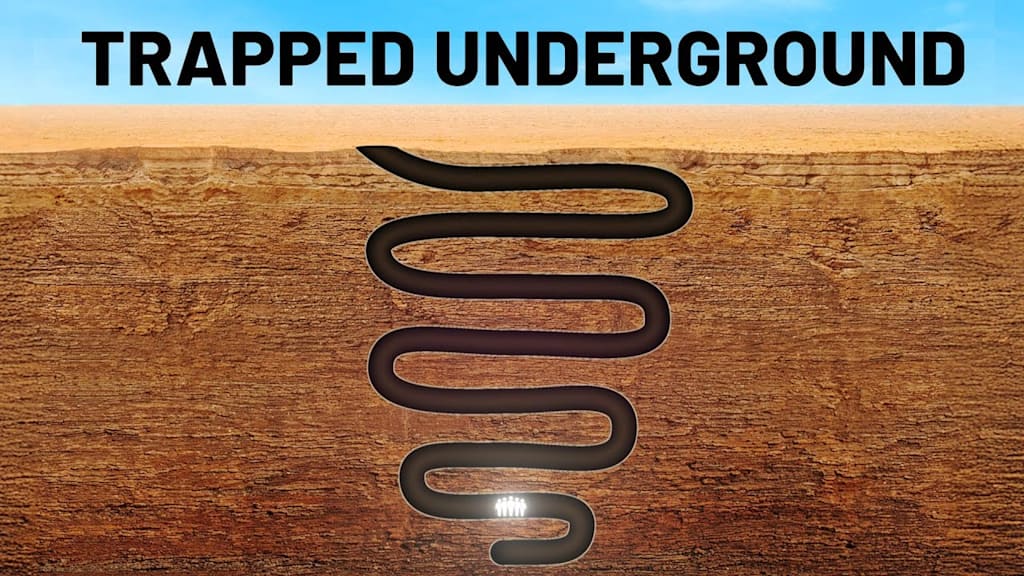
It is August 5, 2010, at the San Jose Gold and Copper Mine in Chile. More than 2,000 feet below the surface, a couple of miners notice a faint rumbling sound echoing through the rocks. The miners have heard rumblings like this before as the rock adjusts to new excavations, but today these rumblings are much more frequent than usual. The time is 2:00 PM, and the workers are trying to wrap up as much work as possible before they will be picked up by a work truck to go to the surface for lunch. Suddenly, they hear something much louder than the previous rumblings. The blast sends those working on the higher levels to the ground and causes the tunnels and shafts to collapse. Large rocks tumble down, sweeping across the workers, and all they can do is hang onto them and ride it out. The San Jose mine has just collapsed, trapping 33 men beneath the surface.
The mine is located in the Atacama Desert, one of the driest areas in the world. To go in, there is an unassuming five-by-five meter entrance leading to a tunnel known as the ramp that spirals downwards. The entrance is at level 720, which is 720 meters above sea level. When the mine collapsed, some workers were as deep as level 40. In the immediate aftermath, some miners tried to drive up the ramp, but they reached level 190 and found a giant slab of diorite—tall as a 45-story building and weighing 770,000 tons—completely blocking the way. Their only option was to retreat to level 90, where a small emergency shelter known as The Refuge was located. Shift supervisor Luis Urzua ordered everyone to gather there.
Some workers realized they might be able to escape through ventilation shafts, but when they reached them, they discovered a heartbreaking sight: the owners had never finished installing the required safety ladders. Back at the surface, authorities weren't called for more than five hours. Eventually, the government deployed special forces to climb down the ventilation shafts, but they found the shafts were too unstable and actively collapsing. The only option left was to drill. 2,300 feet below, the miners realized they were trapped for the long haul. They took inventory of their food: what was supposed to be a two-day supply for a shift was actually just a few cans of fish and peaches, some cookies, and condensed milk. To survive, 33 men began eating just one spoonful of tuna and a cookie every 24 to 48 hours.
To keep their spirits up, an electrician wired flashlights to vehicle batteries to simulate day and night, and a miner named Jose Henriquez became the group's "Pastor," leading them in daily prayer. Above ground, a "city" of families called Camp Hope formed, led by Maria Segovia. On the fourth day, the miners heard a faint sound: a drill. Rescuers were using a rotary drill to reach The Refuge, but because the ground was unstable directly above, they had to drill at a 78-degree angle toward a target only 32 feet wide. Andre Sougarret, an expert engineer, took over the operation and deployed eight drills to run concurrently.
On August 22nd, 17 days after the collapse, a drill broke through. When it was pulled back up, rescuers found a note attached with rubber tubing. It said, "We are well in The Refuge, the 33." Euphoria erupted in Chile. Lifeline boreholes were established to send down glucose gel, medicine, and eventually real food and communication lines. Sougarret then launched a three-plan rescue strategy: Plan A (a Strata 950 rig), Plan B (a Schramm 2130XD), and Plan C (a massive oil rig). Plan B ultimately succeeded in widening a hole to 28 inches.
On day 69, the rescue began. A custom-built capsule named the Phoenix was lowered into the hole. One by one, the men were hoisted to the surface. Florencio Avalos was the first to emerge, and Luis Urzua, the leader, was the last. The world watched as all 33 men were saved in the greatest underground rescue in history. After their release, the miners made a pact to stand together as a unit, but the media attention soon turned toward sensationalism and rumors. Despite the global fame, the owners of the mine were never charged, and most of the miners returned to a life of modest means, their incredible story of perseverance remaining a testament to the human spirit.
About the Creator
Edge Words
All genres. All emotions. One writer. Welcome to my universe of stories — where every page is a new world. 🌍
Keep reading
More stories from Edge Words and writers in History and other communities.
The Deepwater Horizon Disaster
Good afternoon. We begin with breaking news. An explosion on an oil drilling platform in the Gulf of Mexico. On April 20th, 2010, an explosion occurred on the Deepwater Horizon oil platform, leading to the worst oil spill in US history. The resulting oil slick was visible from space, a dark bruise on the ocean as millions of gallons of oil spilled uncontrollably into the sea. This is a battle being waged against a spill that is assaulting our shores and our citizens.
By Edge Wordsabout 21 hours ago in History
A Love Written in the Sands: Antarah & Abla.
In every age, there are love stories that rise beyond time, culture, and conflict—stories that continue to inspire generations. One such timeless tale comes from the golden deserts of ancient Arabia, where honor, bravery, and poetry shaped human life. It is the story of Antarah, a powerful yet rejected warrior, and Abla, a noble woman of grace and beauty. Their love was not simple or easy; it was tested by society, pride, and impossible challenges. Yet, through struggle and determination, their bond became a symbol of courage and devotion that still echoes through history today.
By hamad khan5 days ago in History



Comments
There are no comments for this story
Be the first to respond and start the conversation.