
The Islamabad Accords: A Masterstroke of Peace or the Ultimate Geopolitical Deep Fake?
Are we looking at the dawn of a new era, or just the 14-day countdown to the real storm?
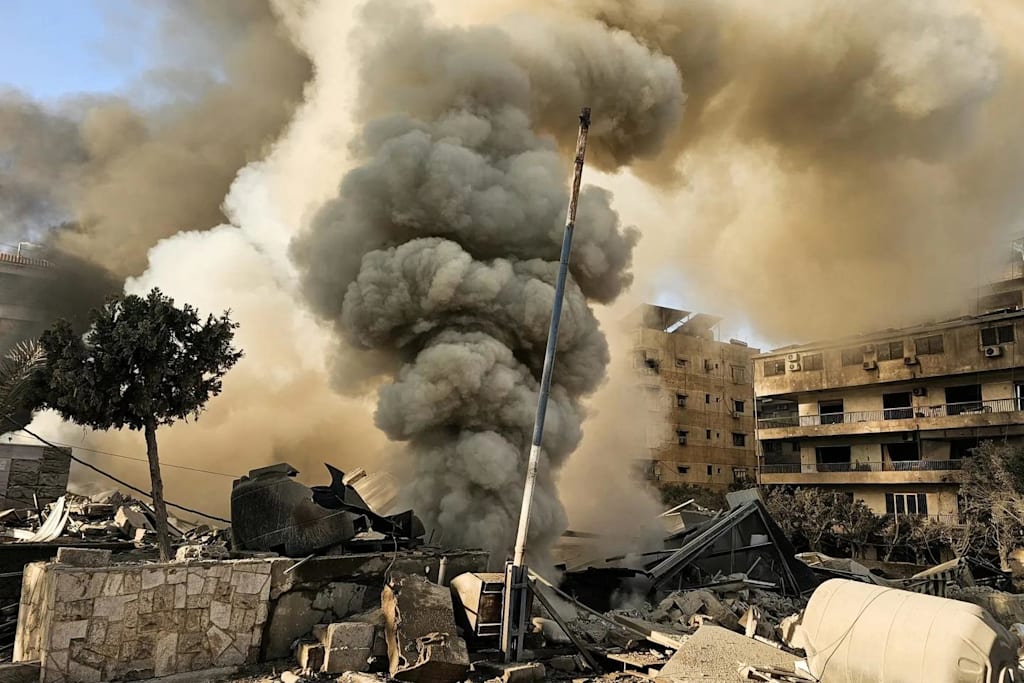
On April 8, 2026, the world held its breath. For weeks, the Middle East had been a centrifuge of chaos, spinning faster every day toward a total civilizational reset. US President Trump was threatening "apocalyptic" strikes on Iranian infrastructure, Israeli sirens were a permanent soundtrack in Tel Aviv, and global oil traders were hovering over the "buy" button for $150-a-barrel crude.
Then, the screech of brakes.
The "Islamabad Accords"—a sudden, two-week temporary ceasefire—arrived not with a bang, but with a series of frantic social media posts. Within hours, Brent crude plummeted 16%, dropping from $110 to $91. The Dow Jones surged. In Tehran, crowds waved flags; in Tel Aviv, the mood was… complicated.
If you think this is a "miracle of peace," you’re playing the wrong game. This isn't a heart-to-heart; it’s a high-stakes casino where the house just realized it ran out of chips.
1. The Math of War: When the Shield Goes Bankrupt
To understand why the U.S. and Israel blinked, you have to look at the "Open Scheme" of asymmetrical attrition. This wasn't a battle of wills; it was a battle of industrial production lines.
The U.S. and Israel are fighting with "Golden Spears" against "Iron Rocks."
- The Arrow-3 Interceptor: Costs roughly $3 million per shot.
- The THAAD Interceptor: Costs a staggering $12 million to $15 million per missile.
- The Iranian "Witness" Drone: Costs as little as $20,000.
In the 40 days leading up to the ceasefire, the U.S. was burning through decades of ammunition stockpiles to stop drones that Iran can manufacture in a garage. The U.S. currently produces about 20 Patriot missiles a month. Iran can launch that many drones in twenty seconds.
Trump’s ultimatum to "bomb the power plants" wasn't a show of strength; it was a desperate mask for the fact that the U.S. air defense network was nearing physical depletion. This isn't a ceasefire; it’s a disguised capitulation of high-tech capacity to low-cost industrial volume.
2. Iran’s "10 Commandments": A Strategic Reset
The ceasefire is built on Iran’s "10-point proposal," a list of demands that effectively dismantles forty years of U.S. Middle East policy. The highlights?
- Total Sovereignty: A guarantee against any future U.S. attacks.
- Hormuz Control: Recognition of Iran’s right to coordinate passage through the Strait.
- Nuclear Rights: Acceptance of Iran’s right to enrich uranium.
- The Reconstruction Fund: Demanding the U.S. and Israel pay for the damage they caused.
While Trump claims the "actual" version being negotiated is different, the fact that these terms are even on the table is a tectonic shift.
3. The "Smart Money" Knew First
Before the official announcement, the financial world was already acting weird. Massive bets appeared on Polymarket predicting a ceasefire before April 15. Defense stocks like Lockheed Martin and Raytheon began to sag in late March.
The "Smart Money" saw the bottleneck: the U.S. government simply couldn't afford to keep buying $3 million interceptors to shoot down $20,000 lawnmowers with wings. The national treasury was being overdrawn in real-time.
4. The VIP Observers: Russia and China
In the front row, Moscow and Beijing are watching the U.S. struggle with a "high-consumption, low-return" war.
Russia: For Putin, this war is a gift. With Brent crude over $90, Russia is pocketing an extra $20-$30 per barrel in net profit daily. Every interceptor fired in the Middle East is one less missile available for Ukraine.
China: Beijing played the "behind-the-scenes broker." A ceasefire secures China's energy supply through the Strait and proves that asymmetric attrition works—a lesson the U.S. knows Beijing is taking to heart.
5. Pakistan: The Nuclear Messenger
Why Islamabad? In the "Dark Forest" of diplomacy, you need a messenger trusted by both sides. Pakistan is the only country that is:
- A nuclear power.
- A predominantly Muslim neighbor to Iran.
- A long-term military partner to the Pentagon.
Islamabad had a massive incentive to stop the fire: their own economy was being crushed by energy prices. By hosting the April 10 negotiations, Pakistan has moved from a regional player to a global pivot.
The Verdict: Peace or Just Refueling?
Strip away the rhetoric, and you have two boxers sent back to their corners.
- The U.S. is frantically loading C-5 Galaxy transport planes with fresh Patriot and THAAD missiles to refill the "Shield."
- Iran is relocating its mobile launch sites and refueling its drone swarms.
This two-week window isn't a bridge to peace; it’s a pit stop in a race. Trump needs lower oil prices for his legacy; Iran needs to consolidate its gains.
The "Islamabad Accords" have revealed the most brutal logic of 2026: War is no longer about who has the best tech—it’s about who can manufacture the most "trash" to throw at the other guy’s expensive shield.
About the Creator
Year 1822 Fun Facts, Trivia, and Historical Events
This quick read presents a collection of fun facts, trivia, and historical events from the year 1822. Discover the year’s top news stories, most influential people, historic firsts, famous birthdays, retail prices, and much more.
By Gregory DeVictor4 days ago in History
Carbon dating helped establish the start point of Roman invasion of Britain
For a long time, researchers believed the Roman conquest of Britain started from the northern seaside of modern France, given the shortest distance from the continent to the island. This assumption triggered an extensive search for physical evidence to support the theory, such as a bay or port, or at least a riverside fort with plenty of ancient military artefacts.
By Aurel Stratan4 days ago in History



Comments
There are no comments for this story
Be the first to respond and start the conversation.