
The China–Iran 25‑Year Deal
Will 2026 Be the Turning Point for Iran’s Economy?

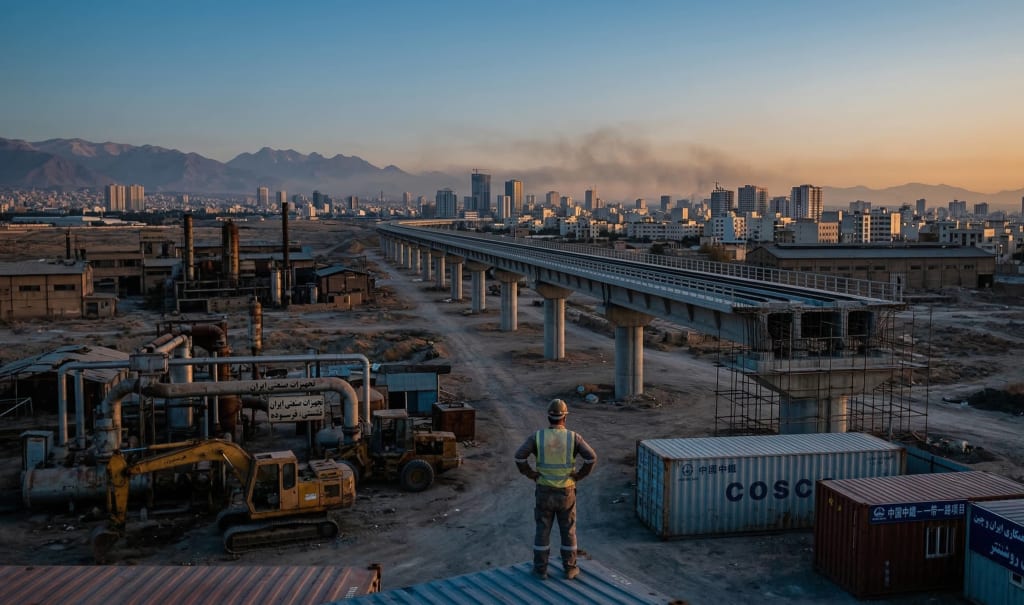
I still remember the WhatsApp message.
A friend in Tehran sent me a blurry PDF of a Persian news article in March 2021 with a single line:
“China signed a 25‑year strategic deal with Iran. Bro…we’re saved.”
He wasn’t joking, but he also wasn’t exactly serious.
If you’ve grown up around Iranians—inside the country or in the diaspora—you’ve probably heard this weird, half‑hopeful, half‑bitter line whenever some new government “plan” hits the news: “This one will fix everything.” It’s usually followed by a laugh.
The China–Iran 25‑year deal landed right in that emotional sweet spot: too big to ignore, too vague to feel real.
Oil, infrastructure, tech, ports, railways, billions of dollars—officials threw numbers around like confetti. Some said $400 billion. Others said 25 years of “guaranteed stability.” Nobody showed any signed contracts.
And yet, buried inside all the noise, one question stuck with me:
What if 2026 is the point where this story either becomes real—or permanently turns into a meme?
Because we’re now close to the 5‑year mark of a 25‑year plan. If a long‑term economic deal is going to leave fingerprints on a country, you usually start to feel it around year five.
So I went back, dug into numbers, read interviews, watched angry YouTube comment sections, and asked people inside Iran what’s actually changed.
Short answer? Less than the slogans promised.
But not nothing.
And that gap between promise and reality—between China’s patience and Iran’s chaos—might be exactly why 2026 matters more than anyone wants to admit.
What is the China–Iran 25‑year deal, really?
On paper, the China–Iran 25‑year deal is a long-term “comprehensive cooperation agreement” that runs from 2021 to 2046.
In human language, it’s supposed to be a framework that says:
Iran gives China long‑term access to energy—oil, gas, petrochemicals—possibly at discounted prices.
China invests in Iran’s infrastructure—railways, ports, energy, telecom, industrial zones.
Both sides expand trade, security cooperation, and political coordination.
People threw around that $400 billion figure so often it sounded official. But if you actually dig into it, that number appears more like a wish list than a signed check. There’s no public evidence Beijing ever guaranteed that amount.
Still, the broader idea makes sense for both sides:
China wants energy security and routes that bypass US‑influenced chokepoints. Iran is a bridge between Central Asia, the Persian Gulf, and Europe.
Iran wants foreign investment, a steady buyer for its oil, and someone who doesn’t lecture it about human rights at every meeting.
On paper, they look like natural partners.
In reality, they behave more like two people in a messy situationship—lots of big talk, some shared interests, very real constraints, and a constant third wheel sitting in the corner called “US sanctions.”
What surprised me digging through timelines was this: the deal wasn’t some sudden, romantic pivot to China. It sat on desks and in drafts for years, and only moved forward when both sides felt boxed in.
Iran needed breathing room after Trump’s “maximum pressure” sanctions.
China wanted to hedge energy routes amid growing tension with the US.
So yes, it’s strategic. But it’s also defensive.
That defensive energy shows up in how slowly it’s actually moving.
And that slowness is why 2026 feels less like a magic turning point and more like a deadline for both sides to decide whether they’re serious.
Why has so little changed in Iran’s economy since 2021?
The first time I realized something was off, it wasn’t from a news report.
It was from a cousin.
He runs a small business in Iran—imports, packaging, distribution, the kind of hustle that lives and dies based on access to dollars and stable prices. I asked him last year, half‑excited, “So, have you seen any change from the China deal? Cheaper goods? New projects?”
He just laughed and said:
“We got more Chinese cars and more inflation. That’s it.”
That’s obviously an exaggeration, but it captures how a lot of people feel.
So what’s actually blocking this giant “historic” deal from showing up in real life?
Three things kept coming up.
Sanctions paralysis
China can talk about “strategic partnership” all day, but big Chinese banks and state‑owned firms still care about the US financial system.
If doing a multi‑billion dollar project in Iran risks losing access to US markets or getting secondary sanctions, they’ll stall, delay, or structure things in a way that looks like this:
Smaller projects, not mega ones.
Oil purchases routed through obscure traders and shell companies.
Barter deals—oil in exchange for goods or services—instead of clean, transparent investment flows.
That means less capital visible in Iran’s official stats, and more weird, opaque trade no one fully trusts.
Iran’s own economic chaos
Sanctions are real, but so is mismanagement.
You can’t attract serious long‑term investment if:
Your currency loses 70–80% of its value in a few years.
Rules change overnight.
Different power centers—government, IRGC-linked entities, local lobbies—pull projects in different directions.
Foreign investors, including Chinese ones, hate uncertainty more than they hate ideology.
China’s companies aren’t a charity. They want profit and predictability. Iran’s economy often offers neither.
The deal is a framework, not a magic wand
This part annoyed me the most once I noticed it.
Politicians talked about the 25‑year deal as if you sign one document and suddenly highways, ports, and pipelines start appearing like Sims buildings.
But the agreement is more like a menu.
You still have to order.
Every project—railway, refinery, industrial zone—needs its own negotiation, contract, financing, approvals, and local buy‑in.
That takes time in a stable system. In Iran’s ecosystem, with sanctions on top? Even slower.
So, despite the big promise, in the first 5 years you mostly get:
Some increase in oil exports to China (often under the radar).
A bit more Chinese presence in sectors like cars, telecom, consumer goods.
Lots of talk about railways, ports, and energy projects—very few actually completed at scale.
Which raises the uncomfortable question: if 2021–2026 is this slow, why should 2026–2031 look any different?
That’s exactly where the turning point idea gets interesting.
Why are so many people fixated on 2026?
If you read enough Persian and English commentary on this deal, 2026 pops up again and again like a glitch.
People ask:
“Will 2026 be the turning point for Iran’s economy?”
“Is 2026 when the China deal actually kicks in?”
“Does something special happen in 2026 with sanctions or contracts?”
The answer is messy.
There’s no single clause in the public agreement that says, “Year 5: magic happens.”
But a bunch of separate timelines converge around that year, and that’s what gives 2026 its strange energy.
Here’s what’s stacking up.
Five‑year checkpoint psychology
In long‑term plans—25‑year visions, strategic frameworks, whatever governments love to call them—year five is where people stop giving you the “it’s too early” excuse.
If there’s going to be a large‑scale rail or port project, you at least see ground broken.
If trade is meant to surge, trends are visible.
If investment is real, numbers start showing up.
If Iranian citizens don’t feel anything by 2026, the “China deal” label becomes political dead weight. It turns from a symbol of hope into another running joke.
China’s own patience has limits
China thinks long term, but it doesn’t wait forever.
If Iran can’t offer a minimally stable environment for big projects by the mid‑2020s, Beijing might quietly downgrade its ambitions:
Buy oil as needed.
Do a few targeted projects in logistics or telecom.
Skip the grand idea of “turning Iran into a major economic node” and focus on safer partners.
2026 is roughly the point where internal Chinese reviews will ask: “Are we actually getting what we wanted out of this partnership?”
Energy and regional shifts
By the mid‑2020s, several things collide:
Iraq and Saudi are trying to sell their own energy and infrastructure deals to China.
Gulf states are racing to become logistics hubs connected to China’s trade routes.
Global energy demand is shifting slowly, but not enough to make oil irrelevant.
Iran can either show that it’s ready to be a reliable, integrated part of this regional network…or stay a discounted supplier operating in the shadows.
If that choice isn’t clearer by 2026, Beijing’s attention will drift toward partners that don’t bring quite so much political drama.
So no, 2026 isn’t written into the stars.
But it’s a practical deadline: the point where the excuses start to expire.
What would a real economic turning point in 2026 actually look like?
I kept asking myself this: if you dropped me blindfolded into Iran in 2026, what signs would tell me the China–Iran deal is finally real and not just propaganda?
Not slogans. Not headlines. Actual, lived‑in changes.
I ended up with a kind of mental checklist.
If 2026 is a genuine turning point, you’d probably see at least some of these:
Visible projects on the ground
Not just artist renderings.
Railways being built or upgraded with Chinese financing and tech, especially along key corridors (like connecting the Persian Gulf to the Caspian and beyond).
Port expansions—Chabahar and Bandar Abbas get mentioned a lot—that clearly involve Chinese contractors or funding.
Energy infrastructure upgrades: refineries revamped, petrochemical projects expanding with technology that Iran can’t easily source from Europe or the US.
Trade volumes that can’t be hidden
Even with sanctions, certain figures leak.
You’d expect:
A clear, sustained increase in Iran–China trade figures—not just oil but also non‑oil exports.
More Iranian products, even low‑margin ones, finding their way into parts of Asia through Chinese channels.
Some movement on digital infrastructure or telecom cooperation, because China doesn’t show up anywhere without its tech companies trying to plug in.
Everyday economic signals
Fancy reports mean nothing if your grocery bill tells a different story.
Signs on the ground would look more like:
Some stabilization—or at least slower collapse—of the rial, linked to more predictable oil income and trade channels.
More Chinese brands and joint ventures not only selling imported stuff, but actually producing inside Iran.
Small and mid‑size businesses saying: “We have clearer access to materials or credit because of X project with Chinese support.”
A shift in how ordinary Iranians talk about it
Right now, mention “China deal” in a Tehran taxi and you’ll usually get:
“They’re selling the country.”
“We’ll become like a Chinese colony.”
Or my personal favorite: “Ok, but can China fix the price of tomatoes?”
If 2026 is a real turning point, the sarcasm doesn’t vanish, but it changes flavor:
“I don’t trust them, but my cousin did get a job on that new project.”
“We complain, but at least the trains actually run now.”
“I don’t like being dependent, but it’s better than total isolation.”
You hear a reluctant, suspicious acceptance instead of pure disbelief.
Without at least a few of these shifts, any “turning point” language is just a new coat of paint on the same old wall.
Is China Iran’s lifeline—or just another risky bet?
Here’s where I have to admit something that makes me slightly unpopular in some circles.
For a long time, I dismissed the whole China–Iran partnership as just another headline tool. Something politicians throw at people when the economy tanks: “Don’t worry, we have a 25‑year deal with a superpower.”
But the more I read, the more I watched, the more I talked to people, the less comfortable that easy dismissal felt.
Because both of these statements are true at the same time:
Iran doesn’t have many options. Western investment is mostly off the table under current politics and sanctions.
Depending too heavily on China creates a new kind of dependency that many Iranians honestly fear.
It’s not a clean hero/villain story.
China isn’t some generous savior coming to “rescue” Iran.
It’s a calculated player looking out for its own interests.
Iran isn’t just a victim either.
It made political choices that narrowed its own path and now has to work with whoever’s still picking up the phone.
So is China a lifeline or a trap?
Probably neither on its own.
What it is, is a lever.
Used well, this 25‑year deal could:
Give Iran semi‑stable energy income through Chinese purchases.
Fund infrastructure that improves logistics, industry, and regional trade.
Create enough breathing room for internal reforms—if those reforms ever become politically possible.
Used badly, it could:
Lock Iran into long‑term discount sales of its own resources.
Deepen corruption around opaque deals.
Cement an economy that’s extractive and dependent rather than diverse and resilient.
That’s why 2026 matters more than the year sounds on paper.
It’s the moment where we’ll be able to say—without guessing—whether Iran is using China to build something, or selling itself short just to get through the next crisis.
And honestly, I don’t know which way it’ll go.
Will 2026 actually change Iran’s economy?
Let me answer this the way my uncle answered when I asked him if he thought the nuclear deal (JCPOA) would fix everything years ago.
He shrugged and said:
“Deals don’t change countries. People do. But deals can give people a chance.”
So no, 2026 isn’t some magic cliff where Iran’s economy suddenly flips from crisis to stability because a line in a 25‑year agreement says so.
What 2026 can do is expose reality.
By then, five years into the China–Iran deal, we’ll be able to see:
Did Iran manage to convert a political slogan into serious, on‑the‑ground projects?
Did China treat Iran as a strategic partner worth the risk, or just a discounted fuel station?
Did any of that actually show up in the lives of normal people trying to pay rent, buy meat, or keep a small business afloat?
If the answer across the board is “not really,” then we’ll know something else:
Big deals, big speeches, and big timelines don’t mean much if the state behind them can’t build trust, stability, and basic competence.
And if there are visible changes—railways humming, ports working, numbers shifting, people grudgingly admitting “ok, something’s happening”—then the conversation doesn’t end there either.
Because the next question is harsher:
Will that new economic reality be used to open Iran up, or to lock it tighter in the hands of those already in charge?
That’s the part no one can outsource to China. Or to any foreign partner.
The sentence I keep coming back to is this:
2026 won’t decide Iran’s future, but it will expose whether the people in charge know how to turn a rare opportunity into something more than a headline.
And that’s what scares me a little—and weirdly, gives me a bit of hope.
Key Takeaways
The China–Iran 25‑year deal is more of a long-term framework than a signed promise of $400 billion; every project still needs its own negotiation and financing.
Five years in, the gap between political hype and real economic change is still wide, with sanctions, mismanagement, and uncertainty slowing almost everything.
2026 matters because it’s the practical checkpoint where both Iranians and Chinese officials will judge whether this “strategic partnership” is paying off.
A genuine turning point would show up in visible infrastructure, measurable trade growth, and small but real changes in everyday economic life.
China isn’t a savior or a villain; it’s a self‑interested partner, and Iran’s choices will decide whether this deal becomes a lifeline or a long-term liability.
If by 2026 the deal still mostly exists in speeches and slogans, it will become another symbol of lost opportunity rather than hope.
The deepest question isn’t “Will China save Iran’s economy?” but “Will Iran use this limited window to build something that actually serves its people?”
Call to Action
If you’ve got family in Iran or you follow this stuff up close, I’d honestly love to hear what you see on the ground—does any of this match what people are feeling? Drop your take in the comments or share this with that one friend who still thinks the China deal is either the miracle or the end of the world.
About the Creator
abualyaanart
I write thoughtful, experience-driven stories about technology, digital life, and how modern tools quietly shape the way we think, work, and live.
I believe good technology should support life
Abualyaanart
Keep reading
More stories from abualyaanart and writers in History and other communities.
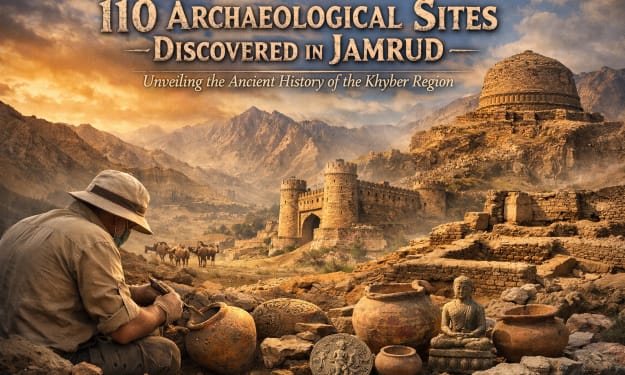
A Window into the Ancient History of the Khyber Region
The historic town of Jamrud has recently gained renewed attention after archaeologists reported the discovery of 110 archaeological sites in and around the region. Located at the mouth of the famous Khyber Pass, Jamrud has long been known as a strategic and cultural crossroads between South Asia, Central Asia, and the Middle East. The newly identified sites provide remarkable evidence that the region was home to vibrant human activity stretching back thousands of years.
By Irshad Abbasi 4 days ago in History
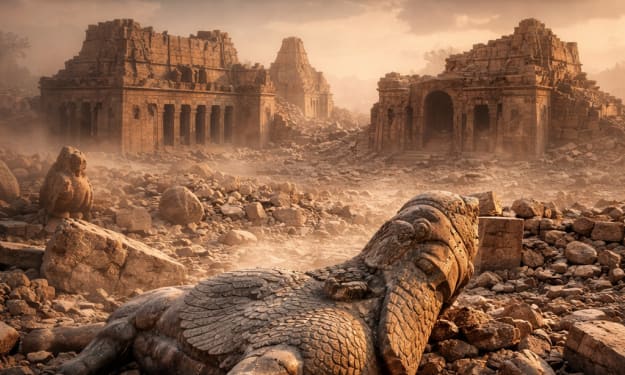
The Fall of Nimrud
The ancient city of Nimrud—one of the most important archaeological treasures of the ancient world—has reportedly been completely destroyed, according to a statement from a militia commander operating in northern Iraq. The claim that the historic site has been “100 percent destroyed” has sparked renewed concern among historians, archaeologists, and international organizations dedicated to protecting cultural heritage.
By Irshad Abbasi a day ago in History
The Solitude of The Chupacabra
Many say that the Chupacabra is a rather recent and modern tale, a mangy coyote or rabied dog. Some point out that it’s just twisted evolution. But very few know the true backstory of the shapeshifter that led to the bloodsucking legend. And perhaps once you will come to know and understand more, you might “forget” a few cattle out to wander.
By Oneg In The Arctic4 days ago in Fiction
Comments
There are no comments for this story
Be the first to respond and start the conversation.