
Strait of Hormuz Crisis Explained (2026)
Why This Tiny Waterway Controls Global Oil, War, and Your Wallet
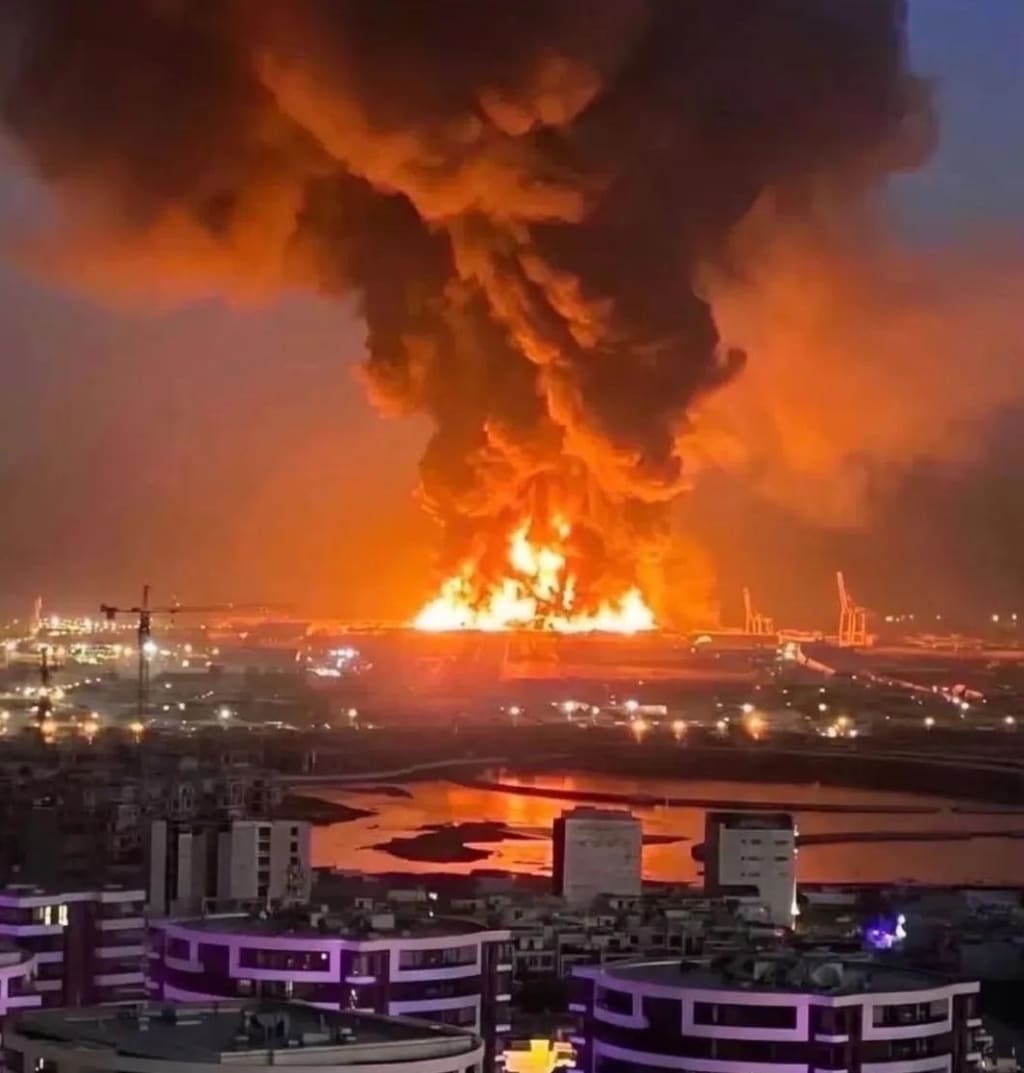
If you zoom out on a world map and trace the oil routes, your eyes will inevitably land on one thin, almost fragile-looking passage — the Strait of Hormuz.
It sits like a gate between two massive bodies of water:
- The Persian Gulf (where much of the world’s oil comes from)
- The Indian Ocean (where that oil travels to the rest of the world)
To the north: Iran
To the south: Oman
At its narrowest point? Just 33 kilometers wide. That’s not just geography — that’s a chokehold. Every day, millions of barrels of oil pass through this tiny strip of water. Block it, and you don’t just disrupt trade… you shake the entire global economy.
A Name Rooted in Myth, Trade, and Power
The word “Hormuz” carries layers of history. Some trace it to Ahura Mazda, the ancient Persian god of light — symbolizing purity and power. Others say it simply means “land of dates”, a grounded reminder of the region’s agricultural roots.
Even ancient Chinese records mentioned it as “Hurrum” — a sign that this wasn’t just a local route. It was part of something bigger: the Maritime Silk Road.
For over a thousand years, ships carrying silk, spices, and stories passed through here.
The Original Global Trade Highway
Long before oil tankers, this strait was already the center of global trade. During the Achaemenid Persian Empire, it linked East and West. Arab merchants later turned it into a commercial superhighway. Ports like Hormuz and Sohar became buzzing economic hubs. Then came the Kingdom of Hormuz — a trading powerhouse that controlled goods like:
- Pearls
- Spices
- Silk
Think of it as the Amazon of the medieval world — but with ships instead of servers.
When Empires Fought for Control
When Europe entered the picture, things got aggressive. In 1507, Afonso de Albuquerque stormed in and seized control. The Portuguese didn’t just trade — they monopolized. For over a century, they controlled the spice routes like a cartel. But power never stays still.
In 1622, a surprising alliance between Persia and the British East India Company pushed them out. That moment changed everything:
- Portugal declined
- Britain quietly took over influence
- The Gulf slowly became a British-controlled zone
By the 19th century, the British Royal Navy was effectively policing the region. They didn’t call it a colony. But make no mistake — it functioned like one.
Oil Changed the Game Forever
Everything shifted after oil was discovered in Iran in 1908. Then came:
Saudi Arabia
Kuwait
Suddenly, the Strait of Hormuz wasn’t just important — it was essential.
At one point:
60% of Western Europe’s oil passed through it. 90% of Japan’s oil depended on it. That’s when it earned its nickname:
👉 “The world’s oil valve.”
Turn it off — and everything stops.
From Cold War Politics to Modern-Day Flashpoints
After Britain stepped back in 1971, a new player took center stage: the United States. Using the Nixon Doctrine, it backed Iran as a regional power — until the Iranian Revolution flipped the script.
Since then, tension has never really disappeared.
Major flashpoints:
Iran-Iraq War
→ Tanker wars, hundreds of ships attacked
Gulf War
→ Regional instability explodes
2008–2012 sanctions crisis
→ Oil prices spike dramatically
2019 tanker attacks
→ Strait labeled “high-risk zone”
And now…
2026: The Moment the World Feared
For decades, “blocking the Strait of Hormuz” was a threat. In 2026, it became a reality. A direct escalation involving the United States and Israel against Iran pushed the region over the edge.
What followed:
- Oil prices surged toward $120 per barrel
- Shipping insurance costs exploded
- Global supply chains took a hit
This wasn’t just a regional conflict anymore.
It became your problem — through fuel prices, inflation, and economic shockwaves.
🧠 The Uncomfortable Truth Nobody Tells You
Here’s the raw, grounded reality:
The Strait of Hormuz is not just about geography.
It’s about control.
- Control of energy
- Control of trade
- Control of pressure
Whoever influences this narrow strip of water holds leverage over:
- economies
- governments
- and everyday people
And history shows one brutal pattern:
👉 Every time tension rises here, ordinary people pay the price — not the politicians.
Final Thought (And Why You Should Care)
This isn’t just a distant geopolitical story. It’s a domino effect. When the Strait of Hormuz shakes:
- Fuel prices rise
- Food costs follow
- Jobs and markets feel the pressure
So the next time you hear about it in the news, don’t scroll past.
Because this tiny waterway — barely 33 km wide — quietly controls a huge part of your financial reality.
About the Creator
The Mystery Behind Egypt’s Newly Discovered Royal Tomb
In the arid sands of Egypt, where countless secrets of the ancient world still lie buried, archaeologists have once again made a remarkable discovery: a previously unknown royal tomb. The find has sparked excitement across the global archaeological community, yet it has also raised one pressing question—who does this tomb belong to?
By Irshad Abbasi 2 days ago in History
The dark side of Albert Einstein
He is perhaps the most recognizable scientist who ever lived — a wild-haired, gentle-eyed figure whose name has become synonymous with brilliance itself. Mention Einstein in any corner of the world, and people instantly know who you mean. Yet for all his fame, the real Albert Einstein, the complicated, contradictory, deeply human man beneath the legend — remains surprisingly little known. Strip away the mythology, and what you find is far more fascinating than any caricature.
By Shirley Oyiadom7 days ago in History


Comments
There are no comments for this story
Be the first to respond and start the conversation.