
He Never Stood a Chance: The 1916 Lynching of Jesse Washington (17)
Jesse was convicted of killing his employer's wife

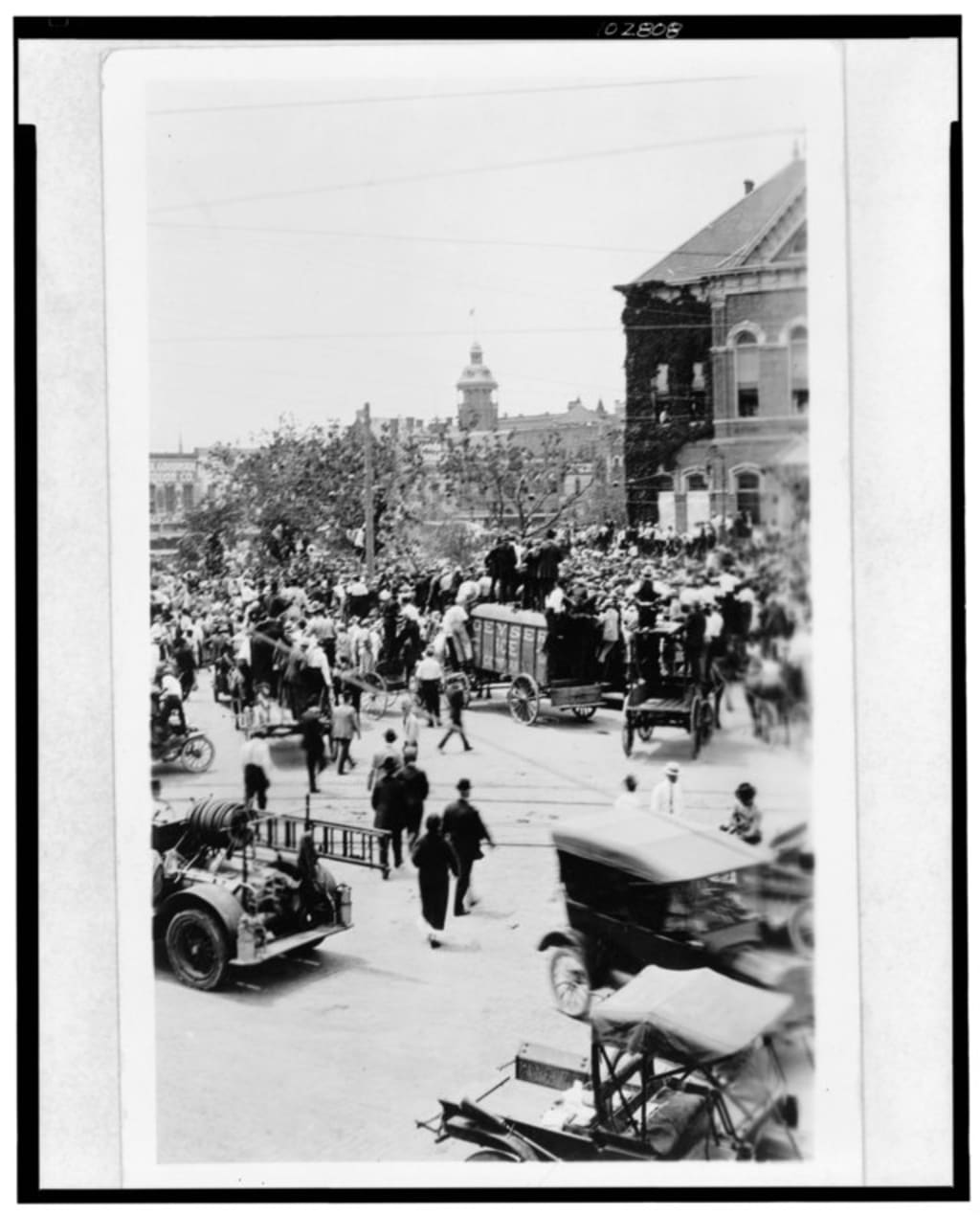
They didn’t just watch. They took photos. Turned them into postcards. Mailed them to friends and family, as if lynching a man was a souvenir. The violence inflicted upon 17-year-old Jesse Washington on May 8, 1916, is purely horrific, but just as shocking is the number of people who gathered to see a Black teenager tortured to death.
People from Waco and nearby small, rural towns gathered at the city hall. They brought along kids, claiming that watching a lynching of a Black man was a rite of passage for young white boys. Some 10,000 to 15,000 people watched, cheered, and laughed as Jesse lost his life over a two-hour lynching spectacle.

The mayor and sheriff of Waco were among those in attendance. Sheriff Fleming had already instructed his officers not to intervene well before the lynching began. How could Black people ever get justice if the system designed to protect them supported the mobs who wanted them dead?
Jesse had been convicted of raping and killing Lucy Fryer, his employer’s wife. Police claimed they found him in blood-soaked overalls and that he later confessed to the murder. They also had a signed statement admitting to killing the 53-year-old white woman.
In the 1900s, police officers always got their confessions from Black people. Even without evidence. It wasn’t justice; it was the police getting what they wanted at any cost. No concern about how they obtained the confession or if it was true. Whether by coercion, threats, or flat-out lies, they got it. Confessions weren’t as honest as one might expect.
The Lynching of Jesse Washington
Jesse’s guilt had been determined well before he walked into the courtroom. He was Black, and that was all that a judge needed to render a guilty verdict.
After the verdict, officers attempted to escort Jesse to jail. Before they had a chance to walk more than a few steps, a mob of about 400 white people from the crowd overpowered the guards and kidnapped the convicted criminal.
Jesse tried to fight the men as they chained him by the neck. It was useless; there were too many of them. They kicked, punched, and stabbed Jesse as they dragged him by the neck down the street away from the courthouse.
Onlookers cheered and roared.
But the worst was yet to come. Sadly, Jesse probably knew he was about to die a horrible death.
The group arrived with Jesse at a large crowd of whites who had gathered at City Hall well before the end of the day-long trial. Everyone knew the outcome. Guilty or not, this would be Jesse’s fate. All were eager to watch the upcoming murder as if it were entertainment.
They castrated Jesse as the second group started a bonfire. Mob members cut off Jesse’s fingers, slowly, one by one, painfully.
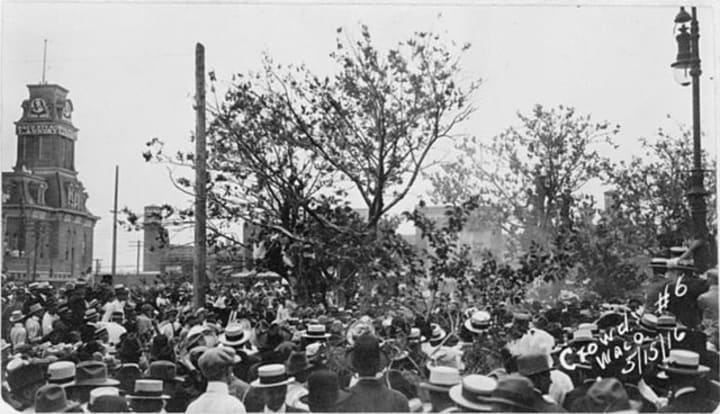
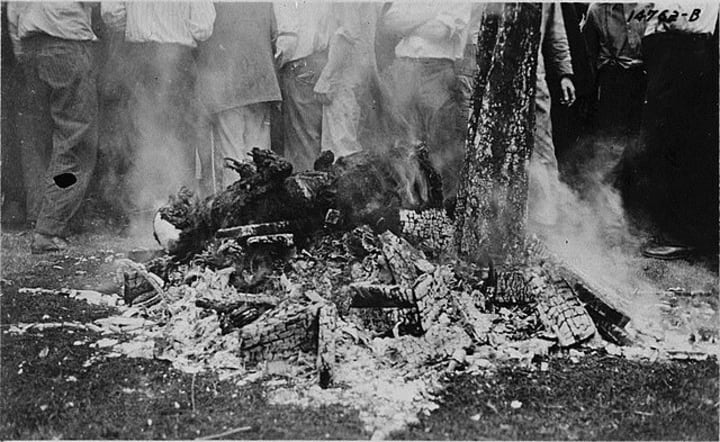
The group doused Jesse in coal oil and hanged him in a tree directly over the fire. Over the next two hours, the mob lifted him in and out of the pit, taking measures to keep him alive merely for the pleasure of prolonging his suffering.
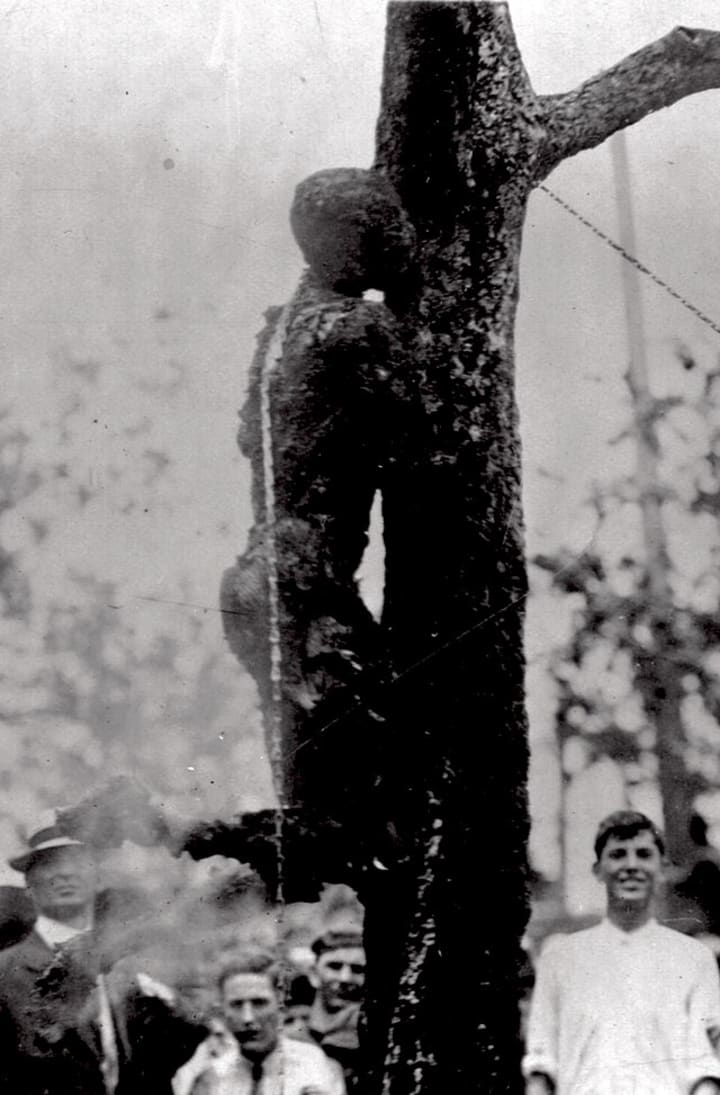
The crowd continued to shout, cheer, and clap as Jesse burned to death. The sheriff and mayor never attempted to intervene.
Jesse’s arm and legs had burned off, his head and torso were charred, and his cranium was exposed by the time the crowd dispersed. The men chained his remains to the back of a horse and dragged him to nearby Robinson, Texas, where Mrs. Fryer had been killed. His body was publicly displayed in front of a blacksmith’s shop until Constable Les Stugall buried him late that night.
Lynching Postcards
A photographer and his assistant were among those in the crowd watching Jesse’s horrific death. The men brought along their equipment and captured Jesse’s lynching and death.
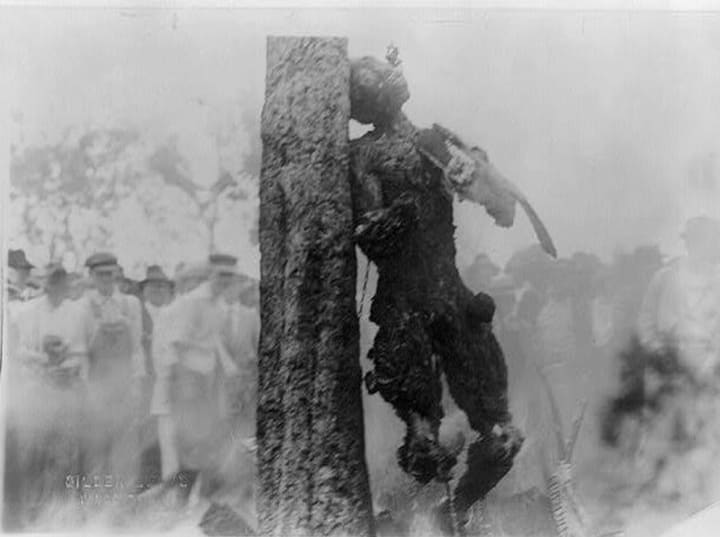
Photographing public lynching victims was common practice in those days, but this photographer captured the entire incident from start to finish. This had never been done before.
The gruesome photos were turned into postcards, as if scenes of a man dying were a keepsake souvenir, and sold throughout Waco.
Buyers mailed the postcards to friends and family, some in Northern states, who were sickened by the images before their eyes. Their disgust helped launch anti-lynching movements and eventually end the horrific torture of Black Americans.
Jesse Washington Guilt
Historians later examined Jesse’s case. They determined he likely did kill Mrs. Fryer, but did not rape her. Nonetheless, Jesse did not deserve to die in such a barbaric way, all for the entertainment of racist white people who could’ve cared less about his guilt.
About the Creator
Criminal Matters
The best of the worst true crime, history, strange and Unusual stories.
Graphic material. Intended for a mature audience ONLY.
Follow me @ facebook.com/criminalmatterspage
Keep reading
More stories from Criminal Matters and writers in History and other communities.
Chicago Hospital Held Newborn Baby for 8 Months Over an Unpaid Medical Bill
Debts were handled much differently in the 19th and early 20th century. Back then, people who accrued debt had more to fear than letters and calls from collection agencies the same way we do today, especially if they owed a hospital or doctor money.
By Criminal Matters3 months ago in History
The Boy Soldiers of Shiloh
When the Battle of Shiloh erupted on April 6, 1862, over ten thousand soldiers on both sides were under the age of eighteen, with the youngest confirmed combatant being nine-year-old Johnny Clem who picked up a musket taller than himself and charged Confederate positions, and by the time the two-day battle ended with 23,746 casualties, hundreds of these child soldiers lay dead or dying in the Tennessee mud, calling for their mothers while surgeons too overwhelmed to treat adults stepped over their broken bodies to reach soldiers they deemed more likely to survive.
By The Curious Writera day ago in History
The Master of Escape
Few names in history are as synonymous with magic and mystery as Harry Houdini. Known as the “King of Escape,” Houdini transformed stage illusion into a thrilling spectacle of danger, skill, and suspense. His life was as dramatic as his performances—and his death, which occurred on Halloween, only deepened the legend surrounding him.
By Irshad Abbasi a day ago in History


Comments (1)
You should also mention the souvenirs that people took.