
Book Review: "Hannibal" by Philip Freeman
5/5 - a very interesting text about a divisive man...

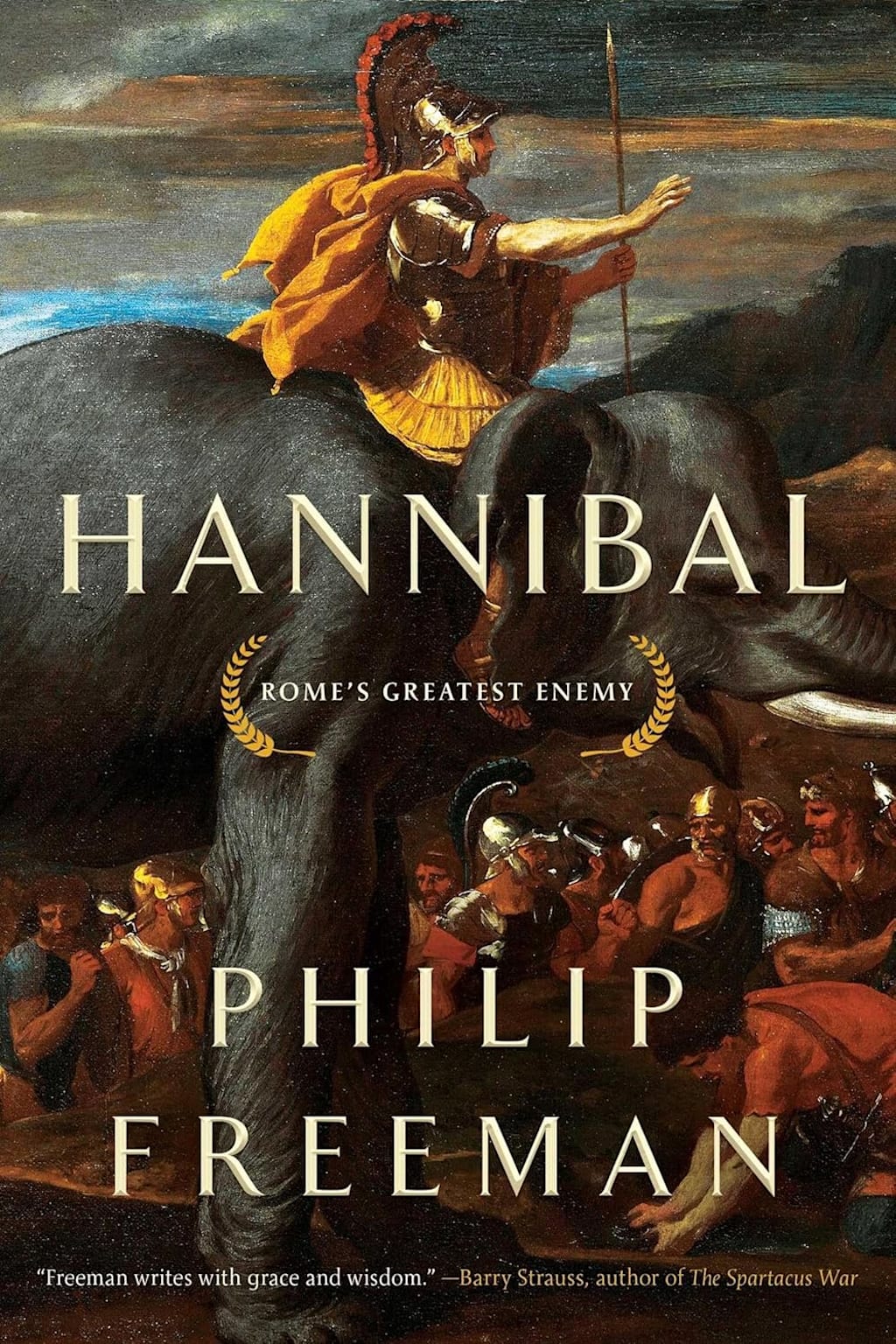
This is quite fascinating. I have studied people like Napoleon and of course, there's that famous painting of him 'Crossing the Alps' by Jacques-Louis David, one of my favourite painters. If you look at where he has carved his name, it is directly above that of Hannibal. Now, I've heard of Hannibal and the Elephants before mainly because I wasn't an ignorant child but I had never actually studied him in any detail. The extent of what I knew seemed to stop at 'he fought the Roman army' and he was actually a formidable foe to them, able to hold his own. But after reading this book by Philip Freeman, I have to say I know a lot more now and it is all very interesting to me.
We get an insight into who Hannibal was and where he was from. The political climate of Carthage was clearly under some threat and so, Hannibal's father when his boy was about 9 years' old asked his son to travel with him to war. Hannibal was made to take an oath on the corpse of a lamb that he would never feel any mercy towards the Romans and never give up on fighting them. He was quick to take the oath and move forwards. Philip Freeman writes Hannibal's early life as one that we are unsure about in terms of dates and times (we don't know his mother's name really), but we are pretty sure about this mythology which tells us about the beginning of his military career. Once he left, he would not return to Carthage for forty years - he would never see this mother of his again.
Hannibal would quickly turn into one of the most talked about generals to take on Rome because he did it and he almost won the whole bloody thing. But until then, we get notes about his travels through Sicily, the atmosphere and the people there, we get the travels through Spain and how Hannibal would have loved travelling on the ocean even though most of his exploits took place on land. But one thing we are constantly reminded of is the fact that there was a stark difference between the way the Romans portrayed Hannibal and who he actually was. The Romans of course, loved their propaganda.
Hannibal's father eventually dies after misaligning and misjudging the battlefield. He gives his life to save the rest of his army (including his son) and Hannibal learns the important lesson of togetherness in the army and the fact that the general should be doing exactly what everyone else is doing and not less. Hannibal's brother-in-law eventually takes over the army as Hannibal himself is too young still and there is surprisingly no power struggle between the two. Hannibal is treated with respect and he grows in turn, to respect others. The author describes his father's death and the power of the army changing hands slightly as a time of great movement in Hannibal's life - there are so many things to take in when it comes to how one should treat others.
The author intersperses the book with quotations by Roman historians, showing both how either level-headed or how brazenly shoddy their research about their formidable opponent is. One of the historians constantly referenced is Livy now, I don't know about you but I've read a little of Livy and he is probably the best example of being both. When Hannibal finally takes over the army and we see his actual military tactics of pretending to retreat backwards in order to tire out the opposing army, it is clear that not many people can question the abilities of this new, young general.
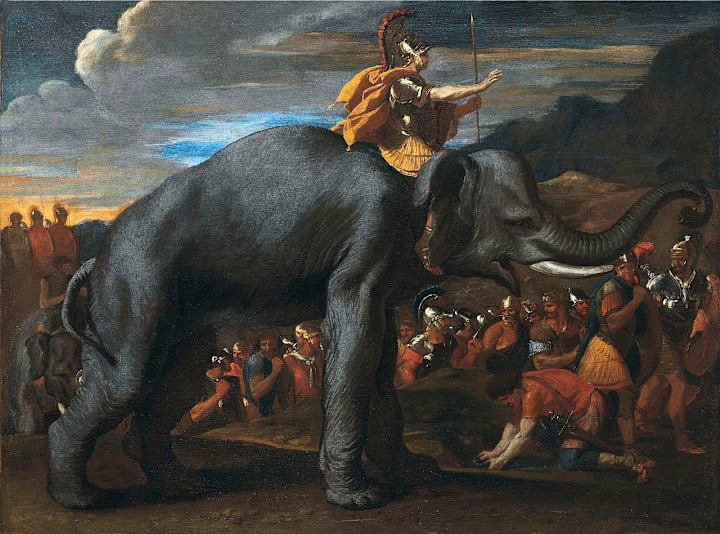
One of the parts I loved is the way in which Hannibal used the elephants. There's a story about Hannibal being able to train the elephants and make them a part of the army. One of the most surprising things about this actually appears later in the time where he crosses the alps - he is able to take thousands of army men and the elephants over this cold climate, through this treacherous plain and into the mouth of the beast that is the Roman Empire. Once he gets to Rome though, he chooses not to attack straight away, showcasing great amounts of strategy when it comes to how to go about taking over the place if he could.
As we move through the occupation of Rome, we also then get the famed exile and death of Hannibal which was based on a strange amount of diplomacies happening back home, including some character flaws on Hannibal's part. The author ends the book by wondering what would have happened if Hannibal had won - what would have happened if Hannibal had chosen to strike Rome immediately and would he have actually been able to sack Rome? I guess we may never know anything other than the reasoning Philip Freeman gives us. We are given a short glimpse into what might have happened had the Roman Empire never existed...
About the Creator
Annie Kapur
I am:
🙋🏽♀️ Annie
📚 Avid Reader
📝 Reviewer and Commentator
🎓 Post-Grad Millennial (M.A)
***
I have:
📖 300K+ reads on Vocal
🫶🏼 Love for reading & research
🦋/X @AnnieWithBooks
***
🏡 UK
Keep reading
More stories from Annie Kapur and writers in Geeks and other communities.
Book Review: "Ancient Rome" by Thomas R. Martin
I have not got a single clue what drew me to this book, I have to say that the vast majority of the time, I'm not overly interested in Ancient Rome. But I think that because this book was a good length and was also free, I can honestly say that I became more interested as I went on. The book was fairly interesting, I learned about how the Ancient Roman family was structured and how it depended on class. I learned about how women (for the middle class and upwards at least) actually had some power and agency. No, it wasn't a lot but it was a hell of a lot more than you would think when you think about a society that was deeply patriarchal. Roman children of rich households would be taught rhetoric: men for a political life and women in order to make and carry great conversation. Much of this, of course, was influenced by the Greek lifestyle that came before it but there's so much more to learn here. Let's take a look at some other really interesting things I found out in this book...
By Annie Kapura day ago in Geeks
Simpsons Review: "So It's Come to This: A Simpsons Clip Show"
Happy April Fools' Day, all! It's been a while since I've written a review of a Simpsons episode, and with today being the aforementioned holiday, I just have to talk about this episode. It's a landmark episode, in more ways than one, so let's get to it.
By Clyde E. Dawkinsa day ago in Geeks
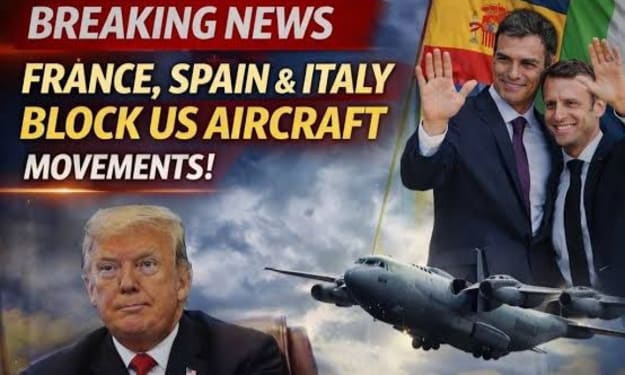
Did France, Spain, and Italy Really Block U.S. Military Flights?
In today’s fast-moving digital world, news spreads across borders in seconds. A single headline or social media post can ignite global debates, shape public opinion, and even create diplomatic speculation. One such claim that has recently captured attention is the idea that France, Spain, and Italy have blocked U.S. military aircraft from passing through their airspace. The claim sounds serious—suggesting a potential fracture between Europe and the United States—but how accurate is it?
By shaoor afridia day ago in Geeks



Comments
There are no comments for this story
Be the first to respond and start the conversation.