
Book Review: "Ancient Rome" by Thomas R. Martin
4/5 - it was all going so well until Jesus popped up...

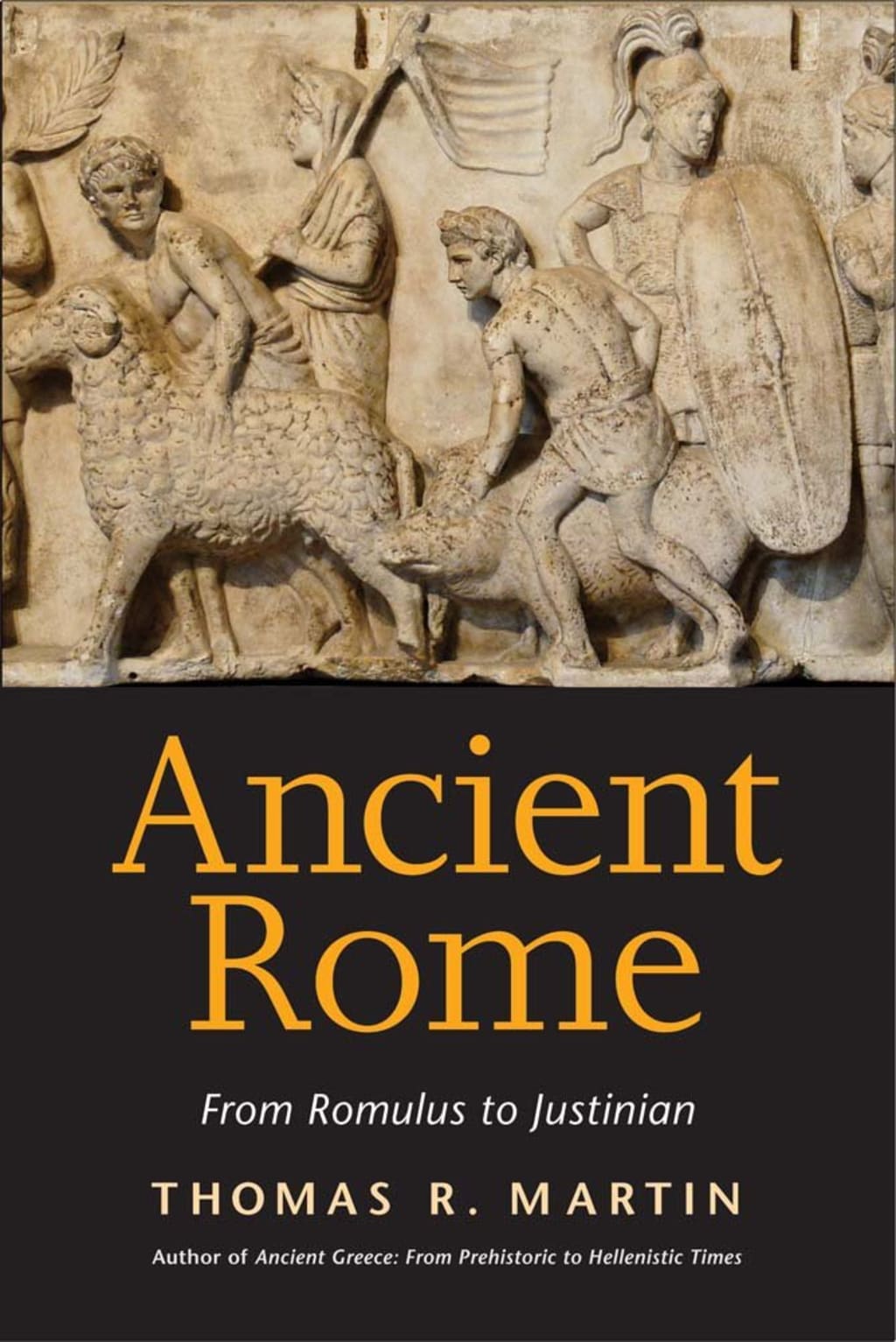
I have not got a single clue what drew me to this book, I have to say that the vast majority of the time, I'm not overly interested in Ancient Rome. But I think that because this book was a good length and was also free, I can honestly say that I became more interested as I went on. The book was fairly interesting, I learned about how the Ancient Roman family was structured and how it depended on class. I learned about how women (for the middle class and upwards at least) actually had some power and agency. No, it wasn't a lot but it was a hell of a lot more than you would think when you think about a society that was deeply patriarchal. Roman children of rich households would be taught rhetoric: men for a political life and women in order to make and carry great conversation. Much of this, of course, was influenced by the Greek lifestyle that came before it but there's so much more to learn here. Let's take a look at some other really interesting things I found out in this book...
We learn all about how the Roman Republic came about and why. First of all, we have the story of Tarquin and how he raped Lucretia and thus was exiled (I'm pretty sure this is the 'ghost' Macbeth talks about in Act 2, Scene 1 as well). The decision was that one man could not possibly hold all the power because it would almost always lead to the abuse of power. So they created a senate, dissolved the monarchy and lived with a group of people who voted and discussed in a parliament-style manner. The problem, the author states, is that the elder and more wealthy senators would be allowed to speak and discuss (and also vote) first, which also meant that the vote, in order for the less prestigious folk to keep their seats, would be skewed towards their desires and leanings. So then again, there was definitely an abuse of power going on, it was just slightly different because they could cover it with the illusion of a state.
Roman cultural developments are based on the earlier Ancient Greek traditions, I think this is something we have all figured out by now, no matter where we are in our learning about Ancient Rome. The first historians of Ancient Rome wrote in Ancient Greek and most of his stuff is actually lost. I know this because this is the same person (though I can't recall his name) whom Livy etc based their writings to do with the founding of Rome on as he mentions Romulus as being the founder. When it comes to the theatre there is something very obvious that is taken from the Greek tradition but then again, the Romans did develop rhetoric and the performance of the trial a bit more than the Greeks did it in their time. The author definitely makes sure that the lines between the Ancient Greeks and the Ancient Romans is drawn because it helps us to understand the latter.
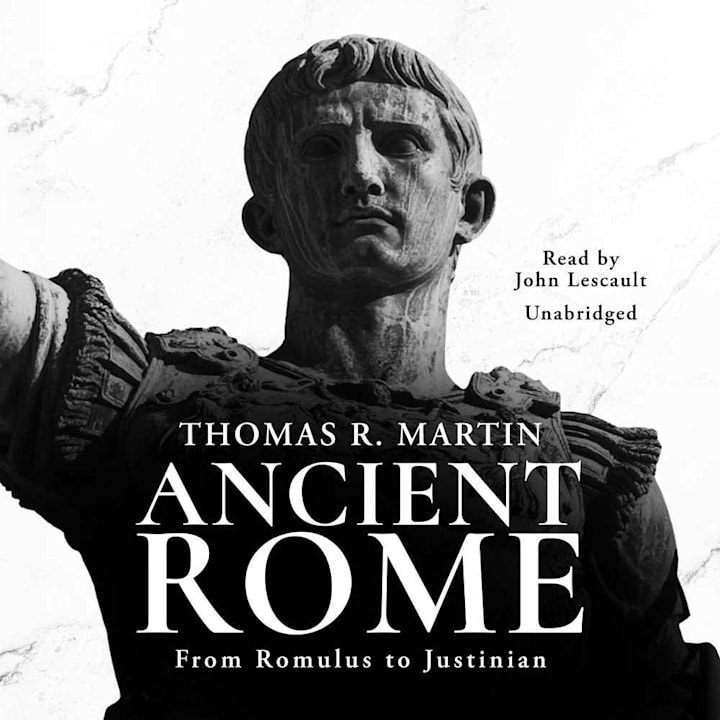
We then move on to looking at the Roman Emperors who ruled after the overthrow of Julius Caesar and a bunch of civil wars. Augustus leads and even though Virgil wants The Aeneid destroyed on his deathbed, they didn't do it (thank god, I wrote my thesis using The Aeneid as one of the main texts). Ovid was banished for his works and Augustus seemed to be the emperor of the new age, even though it was pretty much the same age just a different time. When you've been at war for so long, anything looks like peace time. The author does a great job of taking us through different ceremonies and the fact that Augustus dressed and behaved like a normal person even though the reality was very, very different.
We are introduced to the expanding Roman Empire and how this was possibly navigated by some guy called Jesus. I'm not going to lie but when you start using Jesus as a historical person I tend to get angsty. This book admits that there are discrepancies of time and place, things we simply don't know. It also starts off with addressing the issue of Romulus and whether he actually existed (heads up, he probably didn't, but his story makes for a really cool piece of folklore that we can all enjoy. And for a group of people who were so fragile in their identity, having an overarching myth telling who they are and where they came from was probably a good strategy for building a strong and consistent military force). Jesus though, I can't explain why the author seems to have dedicated a whole chapter to sporadic mentions of his existence. There's definitely other things to do that are probably more historical and factual.
As we move towards the age of Justinian, I think it's important to remember that not everything in Ancient Rome is confirmed. For example: the Jesus question, the Romulus and Remus myth, the question of whether Nero burnt Rome to the ground, the ideas espoused by Augustus being practically the same as where the Romans had just come from and of course, the times of the "Early Roman Kings".
If you get the joke, you get the joke, I'm not explaining it but there's a reason I put that in bold...
About the Creator
Annie Kapur
I am:
🙋🏽♀️ Annie
📚 Avid Reader
📝 Reviewer and Commentator
🎓 Post-Grad Millennial (M.A)
***
I have:
📖 300K+ reads on Vocal
🫶🏼 Love for reading & research
🦋/X @AnnieWithBooks
***
🏡 UK
Keep reading
More stories from Annie Kapur and writers in Geeks and other communities.
Book Review: "Queen Victoria" by Lucy Worsley (Pt. 6)
As we make our way towards the end of Victoria's reign, there are a number of stories about other people. We've had the story of Bertie and Alix, the story of Beatrice and Henry, we've also had stories about Albert, Benjamin Disraeli, Victoria's mother and father and more. Chapter 22 though is about a young Indian muslim named Abdul Karim who became Queen Victoria's closest friend. She needed to be helped more about the place and that is what he was for. After holding a colonial exhibition at the Royal Albert Hall, Abdul didn't return to India but stayed behind in England to help out. He climbed to become one of the most respected gentlemen (at least by the queen) in England. All of the other gentlemen around the queen were obviously disliking of him as were Victoria's children. However, he seems to have been completely devoted to her comfort and safety.
By Annie Kapura day ago in Geeks
Can We Predict The Future of Star Trek?
After failing to reach the Nielsen top 10 for streaming, Star Trek’s latest series was cancelled almost immediately after finishing its first season. Showrunners Alex Kurtzman and Noga Landau gently broke the news with a letter which assured that while season 2 was still happening, it would in fact be the final season.
By EARLY RAY MIXON3 days ago in Geeks



Comments (1)
I love the ancients, and while Jesus was a good guy, Christianity never was