scifi tv
The best science fiction television from every decade.
Doctor Who: Empress Of Mars Review
Having wrapped up the Monks trilogy that had come to define much of the middle of this season, Peter Capaldi's Doctor looked set to continue his last hurrah with the return of an old foe. The Ice Warriors, reptilian warriors from the planet Mars were one of the most iconic monsters to come out of the classic series of Doctor Who but had featured only once previously in its 21st century incarnation (ironically enough in Matt Smith's final season as the Doctor in 2013). Written by Mark Gatiss, Empress Of Mars would not only bring the Red Planet warriors back but fill in part of their story while also telling an immensely satisfying SF action/adventure story along the way.
By Matthew Kresal9 years ago in Futurism
Most Realistic Alien Species in Sci-Fi
It doesn't take much to see how scientific discoveries have inspired sci-fi authors to create new worlds. Many famous science fiction authors wondered what life would be like on another planet after seeing the lunar landing. Others gained inspiration from seeing robots being made. Even more may have wondered what kind of biology aliens would have—and how it'd interact with ours.
By Ossiana Tepfenhart9 years ago in Futurism
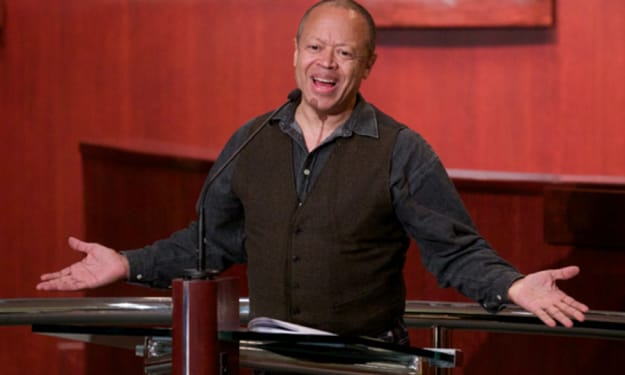
Where X Marks the Spot: An Interview with Steve Barnes
Steve Barnes is a writer, lecturer, personal performance coach and a killer philosopher. He has published more than 25 science fiction, fantasy and horror novels, including New York Times bestsellers. He’s been nominated for the Hugo, Nebula, and Cable Ace Awards. And he wrote the Emmy winning episode, “A Stitch In Time” for Showtime’s the Outer Limits. He’s also written for the New Twilight Zone, StarGate, Andromeda, and Ben 10. I got to sit with Steve to discuss his viewpoints on the state of the field, life, the universe, and everything in-between.
By Joshua Sky9 years ago in Futurism
Rewatching... Doctor Who: The Evil Of The Daleks - Part 3
"You are more than human." Saturday 3 June 1967 All things considered it hasn't been a great day for Jamie. He opened a booby trapped box of gas which knocked him and the Doctor out. Then he woke up all groggy in 1866 with a thumping headache. In Canterbury. Now I'm sure most of us could tell a few stories about waking up in 1866 after springing a gas box (yes that's right: a euphemism), but even I have never woken up in Canterbury. And now he's been bashed on the head and abducted by a well loved 70s comedy actor (Windsor Davies), playing a thug called Toby, and has woken up all groggy with a thumping headache (probably - he doesn't actually say so), in a barn. Toby calls his weapon 'Mr Nod'. I like a villain who gives his weapon a pet name. Mr Nod is a sort of cudgel thing. I expect if he'd been armed with a pistol it would have been named Mr Death.
By Nick Brown9 years ago in Futurism
The Star Trek: Discovery Debacle
The above trailer has sparked such a controversy among its viewer base that it would be nigh-impossible to fairly describe the whole affair in any short time. I'll try nevertheless, concentrating on my own thoughts concerning the subject.
By Nathan Istvan9 years ago in Futurism
Doctor Who: The Lie Of The Land Review
Warning: Potential spoilers ahead for the episode. The trilogy is a most dangerous form of storytelling. It assumes that you will be able to tell one large story across three separate parts (or acts if you prefer) with each standing up on its own. The opening can be good, the middle can be strong, but it is the ending that might ultimately determine how the story is remembered. What has been termed “the Monks trilogy” has seen the long running British science fiction series Doctor Who attempt a trilogy in the middle of its tenth season with the titular aliens coming and taking over the Earth. So could the dystopian The Lie Of The Land bring the trilogy to a satisfying close?
By Matthew Kresal9 years ago in Futurism
The Fire Next Time
Climate change has hit the headlines again in the last few days with the decision made by the current administration to withdraw from the Paris Accords. There's been all the usual discussions: should we or shouldn't we be a part of it, is climate change even real, and so forth. In my own mind though was a miniseries I recently watched on the recommendation of a friend and fellow writer called The Fire Next Time that, despite being aired in 1993, touched upon much of what we're dealing with in the year it was set in.
By Matthew Kresal9 years ago in Futurism
History of Science Fiction Part III
At the dawn of the 1960s, the history of science fiction took a huge turn from its past. In two decades, the whole genre of sci-fi would change in ways that would alter mainstream perspectives of the science fiction genre.
By Anthony Gramuglia9 years ago in Futurism
History of Science Fiction Part II
At the start of the 20th century, the history of science fiction took a great turn thanks to the emergence of motion pictures and the proliferation of pulp magazines. It is thanks to these two entertainment forms that the landscape following H.G. Wells' sci-fi novels took such a different direction than the scientific romances of the 19th century.
By Anthony Gramuglia9 years ago in Futurism
History of Science Fiction Part I
When chronicling the history of science fiction, you need to think about the history of sci-fi as it pertains to the history of mankind. Throughout its span, sci-fi asks where we are as a species, where we will go, and what will happen when we get there.
By Anthony Gramuglia9 years ago in Futurism