
Saudi Arabia Solar Energy Market: Renewable Expansion, Vision 2030 & Growth Outlook
How utility-scale solar projects, declining photovoltaic costs, and strong government support are accelerating capacity expansion, grid integration, and sustainable energy adoption across the Saudi Arabia solar energy market.
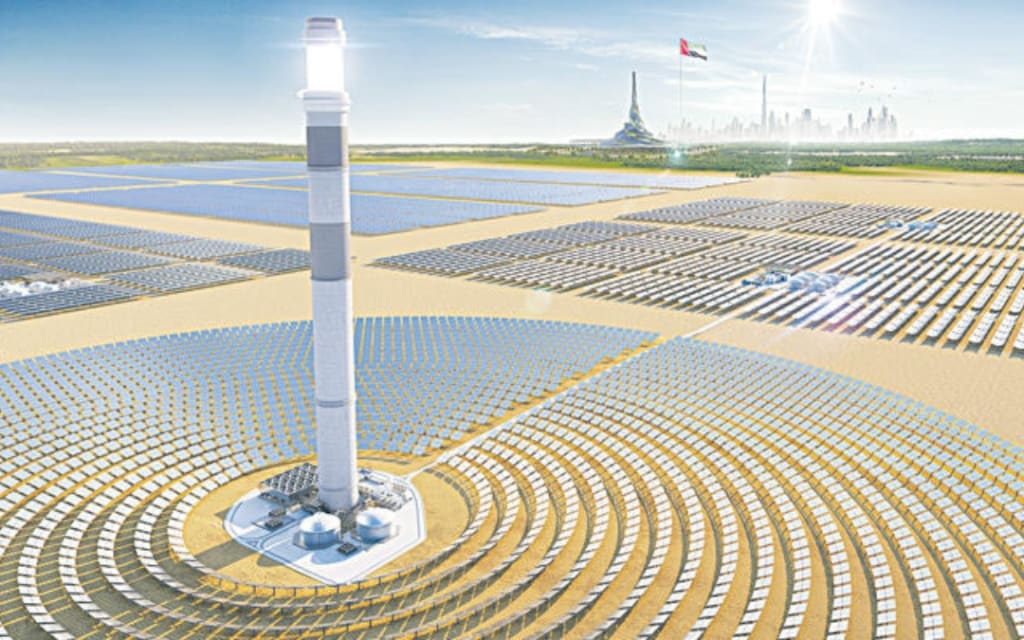
Rising need to reduce carbon emissions, declining solar technology costs, and Vision 2030's ambitious renewable energy targets are driving solar energy adoption in Saudi Arabia, supported by favorable government initiatives, increasing energy security focus, and massive infrastructure investments in photovoltaic and concentrated solar power projects. According to IMARC Group's latest data, the Saudi Arabia solar energy market size was valued at USD 8.3 Billion in 2025. Looking forward, IMARC Group estimates the market to reach USD 145.4 Billion by 2034, exhibiting a CAGR of 37.39% from 2026-2034.
Solar energy now represents a cornerstone of Saudi Arabia's economic diversification strategy, transforming the Kingdom from one of the world's largest oil exporters into an emerging renewable energy powerhouse. The market benefits from exceptional solar irradiance levels among the highest globally, strategic government backing through Vision 2030, and record-breaking low electricity prices from competitive project auctions. Major technologies include solar photovoltaic systems for utility-scale farms and rooftop installations, and concentrated solar power plants with thermal storage capabilities, with developers prioritizing cost efficiency, energy storage integration, and grid stability to support the Kingdom's goal of generating 50% of electricity from renewables while creating new export industries in green hydrogen and sustainable energy.
Saudi Arabia Solar Energy Market Growth Drivers:
- Vision 2030 Framework and National Renewable Energy Program
Saudi Arabia's Vision 2030 framework drives unprecedented solar energy expansion through strategic investments and ambitious capacity targets. The Kingdom aims to generate 50% of electricity from renewables by 2030, requiring approximately 130 GW of renewable capacity with 58.7 GW expected from solar installations. A USD 32 Billion investment pipeline for renewable projects through 2030 demonstrates government commitment. In July 2024, the Public Investment Fund signed 3 agreements to localize manufacturing and assembly of solar generating equipment through the Renewable Energy Localization subsidiary. In June 2024, the Ministry of Energy launched a geographic survey installing 1,200 measurement stations across 850,000 square kilometers to identify optimal locations for solar development. These initiatives position Saudi Arabia as a regional renewable energy hub while reducing dependence on fossil fuels and diversifying economic revenues.
- Record-Low Solar Electricity Costs Through Competitive Procurement
Saudi Arabia achieves some of the world's lowest solar electricity prices through competitive auction mechanisms managed by the Saudi Power Procurement Company. The Shuaiba solar PV project set a world record for the lowest cost of electricity produced by solar energy. A flood of low-cost Chinese photovoltaic panels combined with a 40% drop in battery prices in 2024 dramatically improved project economics. In September 2024, ACWA Power secured USD 2.58 Billion in financing for 3 large-scale solar projects in Haden, Muwyah, and Al-Khushaybi totaling 5,500 MW capacity. In July 2024, SPPC completed power purchase agreements worth USD 3.3 Billion for 3 photovoltaic projects with 25-year contract terms. These competitive tariffs and long-term revenue guarantees attract substantial international investment while ensuring affordable electricity for domestic consumers and industries.
- Strategic Energy Security and Oil Conservation Objectives
The Kingdom strategically deploys solar energy to reduce domestic oil consumption, freeing petroleum for higher-value export markets and industrial applications. Solar power provides energy security through diversified sources independent of fuel supply chains and geopolitical disruptions. The technology offers long-term stability with zero fuel costs and minimal operational expenses once infrastructure is commissioned. Saudi Arabia's exceptional solar irradiance enables year-round generation with capacity factors significantly exceeding global averages. By replacing oil-fired power stations with renewable generation, the Kingdom maximizes petroleum utilization for chemicals, plastics, and export revenues. Energy storage systems and grid infrastructure investments ensure reliable electricity supply while solar capacity scales. This dual strategy optimizes economic returns from hydrocarbon resources while building sustainable energy infrastructure aligned with global decarbonization trends and Paris Agreement commitments.
Saudi Arabia Solar Energy Market Trends:
- Massive Utility-Scale Solar Farm Development Across Multiple Regions
Saudi Arabia leads the Gulf Cooperation Council with 2.1 GW operational photovoltaic capacity and 5.3 GW under construction anticipated for commissioning. The 1.5 GW Sudair Solar Plant ranks among the world's largest operational facilities, while multiple gigawatt-scale projects advance through development phases. According to Rystad Energy projections, the Kingdom targets installing over 70 GW of solar capacity by 2030, representing nearly six times current output. In November 2023, Saudi Power Procurement Company released a request for qualification for the fourth round of solar projects totaling 3,700 MW capacity. Major developments span Northern and Central regions around Riyadh, Western regions near Jeddah, Eastern provinces, and Southern territories. These utility-scale installations leverage abundant land availability, exceptional irradiance levels, and economies of scale delivering globally competitive electricity pricing while supporting industrial electrification and economic diversification objectives.
- Integration of Energy Storage and Smart Grid Technologies
Grid-scale battery storage deployment accelerates alongside solar projects to manage intermittency and ensure reliable electricity supply as renewable penetration increases. Saudi Electricity Company and national utilities invest substantially in digitalization, automation applications, and smart network infrastructure. Storage requirements will grow significantly as the Kingdom approaches its 50% renewable electricity target, creating opportunities for lithium-ion batteries and emerging storage technologies. The Gulf Cooperation Council Interconnection Authority oversees regional transmission networks, enabling power trading, balancing mechanisms, and enhanced energy security across member states. Advanced forecasting systems, demand response capabilities, and flexible grid operations support solar integration while maintaining system stability. These technological advancements enable higher renewable energy shares without compromising electricity reliability, supporting Saudi Arabia's transformation into a clean energy leader while ensuring uninterrupted power for industrial operations and urban centers.
- Green Hydrogen Production Powered by Dedicated Solar Infrastructure
Saudi Arabia positions itself as a first-mover in the global green hydrogen economy through massive renewable energy-powered production facilities. The NEOM Green Hydrogen Company, a joint venture between NEOM, ACWA Power, and Air Products, develops a facility powered by 4 GW of dedicated solar and wind capacity producing green ammonia for export markets. The Yanbu Hydrogen Hub represents another strategic initiative establishing the Kingdom as a clean hydrogen production and export center. These projects leverage low-cost renewable electricity, abundant land, and strategic geographic location for shipping to European and Asian markets. Green hydrogen production creates new revenue streams beyond traditional petroleum exports while supporting global decarbonization efforts in hard-to-abate sectors including steel, chemicals, and heavy transportation. Additional hydrogen facilities advance through development stages, positioning Saudi Arabia to capture significant market share in the emerging hydrogen economy valued at hundreds of billions annually.
Recent News and Developments in Saudi Arabia Solar Energy Market
- September 2024: ACWA Power contracted financing agreements at USD 2.58 Billion with a consortium of banks to develop 3 large-scale solar projects in the country. These projects are in Haden, Muwyah, and Al-Khushaybi in the Makkah and Qassim provinces with capacities of 2,000 megawatts, 2,000 MW, and 1,500 MW respectively, demonstrating the Kingdom's commitment to scaling utility-scale solar infrastructure while attracting substantial international financing for renewable energy development.
- July 2024: The Public Investment Fund announced the signing of 3 new agreements to localize the manufacturing and assembly of solar and wind generating equipment and components in Saudi Arabia. The Renewable Energy Localization subsidiary (RELC), a completely owned PIF subsidiary, entered into these agreements consistent with efforts by the Saudi Ministry of Energy to localize production of renewable energy components, reducing import dependence and creating domestic manufacturing capabilities supporting Vision 2030 economic diversification.
- July 2024: Saudi Power Procurement Company completed power purchase agreements with ACWA Power Company, Water and Electricity Holding Co. (Badeel), and Aramco Power for 3 photovoltaic projects totaling USD 3.3 Billion. Each of the three power purchase agreements has a 25-year contract term, providing long-term revenue certainty for developers while securing competitive electricity pricing for the Kingdom's growing energy demand and supporting grid stability through diversified generation sources.
- February 2024: ACWA Power Company successfully obtained a USD 2.30 Billion loan for 3 solar power projects. The funds will support solar power projects in central and northern Saudi Arabia including Ar Raas 2, Saad 2, and Al Kahfah, expanding the Kingdom's operational renewable capacity while demonstrating strong investor confidence in Saudi Arabia's solar energy sector backed by government guarantees, competitive returns, and long-term growth potential in one of the world's fastest-growing renewable markets.
Note: If you require specific details, data, or insights that are not currently included in the scope of this report, we are happy to accommodate your request. As part of our customization service, we will gather and provide the additional information you need, tailored to your specific requirements. Please let us know your exact needs, and we will ensure the report is updated accordingly to meet your expectations.
About the Creator
Shubham Sharma
Market research enthusiast sharing insights on global industries, emerging trends, growth opportunities, and data-driven analysis across diverse markets.
Keep reading
More stories from Shubham Sharma and writers in Futurism and other communities.
Saudi Arabia Geospatial Analytics Market: Smart Cities, GIS Integration & Growth Outlook
Rising smart city development, satellite technology advancement, and government-led infrastructure modernization are driving geospatial analytics adoption in Saudi Arabia, supported by Vision 2030 initiatives, expanding e-commerce logistics, and growing demand for location-based intelligence across urban planning, natural resource management, and disaster response applications. According to IMARC Group's latest data, the Saudi Arabia geospatial analytics market size was valued at USD 3.6 Million in 2024. Looking forward, IMARC Group estimates the market to reach USD 7.7 Million by 2033, exhibiting a CAGR of 8.15% from 2025-2033.
By Shubham Sharma 12 days ago in Futurism
The Fears of AI And How Much Fun It Can Be
ChatGPT has come a long way, as has AI in general. There are those people who are scared of it, and for understandable reasons. People fear that as technologies advance, they’ll be replaced in the workforce. Then, there are the fears that AI could evolve into something that brings us to the brink of extinction.
By The Man Behind The Maskabout 20 hours ago in Futurism
Aeroderivative Sensor Market Outlook: Turbine Monitoring and Precision Sensing Growth Opportunities
According to IMARC Group's latest research publication, The aeroderivative sensor market size reached USD 338.5 Million in 2024. Looking forward, IMARC Group expects the market to reach USD 747.5 Million by 2033, representing a growth rate (CAGR) of 8.74% during 2025-2033.
By Michael Richard4 days ago in Futurism



Comments
There are no comments for this story
Be the first to respond and start the conversation.