
More Than Just a Port: Why the Move to PS VR2 and PC VR is a Game Changer for 'A Long Survive'
How Friendly Fire Studios is leveraging next-gen hardware to redefine the VR survival shooter.

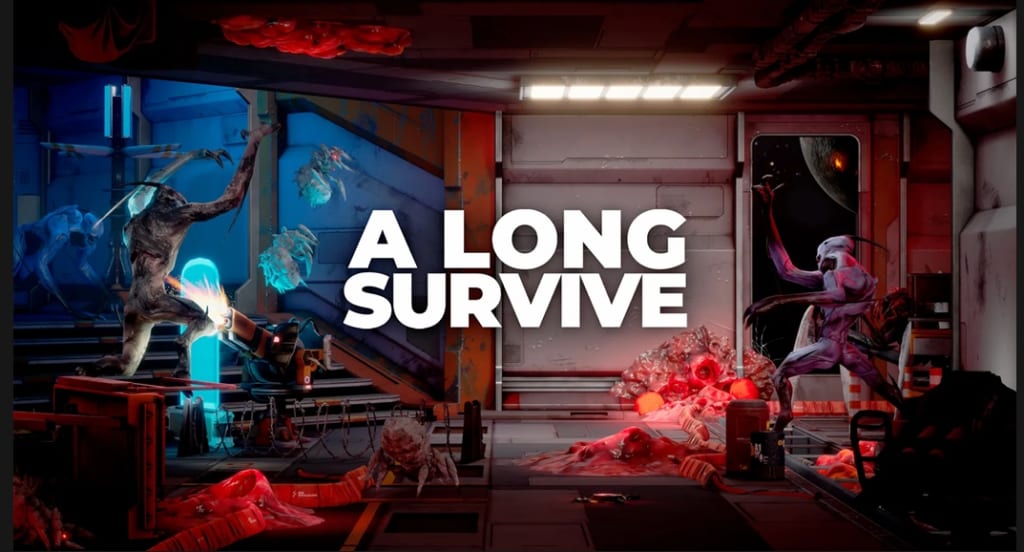
The VR survival shooter remains one of the medium's most crowded and competitive verticals, yet the narrative surrounding it is often defined by a technical compromise. For years, developers have had to choose between the massive install base of standalone mobile hardware and the high-fidelity immersion of tethered systems. Coming out of the VR Games Showcase in March 2026, it is clear that the industry is no longer satisfied with that binary choice.
The recent announcement that Friendly Fire Studios will launch A Long Survive on PlayStation VR2 and SteamVR on April 30th signals a tactical shift in how studios handle cross-platform transitions. Since its initial debut on Meta Quest in October 2025, the title has carved out a respectable niche. However, this isn't a mere late-cycle port designed to squeeze extra revenue from a static asset; it is a calculated attempt to bridge the "parity gap" between mobile chipsets and high-end silicon.
The "Major Update" is Actually a Graphical Overhaul
To understand why this move matters, one must look at the developmental philosophy Friendly Fire Studios is employing. Transitioning from the mobile-first limitations of an XR2-based architecture to the unbound power of the PS5 and modern PCs requires more than just a resolution bump. The studio is treating this release as a fundamental re-engineering of the game’s atmosphere.
The technical list is exhaustive: entirely new character models, a sophisticated VFX suite, and a revamped soundscape designed for spatial awareness. Most importantly, the implementation of an advanced lighting system transforms the core gameplay. In a survival setting, lighting isn't just aesthetic—it is a functional mechanic that dictates visibility, tension, and threat detection.
Friendly Fire Studios explicitly characterizes these releases as a "major update" specifically built to harness the power of PS VR2 and SteamVR, moving beyond the graphical constraints that define standalone play.
From an analyst's perspective, this level of investment is a play for long-term player retention. High-end VR enthusiasts are notoriously discerning; they demand experiences that justify their hardware overhead. By rebuilding the visual and combat feel from the ground up, Friendly Fire is aiming to set a new baseline for what a "definitive version" of a Quest-native game should look like.
Breaking the "Enemy Count" Ceiling on PS VR2
One of the most provocative claims surrounding the PS VR2 version is the introduction of a custom-designed wave system. VR has long struggled with "draw call" bottlenecks and CPU overhead when managing large numbers of active AI entities. Friendly Fire Studios is throwing down a technical gauntlet, claiming the console’s architecture has allowed them to display the largest number of enemies ever seen in the medium.
This isn't just a vanity metric. Moving from tactical skirmishes against a handful of zombies to an overwhelming, high-density horde defense fundamentally alters the gameplay loop. It forces a shift in player psychology from precision shooting to frantic crowd management. If the studio delivers on this promise, A Long Survive could serve as a benchmark for how compute-heavy AI and physics can be utilized to increase the "stress-to-success" ratio that defines the survival genre.
Haptic Immersion as a Core Feature
The "Immersion Gap" is the primary reason high-end VR users often scoff at mobile ports. Visuals are only half the battle; the other half is sensory feedback. Friendly Fire is leaning heavily into the PS VR2’s specific hardware stack to close this gap.
The inclusion of 120Hz support is the baseline for modern responsiveness, but the real differentiator lies in the haptics. By integrating head haptic effects and adaptive triggers, the studio is moving away from the "floating head" sensation that plagues many ports.
When a player pulls back a bowstring or handles a heavy firearm, the adaptive triggers provide the variable resistance necessary to make the weapon feel like a physical object rather than a digital asset. Coupled with head haptics that provide tactile feedback during environmental hazards or enemy strikes, these features turn a visual experience into a physical one. This level of hardware-level integration is what separates a genuine platform-specific build from a generic port.
The Power of a Unified Ecosystem (Crossplay)
Market longevity in the VR space is dictated by the health of the multiplayer lobby. Since its launch in October 2025, A Long Survive has maintained a strong 4.1/5 star rating on the Meta Quest store—a significant data point that serves as vital "social proof" for the upcoming April 30th expansion.
The confirmation of full crossplay across Quest, PS VR2, and PC VR is essentially a population insurance policy. By unifying these three distinct ecosystems, Friendly Fire ensures that matchmaking remains efficient and the community remains unfragmented. This connectivity is the cornerstone of the game's market strategy: using the Quest’s massive install base to provide the volume, while the PS VR2 and PC VR versions provide the high-fidelity "prestige" platform for dedicated enthusiasts.
The Future of Cross-Platform VR
As we look toward the April 30th launch, A Long Survive represents a potential "north star" for the industry. The era of the simple, low-effort port is likely coming to an end. As hardware capabilities diverge, developers must decide if they are willing to put in the work to overhaul their games for high-end audiences.
The question for the rest of the industry is clear: Is the "major update" model now the mandatory price of entry for bringing mobile-native titles to the big screens of console and PC VR? If Friendly Fire Studios succeeds, it will prove that graphical parity is less important than hardware-specific immersion. In the high-stakes world of VR survival, it may be the only way to truly survive the transition.
About the Creator
Tech Horizons
Exploring the future of technology, AI, gadgets, and innovations shaping tomorrow. Stay updated with Tech Horizons!
Keep reading
More stories from Tech Horizons and writers in Futurism and other communities.
Your Private Zoom Call is Now an AI Podcast: The Rise of Shadow Recording
1. The Hook: Your Unseen Audience Have you ever had that nagging, prickling sensation in the back of your neck during a private video call? That brief, flickering moment of digital paranoia where you wonder if, despite the "Private" room setting and the invite-only link, someone—or something—is listening? For most of us, this is just a symptom of the "Zoom fatigue" era, a psychological byproduct of living our lives through a webcam. We dismiss it as irrational. We check the participant list, see only our colleagues or friends, and proceed to discuss our medical histories, our trade secrets, and our deepest anxieties.
By Tech Horizons7 days ago in Futurism
The Fears of AI And How Much Fun It Can Be
ChatGPT has come a long way, as has AI in general. There are those people who are scared of it, and for understandable reasons. People fear that as technologies advance, they’ll be replaced in the workforce. Then, there are the fears that AI could evolve into something that brings us to the brink of extinction.
By The Man Behind The Maskabout 22 hours ago in Futurism
Your Website is a Ghost Town (and That’s Okay)
I finally did it. I followed the "expert" advice. I bought the domain, obsessed over a minimalist WordPress theme, and told myself that if I posted twice a week, the audience would eventually find me. I treated my blog like a Field of Dreams: if I built it, they would come.
By abualyaanart6 days ago in Futurism




Comments
There are no comments for this story
Be the first to respond and start the conversation.