
What Temperature Should a Refrigerator Be?
Learn the ideal refrigerator temperature for food safety, freshness, and energy savings. Find expert tips and common mistakes to avoid.

Ever opened your fridge only to find milk sour or veggies limp? A fridge that’s too warm causes food to spoil, while one that’s too cold wastes energy and may freeze items that shouldn’t. Proper chilling slows harmful bacteria growth. At room temperature, germs can double every 20 minutes, but at fridge temperature, their growth slows. Keeping your fridge at the right temperature is key for food safety, freshness, and energy savings. This guide explains why temperature matters and how to maintain ideal settings.
Why Refrigerator Temperature Matters
Food safety: Bacteria thrive between 40°F and 140°F, so a refrigerator must stay below this “danger zone.” The FDA advises keeping the fridge at 40°F (4°C) or below, and the freezer at 0°F (-18°C). The right temperature keeps food safe for days or weeks. If the fridge rises above 40°F, bacteria like Salmonella or E. coli can multiply rapidly, increasing the risk of illness.
Preventing spoilage: Proper cold storage helps food stay fresh longer. Dairy, meat, and produce last their maximum shelf life when chilled. If the fridge is too warm, foods spoil faster: milk sours, greens wilt, and meat develops off-smells. Conversely, setting the fridge below 33°F/0.5°C may freeze fruits, vegetables, and some dairy, lowering their quality.
Energy efficiency: Running the refrigerator colder than necessary uses more electricity. Setting your fridge 10°F colder than needed can increase energy use by about 25%. Energy guides recommend keeping most fridges around 35–38°F (1.7–3.3°C) for a balance of safety and efficiency. Cranking the dial to the coldest setting isn’t better; it wastes energy and may overwork the compressor.
Ideal Refrigerator Temperature
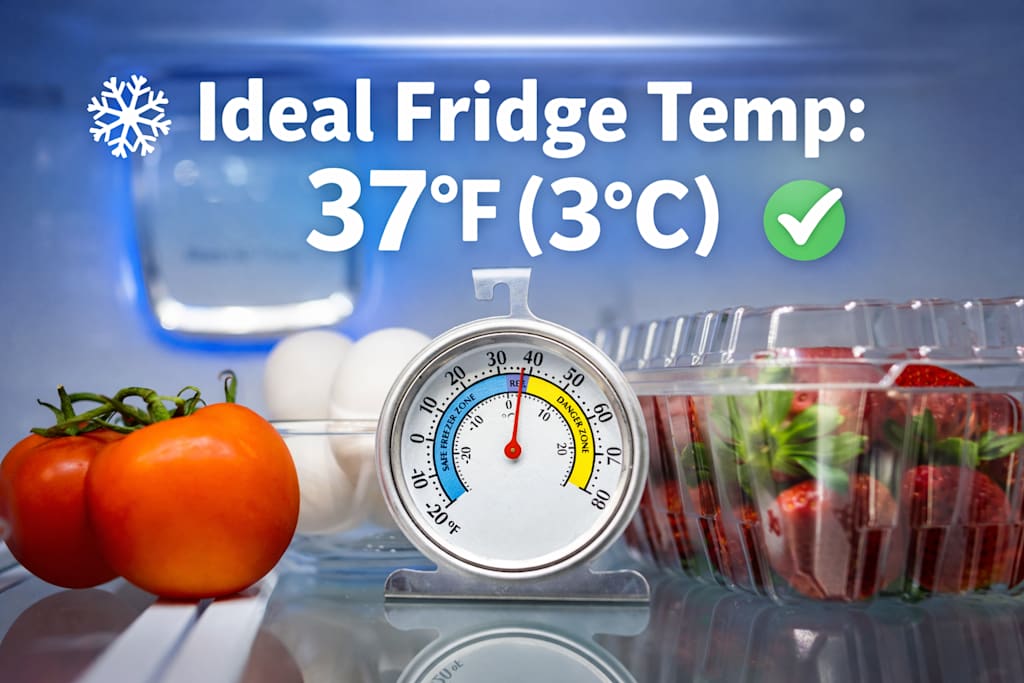
For most home refrigerators, the recommended temperature range is 1°C to 4°C (34°F to 40°F), with 3°C (37°F) commonly considered ideal. Many manufacturers design their fridges so that 37°F is the default or optimal setting. Within this range:
33°F (0°C) is usually the coldest safe limit. Lower than that, fresh produce or dairy can freeze.
40°F (4°C) is the upper limit for safety; above this, bacteria multiply more quickly.
About 37°F (3°C) is ideal: near freezing without freezing food, and it stays below the 40°F safety threshold.
Choosing the right appliance also matters; see the guide on the best refrigerators for efficient cooling performance.
The dial may not show your fridge’s exact temperature, so verify with a thermometer. Place a thermometer on a middle shelf and check after a few hours. If outside 35–38°F (2–3°C), adjust the setting and check again. Aim for “about 37°F” in fresh-food areas.
Ideal Freezer Temperature
For your freezer compartment, the recommended temperature is -18°C (0°F). This keeps frozen food solid and safe for long-term storage, preventing bacterial growth and minimizing freezer burn. Some guidelines say -18°C to -17°C (0°F to 1°F) is acceptable, but experts agree 0°F (-18°C) best preserves quality. If you notice thick ice buildup, the freezer may be too cold or humid. Set the freezer to 0°F (-18°C) and avoid making it colder unless performing a flash freeze of large warm items. Remember to reset the temperature afterward.
Signs Your Fridge Temperature Is Wrong
Here are some clues that your refrigerator is not set correctly:
Foods spoil too fast: If milk sours before its expiration date or vegetables go bad quickly, your fridge might be running too warm. A properly cold fridge keeps perishables fresh much longer. If fruits and veggies rot in days instead of weeks, or milk smells off too soon, the temperature control may be faulty.
Ice buildup or frost: Frost or ice in the fridge (outside the freezer section) means it’s set too cold in some areas. Too much ice in the freezer means it’s too cold. If you see unexpected frost, adjust the thermostat up.
Freezer section issues: On the flip side, if freezer items aren’t fully solid or ice cream is slushy, the freezer may be too warm. Ideally, ice cube trays should form solid ice, and meats should remain rock-hard.
Unusual odors: A fridge that’s too warm or poorly maintained often develops bad smells as food spoils. If you notice persistent odors even after cleaning, check the temperature and fridge settings. (Spoiled foods produce unpleasant smells and can spread bacteria, so maintaining the correct temperature helps prevent that problem.)
Common Mistakes
Here are some frequent pitfalls and habits that can throw off your refrigerator’s temperature:
- Overfilling the fridge: Packing every shelf edge-to-edge blocks cold air circulation. Air needs to flow around foods to keep everything chilled evenly. If the interior is crammed, the fridge has to work harder, and temperatures may rise. Keep enough space between items and avoid blocking air vents. A well-organized fridge (about 80% full, leaving ~20% empty) actually cools more efficiently.
- Frequent door opening: Every time the door opens, cold air escapes and warm air enters. This forces the compressor to work harder and can raise the temperature. Minimize how long the door stays open by planning ahead and closing it quickly after use.
- Putting hot food inside: Placing very hot leftovers directly into the fridge can temporarily raise its internal temperature and create warm spots. The FDA states refrigerating hot food does not harm the appliance, but it’s best to let food cool briefly before storing. Cover hot food and cool it until steam subsides, or portion it into smaller containers for quicker cooling.
- Wrong temperature setting: Many overlook that fridge controls are often numbered rather than marked with exact temperatures. On various models, a setting of “5” can mean different temperatures. Always use a thermometer to verify and understand your refrigerator’s settings. If possible, check the manual; some models recommend 37°F (3°C) as ideal. Basic maintenance affects cooling performance. Dirty condenser coils make the fridge work harder, and worn door seals let cold air escape. In manual-defrost units, excess frost buildup reduces efficiency and temperature stability.
How to Check and Fix the Temperature
Keeping an eye on the actual temperature is simple.
1. Place a thermometer inside: Place an appliance thermometer on a middle shelf (not in the door, where temperatures fluctuate more). In older fridges, also try one near the back or bottom shelf to detect cold spots.
2. Wait and measure: Leave the thermometer for 15–30 minutes, longer if settings changed. Many guides suggest 20 minutes is enough. Read the temperature; it should be 35–38°F for the fridge, about 0°F for the freezer.
3. Adjust settings: If it’s too warm (above ~38°F), turn the fridge dial slightly colder (or press the down arrow on a digital control). If it’s below ~35°F and the food is freezing, dial it up a bit. Change only one small step at a time. Some controls are marked with numbers (e.g., 1–5). If you don’t know what those mean, tweak one notch and wait 24 hours for it to stabilize.
4. Verify in multiple spots: After adjusting, check again with the thermometer. The fridge should settle into the target range. Be aware that different spots in the fridge can vary a few degrees; that’s normal. A top shelf or back corner might be colder than the door shelf. Aim for the overall average to be around 3°C (37°F).
If your fridge doesn’t reach the right temperature even after adjustment and maintenance, there may be a more serious issue (broken thermostat, failing compressor, etc.). In that case, consult a service professional. But most of the time, simple checks and tweaks will fix the problem.
Tips to Maintain Proper Temperature
Keeping your fridge at the right temperature is an ongoing job. Try these best practices:
- Allow good airflow: Don’t block vents or stuff items against the walls. Organize food so air can circulate freely. A smart trick is to keep around 20% of space empty (leave some gaps). That lets cold air flow and prevents “warm pockets” inside.
- Keep coils and surroundings clean: Dusty condenser coils (usually at the back or beneath the fridge) make the appliance work harder. Cleaning them yearly (with a brush or vacuum) can improve efficiency. Also, ensure the area around the fridge is tidy. Moving it a few inches from the wall can help it breathe and cool properly.
- Maintain the door seal: Check the rubber gasket around the door. A loose or cracked seal lets cold air leak out. You can test it with a dollar bill, close the door on the bill, and pull; it should resist. If it slides easily, the seal may need replacement. Even a small leak can raise the fridge’s running temperature.
- Clean spills and old food: Wipe up spills immediately and clean out any spoiled food. Beyond hygiene, leftovers and drippings can foster bacteria even at cold temperatures. Keeping shelves clean also helps with good airflow. Organize foods in covered containers or bags to prevent cross-contamination.
- Keep the fridge reasonably full: As noted, a moderately stocked fridge holds temperature better than an empty one. Cold food helps absorb warm air when you open the door. However, striking a balance, overstuffing is counterproductive. Use containers and drawers wisely, like keeping produce in crisper bins and dairy/meats in the coldest zones (back or bottom shelf).
- Regular checks: Periodically verify the temperature with a thermometer. Even with digital controls, factory settings can drift. Getting into the habit of monthly or bimonthly temperature checks ensures you catch any issues early. The FDA even suggests placing dedicated thermometers (one in the fridge, one in the freezer) and checking them often.
When selecting a refrigerator, design and temperature stability matter. Models listed under best side-by-side refrigerators are popular for their even cooling performance, spacious layout, and precise temperature control — all of which help maintain food safety.
Conclusion
Setting your refrigerator to the right temperature is a simple step that pays big dividends for health, taste, and your wallet. Aim for about 37°F (3°C) in the main compartment and 0°F (-18°C) in the freezer. This keeps food safely cold without freezing fresh produce and avoids unnecessary energy waste. Watch for warning signs like food spoiling too fast or unexpected ice, and use a refrigerator thermometer to verify the actual temperature. By maintaining the proper settings and following good storage habits (organizing food, cleaning coils, sealing doors tight), you’ll keep your family’s food safer and fresher — and even save on electricity bills over time.
About the Creator
Labiba
Product Researcher & Creator. Helping consumers find top-rated products through expert analysis and data-driven insights. Making smart buying simple.
Celebrating Mother's Day When Your Mom Has Passed Away
Losing Your Mom If you have lost your mom, it's difficult enough, but it's even harder when her special day comes around. I know how it feels. I lost my mother. The first year was the worst. I remember how lost I felt. I just couldn't understand why she had to die when so many other people I knew still had their mothers.
By Janis Masyk-Jackson18 days ago in Families
12 Life Lessons The Golden Girls Taught Us
Picture it: Miami, 1985. Four middle-aged actresses agree to play the characters of Blanche, Rose, Dorothy, and Sophia who share a home in a TV sitcom called The Golden Girls, unaware at the time of the kind of impact the show would leave on its adoring fans. The show aired until 1992, ending with a one-season spinoff called Golden Palace. The seven years we were graced with The Golden Girls on our television screens made its mark. More than three decades after Susan Harris’ imagination sparked the creation of these iconic characters, fans from around the world still watch reruns of The Golden Girls, spend time discussing the show on social media in Facebook groups like The Golden Girls Fanatics, carry Sophia-inspired handbags and relate to the episodes in their daily lives.
By Criminal Matters6 days ago in Humans


Comments
There are no comments for this story
Be the first to respond and start the conversation.