
What Is Parallel Parenting? A Complete Guide for Co-Parents
A guide on parallel parenting
Co-parenting can be hard after a divorce or separation, especially if the parents don't talk to each other very well. In such situations, a structured and low-conflict approach called parallel parenting can make a significant difference. But what exactly does it mean, and how does it work?
In this guide, we’ll explore what parallel parenting is, how it differs from traditional co-parenting, and whether it’s the right approach for your family.
What Is Parallel Parenting?
Parallel parenting is a co-parenting strategy where two parents raise their child separately with minimal direct interaction. Instead of frequent communication or shared decision-making, each parent independently manages their responsibilities during their parenting time.
This approach is especially helpful in high-conflict situations, where regular communication may lead to arguments or emotional stress that can negatively impact the child.
The goal of parallel parenting is simple: Reduce conflict between parents while maintaining stability for the child.
How Parallel Parenting Works
In a parallel parenting setup, parents create a structured system that limits the need for direct communication. This often includes:
- A fixed parenting schedule (who has the child and when)
- Clear rules for exchanges (drop-offs and pick-ups)
- Defined responsibilities for each parent
- Communication through written methods like email or parenting apps
Each parent operates like a “solo parent” during their time, making day-to-day decisions without interference from the other.
Parallel Parenting vs Co-Parenting
While both approaches aim to raise children after separation, they differ significantly:
Co-Parenting
- Frequent communication
- Shared decision-making
- Collaborative approach
- Works best when parents are on good terms
Parallel Parenting
- Minimal communication
- Independent decision-making
- Structured and rule-based
- Ideal for high-conflict relationships
In short, co-parenting requires cooperation, while parallel parenting focuses on boundaries and distance.
Benefits of Parallel Parenting
Parallel parenting can be highly effective in the right situations. Here’s why:
1. Reduces Conflict
By limiting interaction, parents avoid arguments and emotional stress, creating a calmer environment for the child.
2. Protects the Child’s Mental Health
Children are less exposed to parental conflict, which can significantly improve their emotional well-being.
3. Encourages Stability
A consistent routine and clear boundaries help children feel secure despite family changes.
4. Empowers Both Parents
Each parent controls their parenting time, reducing power struggles.
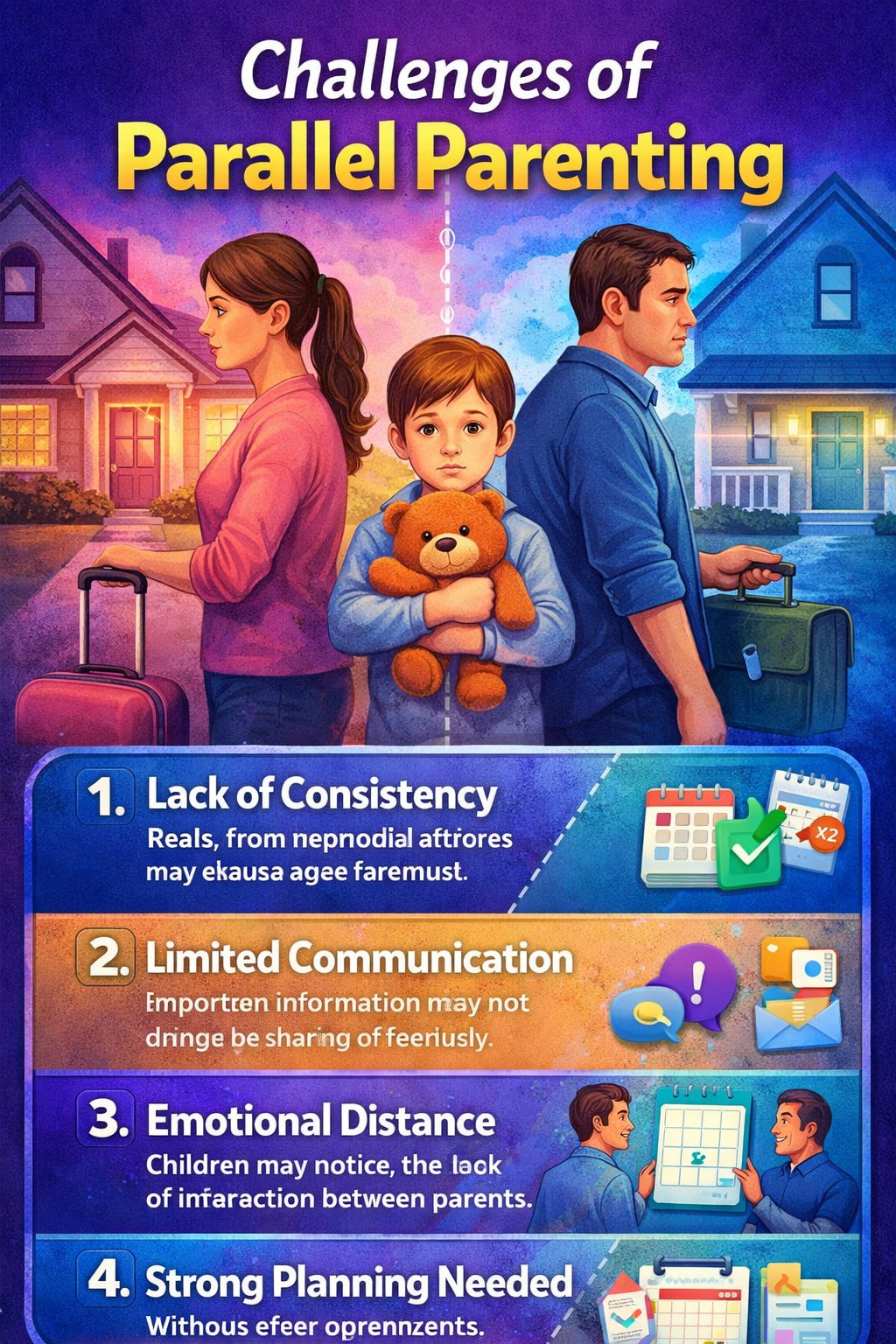
Challenges of Parallel Parenting
While parallel parenting can reduce conflict and create a more peaceful environment, it also comes with certain challenges that parents need to be mindful of:
1. Lack of Consistency
- Since each parent manages their household independently, rules, routines, and expectations may differ significantly. For example, bedtime schedules, screen time limits, or discipline styles might not align. This inconsistency can sometimes confuse children, making it harder for them to adjust and understand boundaries across both homes.
2. Limited Communication
Parallel parenting intentionally reduces direct interaction, which can sometimes lead to gaps in communication. Important updates about the child’s education, health, or emotional well-being may not always be shared promptly or clearly. Over time, this can create misunderstandings or missed information that affects decision-making.
3. Emotional Distance
Children may become aware that their parents do not communicate or interact with each other. While this reduces exposure to conflict, it can also create a sense of emotional distance. Some children might feel caught in the middle or wish for a more connected family dynamic, especially during important events or milestones.
4. Requires Strong Planning
For parallel parenting to work effectively, it requires a well-defined and detailed parenting plan. Without clear schedules, responsibilities, and communication methods, confusion and disputes can arise easily. Parents need to stay disciplined and consistent with the agreed structure to avoid unnecessary complications.
When Is Parallel Parenting a Good Option?
Parallel parenting is particularly useful in situations such as:
- High-conflict divorces or separations
- History of frequent arguments or hostility
- Situations involving emotional stress or toxicity
- When cooperative co-parenting is not possible
It can also serve as a temporary solution, eventually transitioning into cooperative co-parenting as tensions ease.
Tips for Successful Parallel Parenting
To make parallel parenting work effectively, consider these best practices:
- Create a detailed parenting plan with clear schedules and responsibilities
- Use written communication (emails or apps) to avoid misunderstandings
- Stick to boundaries and avoid unnecessary interaction
- Focus on the child’s needs, not past conflicts
- Stay consistent with major rules like education and health
Final Thoughts
So, what is parallel parenting? It’s a structured, low-conflict approach that allows separated parents to raise their children independently while minimizing interaction.
It might not be as warm as co-parenting together, but it gives you peace and stability, which is just as important. Parallel parenting can be a useful and effective way for families who are constantly fighting to make sure their kids grow up in a healthier emotional environment.
Ultimately, the success of parallel parenting depends on one key factor. Keeping the child’s well-being at the center of every decision.
About the Creator
Keep reading
More stories from John Carter and writers in Families and other communities.
Is Messenger Kids Safe? A Complete Parent’s Guide to Features, Risks & Safety Controls
In the digital world of today, kids can use messaging apps more than they ever did before. One popular platform like this is Messenger Kids, which is made just for kids who are with their parents. But a lot of parents really want to know: Is Messenger Kids safe?
By John Carter7 days ago in Families
Celebrating Mother's Day When Your Mom Has Passed Away
Losing Your Mom If you have lost your mom, it's difficult enough, but it's even harder when her special day comes around. I know how it feels. I lost my mother. The first year was the worst. I remember how lost I felt. I just couldn't understand why she had to die when so many other people I knew still had their mothers.
By Janis Masyk-Jackson8 days ago in Families




Comments
There are no comments for this story
Be the first to respond and start the conversation.