Nature
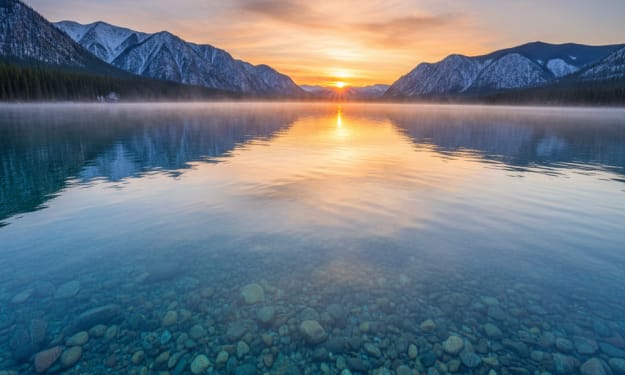
The Oldest, Largest, and Deepest Lake in the World
Exploring Earth’s Most Ancient and Massive Freshwater Giant Lake Baikal is often described as a freshwater sea because of its immense size and volume. Stretching over 600 kilometers in length and plunging to depths of more than 1,600 meters, it surpasses every other lake in age and depth. Unlike most lakes that form and disappear within thousands of years, Baikal has endured for millions, created by a continental rift that continues to widen today. This slow geological movement has allowed the lake to grow deeper over time. Its scale is so vast that it contains more water than all the Great Lakes of North America combined. Scientists regard it as one of the most important natural laboratories on Earth, preserving ancient life forms and climate records within its sediments. The surrounding mountains and forests enhance its isolation, helping protect its pristine condition.
By Muhammah Hanzalahabout a month ago in Earth
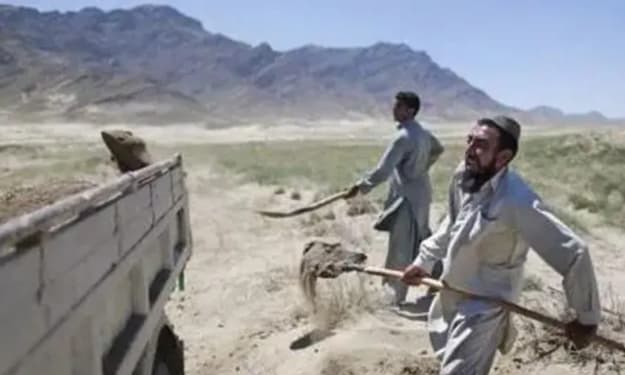
Importing $600,000 worth of sand from other countries instead of Pakistan: What does the 'increasing construction activity' in Afghanistan indicate?
With the increase in construction and industrial activities in Afghanistan, a rise has also been observed in the use and import of sand.
By Real contentabout a month ago in Earth
Honey, It's Time We Save the Bees
As you are looking outside at the flowers and trees, you might see a bee buzzing by, but did you know these common creatures are endangered? According to Greenpeace, “the number of bee colonies per hectare has declined by 90 percent since 1962” (Greenpeace, 2021). This is alarming as bees are responsible for doing so many things to keep our environment running efficiently. Ironically, we common overlook them like they are any other bug. We forget to appreciate all of the things bees do for us, and we fail to see the beauty that they bring into the world.
By Nicole Higginbotham-Hogueabout a month ago in Earth
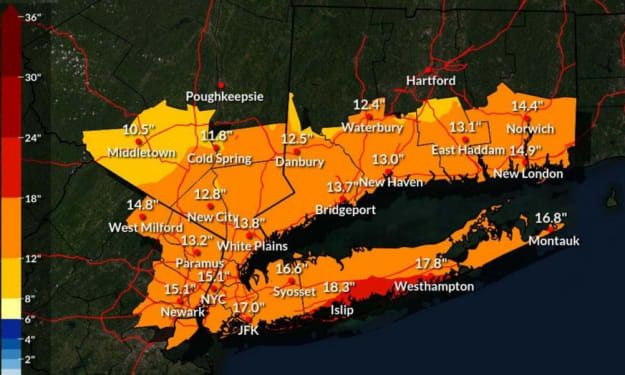
NYC Snowstorm: A Nor'easter threatens the Tri-State area with heavy snow and strong winds.
Forecasters and residents alike are once again scanning the horizon as winter continues to ensnare the Northeast, this time for more than just cold air. This weekend, a "potential coastal storm" with the potential to become a "nor'easter" is expected to affect the New York City area and a lot of the East Coast. It could bring heavy snow, strong winds, and even blizzard conditions in some places. It is anticipated that the weather system will begin to form off the coast of the Southeast before deepening as it moves north along the Atlantic seaboard. This kind of system can draw moist air from the ocean and, when cold Arctic winds are in place over land, produce significant snowfall in a relatively short period of time.
By Raviha Imranabout a month ago in Earth
Central Florida is under a fire weather watch due to the increased risk of wildfires.
Late winter is a time of mild temperatures and clear skies for many Floridians, not of burning sun and wildfire danger. However, this week, a significant portion of Central and West Florida was subjected to an unusual weather threat: an "elevated fire danger" and a "red flag" warning. These are conditions that are more frequently associated with the dry plains or the mountainous West than with the Sunshine State's typically humid climate. Fire officials, meteorologists, and residents alike were taken aback by how quickly the region’s fire risk escalated. The ideal conditions for fires to start and grow included dry vegetation, persistent winds, and low humidity. Authorities urged caution in some areas due to the speed with which embers can travel in gusty conditions, transforming tiny sparks into rapidly spreading wildfires. The narrative began with a prolonged drought.
By Raviha Imranabout a month ago in Earth
Why Russia Never Went Back to Planet Venus
In 1960, when the entire world had its eyes fixed on America’s Apollo missions, something terrifying was happening on our neighboring planet, Venus. The Soviet Union—today’s Russia—was secretly planning what could only be called suicide missions to Venus. After spending billions of dollars and years of effort, they built probes designed to do something unprecedented: land on another planet and capture its images.
By Imran Ali Shahabout a month ago in Earth