Latest Stories
Most recently published stories in Earth.
The Empty Quarter: The terrifying beauty and silence of the Rub' al Khali desert.
The low, rhythmic booming started in my molars before it ever reached my ears—a deep, sepulchral thrum that felt like the earth was trying to clear a throat made of pulverized glass. It wasn't a wind. It wasn't a storm. It was the dunes themselves. They were singing. The sound was a visceral, hollow groan, a vibration so intense it made the water in my canteen ripple in perfect, concentric circles. I stood on the spine of a crescent dune that rose six hundred feet into a sky the color of a fresh bruise. The heat didn't just touch the skin; it occupied it. It was a thick, airless weight that tasted of salt and ancient, sun-bleached silence. Everything was red. A staggering, deranged expanse of oxidized quartz that stretched until the curvature of the planet simply gave up.
By The Chaos Cabinetabout 11 hours ago in Earth
The Whale Who Sings Alone 🐋
52 HERTZ: THE FREQUENCY OF LONELINESS 🎵 Somewhere in the vast dark waters of the Pacific Ocean there is a whale who has been calling out for a companion for over thirty years and has never received a response, a whale whose vocalizations are produced at a frequency of 52 hertz which is dramatically higher than the frequencies used by any known whale species, blue whales communicate at frequencies between 10 and 39 hertz while fin whales use frequencies around 20 hertz, and this frequency mismatch means that while the 52-hertz whale can hear other whales they cannot hear it, or if they can hear it they do not recognize it as a whale call and do not respond, and this animal has been swimming through the ocean for decades producing calls that travel for hundreds of miles through water that carries every other whale's communications perfectly but that turns this whale's voice into something unrecognizable and unreachable 🌊
By The Curious Writerabout 18 hours ago in Earth
The Tree That Survived Everything ☀️🌳
THE OLDEST LIVING THING ON EARTH 🌲 High in the White Mountains of eastern California at an elevation of over ten thousand feet where the air is thin and the soil is poor and the wind blows with enough force to strip paint from metal, there stands a tree that was already ancient when the Egyptian pyramids were being built, a Great Basin bristlecone pine named Methuselah that has been alive for approximately 4,855 years making it the oldest known living non-clonal organism on Earth, and this tree has survived everything that the planet and human civilization have thrown at it including ice ages and droughts and lightning strikes and disease and the complete rise and fall of every civilization that has existed during its lifetime, and it continues growing, adding a fraction of an inch to its trunk each year with the patient persistence of something that measures time in millennia rather than in the minutes and hours that define human urgency 🌎
By The Curious Writerabout 18 hours ago in Earth
Using Biochar Machines for Organic Waste Recycling on Farms. AI-Generated.
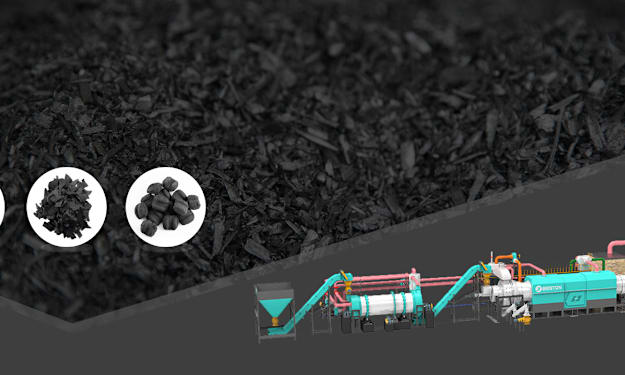
Every day, farms around the world generate tons of organic waste—crop residues, animal manure, rice husks, and fruit peels—that often ends up in landfills or is burned openly. These practices not only waste valuable resources but also release harmful greenhouse gases like methane and carbon dioxide, worsening climate change and polluting air and water. Fortunately, there’s a game-changing solution: biochar machines. These innovative devices transform farm organic waste into biochar, a carbon-rich "black gold" that enriches soil, reduces emissions, and closes the loop on agricultural waste. Let’s explore how biochar machines are reshaping organic waste recycling and paving the way for more sustainable farming.
By Bestonpyrolysisabout 24 hours ago in Earth
Electrification of Heat
by Futoshi Tachino What Changed Heating is undergoing a subtle revolution. In 2022, global sales of electric heat pumps jumped by 11% – the second year in a row of double-digit growth amid high fuel prices and new incentives [1]. Europe led the charge with nearly 3 million heat pumps sold in 2022 (an almost 40% increase from the prior year) [1]. For the first time, Americans also bought more heat pumps than gas furnaces: U.S. heat pump purchases topped 4 million units in 2022, narrowly eclipsing the sales of gas-fired furnaces that year [2]. This milestone was reached even before many new U.S. incentives kicked in, marking a quiet shift in how homes are heated across the country [2].
By Futoshi Tachinoa day ago in Earth
Waste Tire Pyrolysis and Hazardous Waste Classification
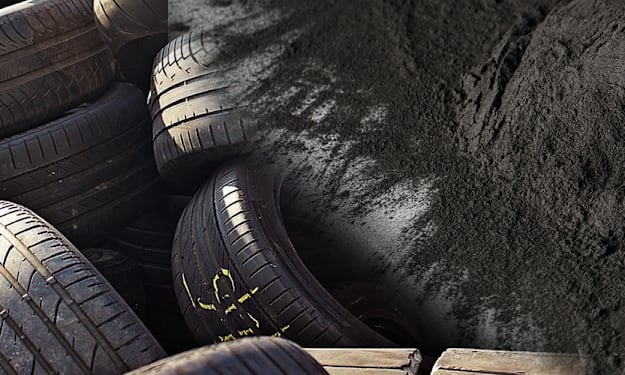
Policy Context of Waste Tire Management End-of-life tires (ELTs) represent a persistent challenge within solid waste governance frameworks. Their complex composition—comprising synthetic rubber, carbon black, steel, and various chemical additives—renders conventional disposal methods such as landfilling increasingly untenable. Consequently, thermochemical conversion technologies, particularly those deployed in a pyrolysis plant, have gained traction as an alternative valorization pathway.
By Wayne Shena day ago in Earth
The Bittersweet Story of Chocolate – From Sacred Rituals in Mesoamerica to a Global Indulgence
Chocolate feels familiar today wrapped, sweetened, easily available. It’s part of celebrations, comfort, gifting, and everyday indulgence. But its story begins far from modern shelves. Long before it became a dessert, chocolate was a ritual, a currency, a symbol of power, and a deeply valued cultural element.
By The Origin3 days ago in Earth
Researchers discover why certain volcanoes suddenly explode.
Researchers have discovered a shallower band of hot fluids over a deep pocket of melt beneath an active volcano. According to the new image, a calm surface may be deceiving because pressure can build up gradually before fractured rock gives way.
By Francis Dami3 days ago in Earth
The Squirrel Mirror:
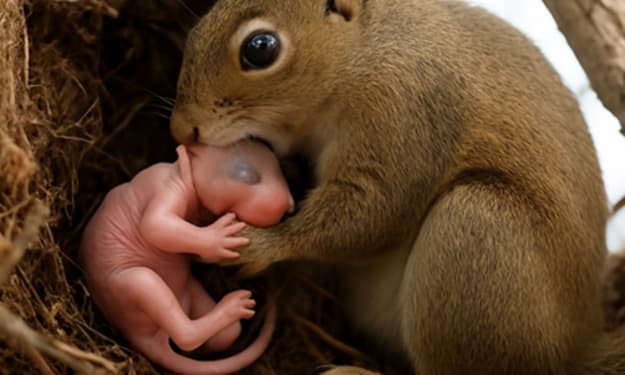
Humans love the idea of animals behaving nobly. The image of a squirrel cradling a tiny pink newborn seems to confirm our deepest hope—that love and care transcend instinct, species, and bloodlines. Social media amplifies this comforting myth with the same captioned claim: “Squirrels will adopt another squirrel baby if its parents die or can’t care for them.” It’s sweet, shareable, and slightly anthropomorphic.
By Dr. Mozelle Martin4 days ago in Earth