
Whole Foods & Other Grocery Stores Have a Perfume Problem
Scented Products Are Contaminating Food Aisles

The Hidden Fragrance Problem Nobody Is Talking About
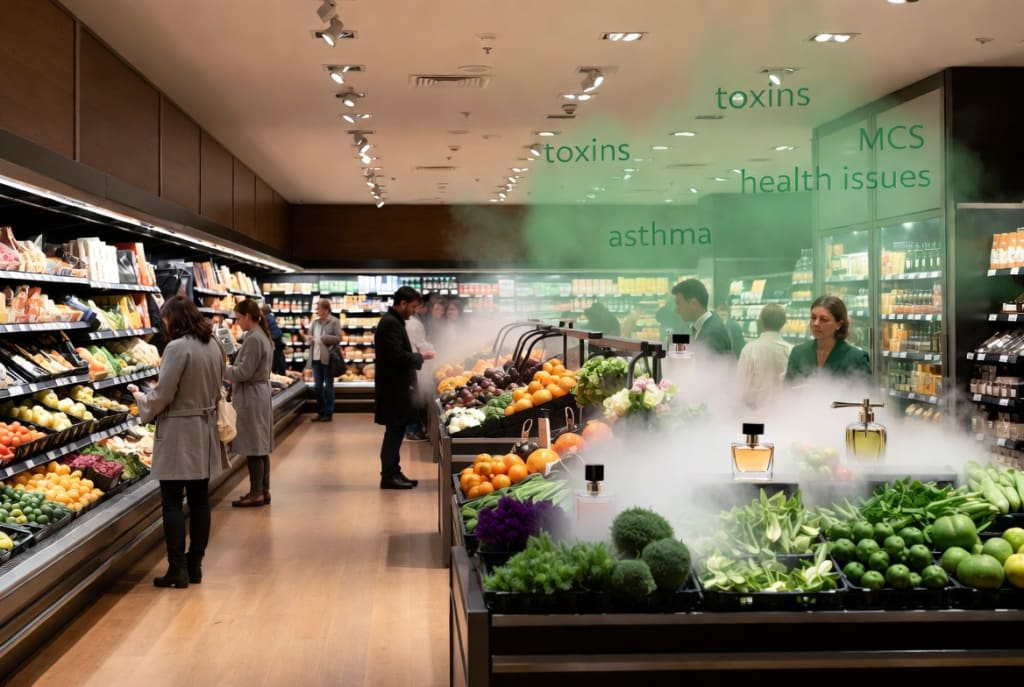
Scented candles next to organic produce. Perfumed soaps beside the bulk bins. One in three Americans has a debilitating health reaction to synthetic fragrance — and they are just trying to buy groceries.
Most grocery stores build their reputation on one promise: clean.
Whole Foods built a reputation on Clean ingredients. Clean sourcing. Clean labels. A store where health-conscious shoppers can trust that what they are putting in their bodies — and bringing home to their families — meets a higher standard.
But a growing number of shoppers with Multiple Chemical Sensitivities, asthma, and MCAS are reporting a problem that undermines that promise entirely. And it is hiding in plain sight — right next to the organic strawberries.
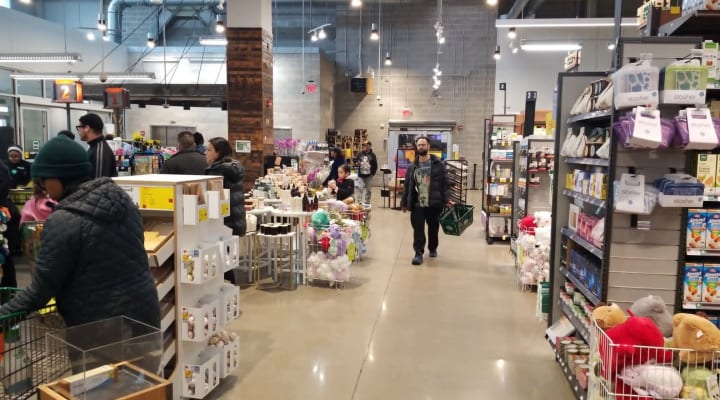
"Taken a few weeks ago at Whole Foods. The pic is not as clear as I'd like but there are 3 displays of fragrance on the left side, an endcap with fragrancs on the right side, and more fragrance in the aisle. A lot of it synthetic fragrance! WTF! I can tolerate natural fragrance, though I stay away from it. But all the synthetic fragrance from open candles, scent reeds, etc, triggered the usual strong reactions for me." Leah
The Problem: Fragrance Does Not Stay Where You Put It
Walk into many health-focused grocery stores today and you may notice something unexpected. Scented candles, perfumed soaps, fragranced bath bombs, and body products displayed in open proximity to produce, bulk foods, pet food, and other consumables.
To most shoppers, this seems harmless. To the one in three Americans who experience debilitating health reactions to synthetic fragrance — including seizures, migraines, and asthma attacks — it is anything but.
Source: doi.org/10.1007/s11869-019-00672-1
Here is the science behind why this matters. Synthetic fragrances are not passive. They are volatile — meaning they actively off-gas chemical compounds into surrounding air and surfaces. Research has identified over 25 volatile organic compounds (VOCs) in air exposed to popular fragranced products, including benzene and acetaldehyde, both classified as carcinogens by the EPA with no established safe level of exposure.
In an enclosed retail space, those VOCs do not stay put. They migrate. They settle onto surfaces. They absorb into porous materials — including the skin of fruits and vegetables, the packaging of bulk foods, and the paper and cloth bags carrying your groceries home.
What Shoppers Are Reporting
Across MCS and fragrance sensitivity communities online, shoppers are documenting consistent experiences at health-focused grocery stores nationwide.
Groceries arriving home with a strong scent of cologne, perfume, or synthetic fragrance — not from other shoppers, but absorbed during time in the store.
A persistent store-wide smell that customers describe as a chemical fog — potentially originating from scented cleaning products, ambient scent marketing systems, or fragrance migration from product displays near food.
Fragrance from employee perfumes, colognes, and hand lotions transferring to refrigerated items, bulk bins, and packaged goods during handling and checkout.
Pet food and dry goods absorbing synthetic fragrance from nearby open-display merchandise.
For shoppers with MCS or MCAS, these exposures can trigger reactions lasting hours or days. For shoppers without a formal diagnosis, they may be contributing to unexplained headaches, fatigue, brain fog, and respiratory symptoms that never get connected to their source.
Why This Matters Even If You Feel Fine
Synthetic fragrance ingredients — including phthalates, used to make scents last longer — are endocrine disruptors that interfere with the body's hormonal system. They have been linked to reproductive harm, developmental problems in children, and increased cancer risk with prolonged exposure.
The critical detail most consumers do not know: manufacturers are not required to disclose individual fragrance chemicals on product labels. A single "fragrance" listing can represent hundreds of individual compounds — none of which are named, tested together, or disclosed to the person buying the product.
When those compounds migrate from open retail displays onto your food, you are consuming chemicals you were never told were there.
An estimated 55 million American adults live with some form of chemical sensitivity. Diagnosed MCS cases have increased over 300% in the past decade. Self-reported chemical sensitivity has grown over 200% in the same period.
These numbers are not fringe. They represent a significant and growing portion of the shopping public.
The Mismatch Between Marketing and Reality
Health-focused grocery chains spend enormous resources ensuring the food on their shelves meets rigorous ingredient standards. Many ban hundreds of synthetic ingredients from their products. They market themselves specifically to consumers who are willing to pay a premium because they trust that standard.
The disconnect happens when open fragrance merchandise — candles, bath bombs, perfumed soaps — is placed adjacent to consumables in a shared air environment, without any consideration for chemical migration or the significant portion of shoppers for whom synthetic fragrance is a genuine medical trigger.
This is not a criticism of selling fragrance products. It is a question of placement, ventilation, and awareness.
What Responsible Retailers Can Do
The solutions are practical, achievable, and already in use in other industries.
Hospitals, schools, and government offices across the country have implemented fragrance-free policies for staff in areas where vulnerable populations are present. Several major retailers already offer sensory-friendly shopping hours for customers with autism and sensory processing disorders.
Grocery retailers committed to health could take similar steps: relocating scented merchandise to contained, well-ventilated sections away from all food, produce, bulk goods, and pet food; providing fragrance-awareness guidelines for employees who handle food; and investigating whether cleaning products or ambient scenting systems may be contributing to store-wide fragrance transfer onto food items.
Switching from fragranced to fragrance-free cleaning and maintenance products alone can reduce VOC exposure in shared indoor spaces dramatically. Research shows that switching to fragrance-free laundry products, for example, reduces relevant VOC emissions by up to 99.7%.
Small changes in product placement and staff policy could make grocery shopping safely accessible to millions of Americans who currently cannot enter these stores without a health consequence.
A Community That Deserves to Be Heard
The shoppers raising these concerns are not asking for perfection. They are asking for awareness — and for the stores that claim to prioritize health to extend that commitment to the air inside their buildings, not just the labels on their shelves.
If you have experienced fragrance contamination in groceries or health reactions during grocery shopping, your experience is valid and your voice matters.
Share your story in the comments. The more people speak openly about this, the more clearly the conversation reaches the people with the power to change it.
Have you noticed fragrance transfer on groceries or experienced health reactions in a store? What would fragrance-conscious grocery shopping mean to you and your family? Share below.
Sources:
Steinemann, A. (2018). National Prevalence and Effects of Multiple Chemical Sensitivities. Journal of Occupational and Environmental Medicine.
Steinemann et al. (2011). Chemical emissions from residential dryer vents during use of fragranced laundry products. Air Quality, Atmosphere & Health.
doi.org/10.1007/s11869-019-00672-1
About the Creator
Sandy Rowley
AI SEO Expert Sandy Rowley helps businesses grow with cutting-edge search strategies, AI-driven content, technical SEO, and conversion-focused web design. 25+ years experience delivering high-ranking, revenue-generating digital solutions.
Keep reading
More stories from Sandy Rowley and writers in 01 and other communities.
Top 11 Mobile App Development Companies in Texas: Expert Picks 2026
If you have spent any time trying to hire a development team recently, you already know the challenge. There are hundreds of agencies promising the world, but very few actually deliver apps that work, scale, and keep users coming back. Texas has become one of the most active tech corridors in the entire country, and narrowing down who is worth your budget takes real effort.
By Sherry Walker6 days ago in 01
The Fears of AI And How Much Fun It Can Be
ChatGPT has come a long way, as has AI in general. There are those people who are scared of it, and for understandable reasons. People fear that as technologies advance, they’ll be replaced in the workforce. Then, there are the fears that AI could evolve into something that brings us to the brink of extinction.
By The Man Behind The Maska day ago in Futurism


Comments
There are no comments for this story
Be the first to respond and start the conversation.