
Why the Maldives Southern Atolls Feel Completely Different from the Northern Ones
Two Faces of the Same Paradise
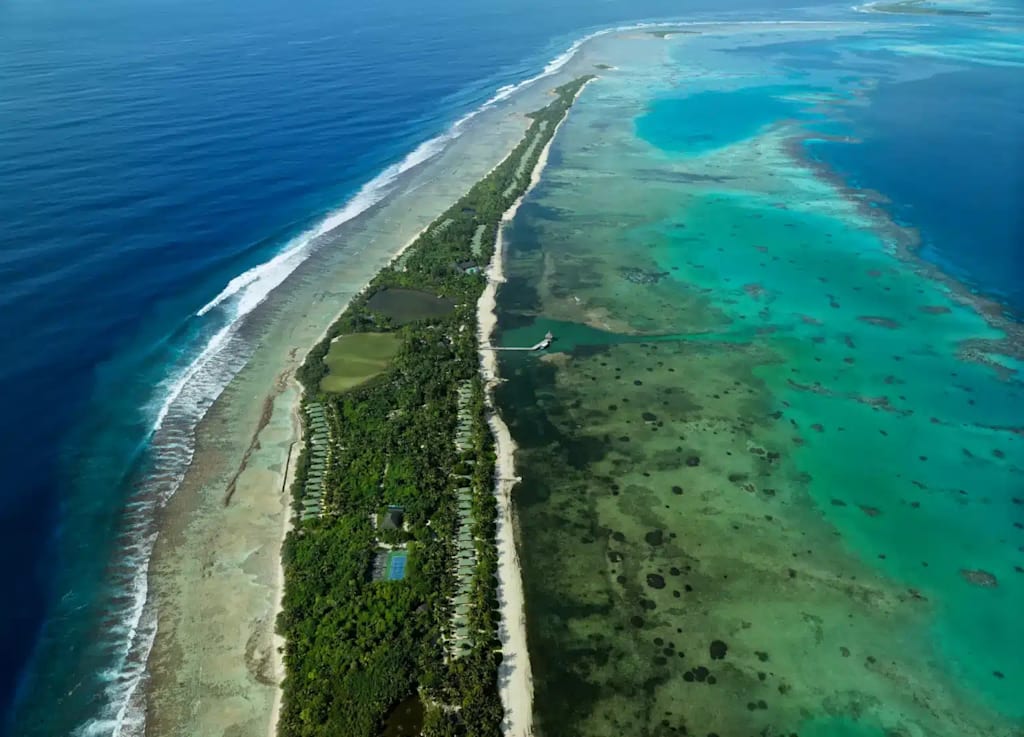
At first glance, the Maldives appears uniformly idyllic — turquoise lagoons, white sand, and overwater villas stretching into the horizon. Yet travellers who venture beyond the well-trodden northern atolls quickly realise that the country offers two very different experiences. The southern atolls feel quieter, wilder, and more remote, shaped by geography, culture, and travel patterns that set them apart from their northern counterparts. Understanding this contrast explains why many seasoned travellers describe the south as a completely different Maldives — one defined less by polish and more by raw authenticity.
Geography That Shapes a Different Rhythm
One of the most defining differences lies in geography. The southern atolls sit much closer to the equator, creating slightly warmer waters, stronger currents, and a more dramatic ocean environment. This geographic position gives the south a noticeably different rhythm — the sea feels more powerful, the skies more expansive, and the islands more spaced out. In contrast, the northern atolls benefit from denser island clusters and calmer lagoons, which lend themselves well to classic resort-style experiences. In the south, nature feels less curated and more dominant, influencing everything from marine life to daily island routines.
Why Tourism Developed Unevenly
Tourism arrived in the northern atolls decades earlier than it did in the south, and that head start shaped everything that followed. Proximity to the international airport made the north easier to access, leading to faster resort development, more infrastructure, and a wider range of luxury properties. The southern atolls, by contrast, remained largely untouched for much longer. Even today, reaching them often requires domestic flights or long transfers, naturally filtering the type of traveller who makes the journey. However, Sri Lankan flights have direct transfers from Colombo to Gan Airport, making it much easier to reach the Gan Addu Atoll in Maldives.
A Different Relationship with Local Life
Cultural immersion tends to feel deeper in the southern atolls. Local islands here often retain tighter-knit communities, slower lifestyles, and traditions less influenced by large-scale tourism. Fishing, boat-building, and island crafts still play a central role in daily life. Visitors who explore beyond resorts are more likely to encounter everyday Maldivian rhythms — children playing along the shoreline, fishermen hauling in their catch, and communal gatherings in the evenings. In the north, tourism has become more integrated into local economies, which brings convenience and polish but slightly softens the sense of separation between visitor and resident life.
Marine Life That Appeals to the Adventurous
The southern atolls are widely regarded as a haven for experienced divers and surfers, and this reputation is no accident. Stronger currents attract larger pelagic species, including sharks, manta rays, and tuna, creating thrilling underwater encounters. Dive sites feel less crowded and more dynamic, rewarding confidence and curiosity. Surf breaks in the south are also more exposed and powerful, drawing enthusiasts seeking consistency and challenge. Northern atolls, with their calmer lagoons and sheltered reefs, are ideal for beginners and casual snorkellers, reinforcing the sense that the north caters to ease while the south caters to exploration.
Resorts That Prioritise Space and Solitude
Resort experiences differ subtly but significantly between regions. In the north, resorts often focus on refined luxury, seamless service, and a broad range of activities within compact island settings. The southern atolls lean toward spaciousness and solitude. Resorts here, including the likes of Canareef Resort Maldives, tend to be on larger islands, with wider beaches, and a stronger emphasis on privacy and immersion in nature. The feeling is less about indulgence on demand and more about retreat — where silence, stars, and uninterrupted horizons become part of the experience. This difference alone can make the South feel like a completely separate destination.
Two Regions, Two Ways to Experience the Maldives
The Maldives’ northern and southern atolls are not better or worse than one another — they simply speak to different kinds of travellers. The north offers effortless luxury and classic island perfection. The south offers space, authenticity, and a sense of discovery that feels increasingly rare. Together, they reveal the Maldives not as a single experience, but as a destination of contrasts — where choosing where to go shapes not just the view, but the entire feeling of the journey.
About the Creator
Keep reading
More stories from ameliarosanna and writers in Wander and other communities.
What is the best time to visit Galle for a peaceful holiday?
Along Sri Lanka’s southern coastline, Galle never feels exactly the same throughout the year. Some months arrive with clear skies and calm seas brushing the walls of the old fort. At other times, clouds gather over the Indian Ocean, and the town moves at a noticeably slower pace.
By ameliarosanna16 days ago in Wander
TLC Polish Ice Cream
I remember the first time that I had TLC Polish Ice Cream on the boardwalk in Ocean City, New Jersey. It was the first time that I had Ice Cream made totally out of water and It was delicious. Also I would like to add that it is perfect for those who are lactose intolerant and cannot handle dairy.
By Revista Miko:XCI 2 days ago in Wander



Comments
There are no comments for this story
Be the first to respond and start the conversation.