
UAE Quick Service Restaurant Market Set for Explosive Growth as Convenience Culture Reshapes Dining
From digital ordering to global cuisine expansion, the UAE’s fast-food landscape is evolving rapidly—projected to grow nearly fivefold by 2033.

Introduction: A Market on the Fast Track
The United Arab Emirates (UAE) is witnessing a dramatic transformation in its food service sector, with the Quick Service Restaurant (QSR) market emerging as one of the fastest-growing industries in the region. Driven by urbanization, digital innovation, and shifting consumer lifestyles, the sector is evolving into a dynamic ecosystem that blends convenience, diversity, and global flavors.
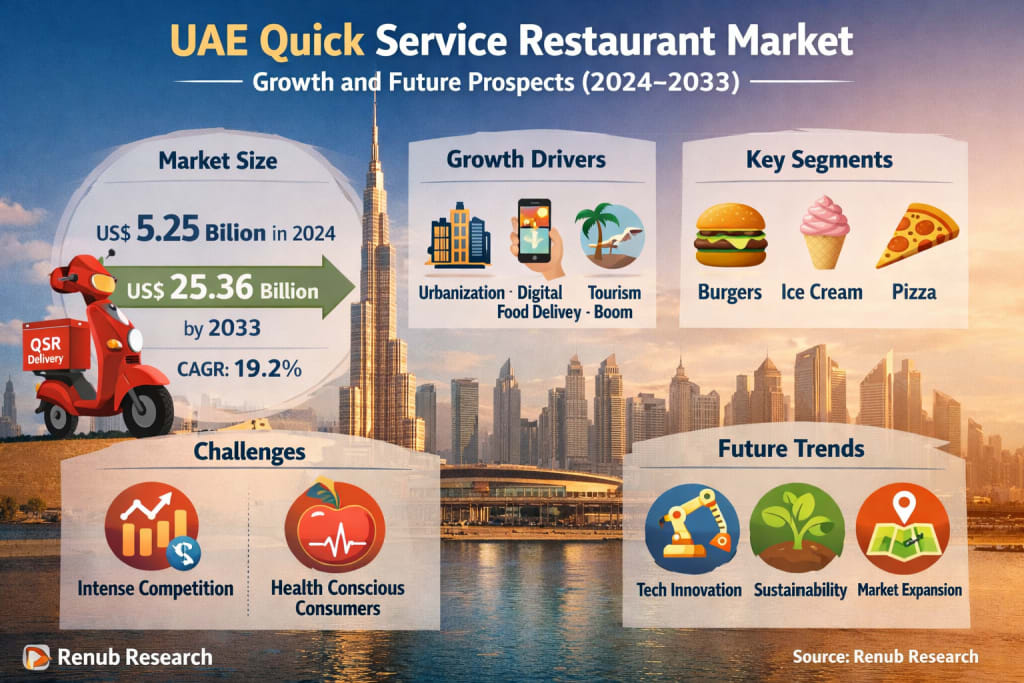
According to recent insights, the UAE QSR market was valued at US$ 5.25 billion in 2024 and is expected to reach US$ 25.36 billion by 2033, expanding at a remarkable CAGR of 19.2% between 2025 and 2033. This rapid growth underscores not only the rising demand for fast food but also the broader socio-economic changes shaping consumer behavior across the country.
What Defines a Quick Service Restaurant?
Quick Service Restaurants are designed for speed, efficiency, and affordability. Unlike traditional dining establishments, QSRs focus on limited menus, standardized food preparation, and minimal table service. Customers typically enjoy meals through dine-in, takeaway, drive-thru, or delivery options.
In the UAE, this model fits perfectly with a fast-paced urban lifestyle. Whether it’s a quick lunch during office hours or late-night cravings fulfilled via mobile apps, QSRs have become an integral part of daily life.
Urbanization and Lifestyle Shifts Fuel Demand
One of the most significant drivers of the UAE QSR market is rapid urbanization. Cities like Dubai and Abu Dhabi have grown into global hubs, attracting professionals, expatriates, and tourists from around the world. As work hours extend and commuting becomes more demanding, consumers increasingly prefer quick and convenient meal options.
The UAE’s urban development strategies, including long-term planning initiatives aimed at improving quality of life, have also contributed to the expansion of commercial spaces such as malls, business districts, and entertainment centers. These locations naturally serve as hotspots for QSR outlets, ensuring consistent foot traffic and high visibility.
The result is a lifestyle where eating out—or ordering in—is no longer occasional but routine.
Digital Transformation: The Rise of Food Delivery Platforms
Technology is playing a transformative role in the UAE’s QSR ecosystem. The proliferation of food delivery apps has redefined how consumers interact with restaurants. With just a few taps on a smartphone, customers can access a wide variety of cuisines, compare prices, and enjoy doorstep delivery within minutes.
Digital platforms have not only expanded customer reach but also encouraged QSR brands to innovate. Many restaurants are investing in cloud kitchens, optimizing logistics, and offering exclusive online deals to attract tech-savvy consumers.
This digital shift is particularly significant in a country where smartphone penetration is high and consumers are comfortable with cashless transactions. It has effectively blurred the line between physical and virtual dining experiences.
Tourism: A Catalyst for Culinary Diversity
The UAE’s thriving tourism industry is another major growth engine for the QSR market. With millions of visitors arriving each year, the demand for quick, familiar, and affordable dining options continues to rise.
Tourists often gravitate toward recognizable global brands or convenient eateries located in airports, hotels, and tourist attractions. This has led to a surge in international QSR chains entering the market, alongside local brands that cater to regional tastes.
Airports alone handle massive passenger volumes annually, creating lucrative opportunities for QSR operators. Food courts in travel hubs are now designed to offer diverse menus, ensuring that travelers from different cultural backgrounds find something appealing.
Competitive Landscape: A Battle of Brands
The UAE QSR market is highly competitive, featuring a mix of global giants, regional chains, and local startups. International brands benefit from strong brand recognition and standardized quality, while local players often differentiate themselves through unique flavors and cultural relevance.
However, this intense competition comes with challenges. High rental costs in prime locations, rising marketing expenses, and the need for continuous innovation make it difficult for smaller players to sustain profitability.
To stay ahead, companies are focusing on menu diversification, customer experience, and loyalty programs. The ability to adapt quickly to changing consumer preferences is becoming a key success factor.
Health Consciousness: A Growing Challenge
As consumers become more health-conscious, traditional fast food is facing increasing scrutiny. High-calorie meals, processed ingredients, and sugary beverages are gradually losing appeal among certain segments of the population.
In response, QSR brands are introducing healthier options such as salads, grilled items, plant-based alternatives, and low-calorie meals. This shift is not just a trend but a necessity, as governments and public health initiatives also encourage better dietary habits.
Balancing convenience with nutrition is now one of the biggest challenges—and opportunities—for the industry.
Segment Insights: What’s Driving Growth?
1. Burger Segment: Still the King
Burgers remain one of the most popular QSR categories in the UAE. International chains continue to dominate, but there is also a growing demand for gourmet and plant-based burgers. Consumers are increasingly looking for premium ingredients, unique flavors, and customizable options.
2. Ice Cream: A Climate-Driven Favorite
The UAE’s hot climate makes ice cream a year-round favorite. QSR ice cream brands are thriving by offering diverse flavors, customizable treats, and seasonal promotions. Healthier options, such as low-sugar and dairy-free variants, are also gaining traction.
3. Pizza: Convenience Meets Customization
Pizza continues to be a staple in the QSR market. Its versatility, ease of delivery, and ability to cater to different tastes make it a popular choice among families and young consumers. Both global and local brands are competing through innovative toppings and value deals.
Outlet Dynamics: Chains vs. Independents
Chained outlets dominate the UAE QSR landscape due to their established brand identity, operational efficiency, and extensive network. Franchise models have enabled rapid expansion, especially in high-traffic areas like malls and airports.
Independent outlets, on the other hand, often focus on niche markets or unique culinary offerings. While they may lack the scale of larger chains, they contribute to the diversity and creativity of the market.
Location Matters: Strategic Expansion
The success of a QSR often depends on its location. In the UAE, key locations include:
Leisure Destinations: Theme parks, cinemas, and gaming zones attract high footfall, making them ideal for quick dining options.
Retail Spaces: Supermarkets and malls provide opportunities for impulse purchases and convenient meals during shopping trips.
Travel Hubs: Airports and highways cater to travelers seeking quick and reliable food options.
Standalone Outlets: These offer flexibility and often include drive-thru services, catering to on-the-go customers.
Each location type presents unique opportunities and challenges, requiring tailored strategies for maximum impact.
Key Players Shaping the Market
The UAE QSR market features a diverse range of players, including major international brands and regional operators. Companies such as AlAmar Foods, Americana Restaurants, Apparel Group, and M.H. Alshaya Co. play a significant role in driving market growth.
These organizations are continuously expanding their portfolios, entering new partnerships, and leveraging technology to enhance customer experience.
Future Outlook: Innovation and Expansion
Looking ahead, the UAE QSR market is poised for continued expansion. Several trends are expected to shape its future:
Digital Integration: Advanced technologies like AI-driven recommendations and automated kitchens will enhance efficiency.
Sustainability: Eco-friendly packaging and sustainable sourcing will become increasingly important.
Menu Innovation: Fusion cuisines and health-focused offerings will attract a broader customer base.
Expansion into New Locations: Emerging urban areas and underserved regions will provide new growth opportunities.
The market’s projected growth to over US$ 25 billion by 2033 reflects not just increasing demand but also the industry’s ability to adapt and innovate.
Final Thoughts
The UAE Quick Service Restaurant market is more than just a fast-food industry—it is a reflection of modern urban life. As convenience, technology, and globalization continue to shape consumer behavior, QSRs are evolving to meet new expectations.
From bustling malls to digital platforms, the industry is redefining how people eat, interact, and experience food. While challenges such as competition and health concerns persist, they also open doors for innovation and differentiation.
In a country known for its ambition and rapid development, the QSR sector stands as a testament to how quickly markets can evolve when driven by the right mix of demand, infrastructure, and vision.
About the Creator
Keep reading
More stories from shibansh kumar and writers in Trader and other communities.
Europe Sugar-Free Energy Drinks Market Surges as Health Trends Redefine Beverage Choices
Introduction: A Health-Driven Beverage Revolution Europe’s beverage landscape is undergoing a remarkable transformation, fueled by shifting consumer priorities and a growing emphasis on healthier lifestyles. At the center of this evolution lies the sugar-free energy drinks segment—an industry that is rapidly gaining traction among health-conscious consumers seeking performance without compromise.
By shibansh kumar12 days ago in Trader
Vinyl Flooring Market: Redefining Modern Interiors with Durability and Design Innovation
Vinyl Flooring Market Overview Vinyl flooring is a synthetic flooring material made primarily from polyvinyl chloride (PVC), offering durability, water resistance, and design versatility. Available in various formats such as luxury vinyl tiles (LVT), vinyl sheets, and vinyl planks, it caters to a wide range of applications across homes, offices, healthcare facilities, retail spaces, and hospitality environments.
By James Smith7 days ago in Trader
Stanislav Kondrashov on How Billions Circulating Across Markets Reveal Hidden Structural Signals
The movement of large-scale capital across markets is often interpreted through surface-level indicators such as price variation or volume shifts. Yet, beneath these observable changes lies a deeper layer of structural information. According to Stanislav Kondrashov, the circulation of billions across interconnected systems can be understood as a form of signal—one that reflects alignment, transition, and underlying coordination mechanisms within complex environments.
By Stanislav Kondrashov 5 days ago in Trader



Comments
There are no comments for this story
Be the first to respond and start the conversation.