
The Rising Demand for Diabetic Foods: A Global Market on the Move
How innovation, awareness, and lifestyle shifts are reshaping the future of diabetic-friendly nutrition worldwide

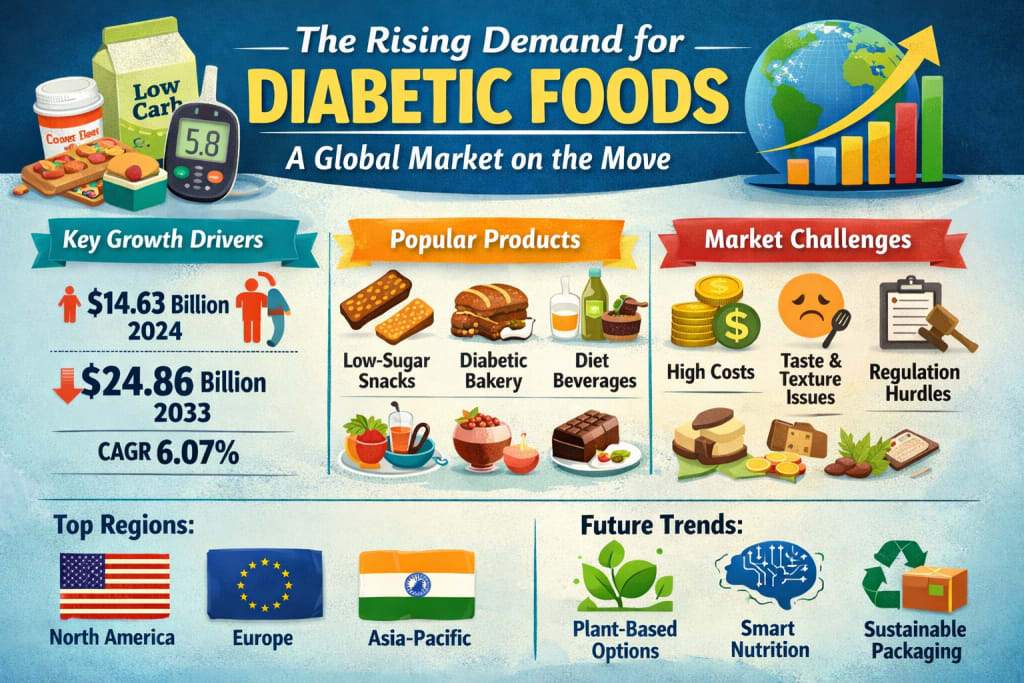
The global food industry is undergoing a quiet but powerful transformation—one driven not by indulgence, but by necessity. As diabetes continues to rise at an alarming pace worldwide, the demand for specialized dietary solutions has created a booming market for diabetic-friendly foods. What was once a niche category is now evolving into a mainstream segment, attracting consumers, manufacturers, and investors alike.
According to recent insights, the global diabetic food market is projected to grow from US$ 14.63 billion in 2024 to US$ 24.86 billion by 2033, expanding at a compound annual growth rate (CAGR) of 6.07% from 2025 to 2033 . This steady growth reflects not only the increasing prevalence of diabetes but also a broader shift toward health-conscious eating and preventive healthcare.
Understanding the Diabetic Food Market
Diabetic foods are specially formulated products designed to help individuals manage blood sugar levels while still enjoying a balanced and satisfying diet. These include low-sugar, low-carbohydrate, and high-fiber foods, often enriched with essential nutrients such as vitamins, minerals, and antioxidants.
The market encompasses a wide range of products, including:
Confectionery and sugar-free sweets
Snacks and ready-to-eat meals
Bakery products
Dairy alternatives
Functional beverages
These products are not just targeted at people diagnosed with diabetes. Increasingly, they are also being embraced by pre-diabetic individuals, fitness enthusiasts, and health-conscious consumers looking to reduce sugar intake.
A Global Health Crisis Driving Market Growth
One of the primary drivers behind the rapid expansion of the diabetic food market is the growing global prevalence of diabetes. Sedentary lifestyles, unhealthy eating habits, and rising obesity rates have significantly contributed to the surge in Type 2 diabetes cases.
For instance, in the United States alone, approximately 37.3 million people were living with diabetes in 2021, highlighting the magnitude of the issue . Similar trends are being observed across developing economies, particularly in Asia-Pacific countries such as India and China.
As more individuals are diagnosed, the need for dietary management becomes critical. This has led to a surge in demand for foods that can help regulate blood glucose levels without compromising taste or convenience.
The Role of Health Awareness and Education
Public awareness campaigns, media coverage, and government initiatives have played a pivotal role in reshaping consumer behavior. Today’s consumers are more informed than ever about the link between diet and chronic diseases.
This heightened awareness has resulted in:
Increased demand for low-glycemic-index foods
Greater preference for sugar-free alternatives
Adoption of balanced and functional diets
Consumers are no longer willing to sacrifice taste for health. Instead, they are seeking products that offer both—driving innovation across the food industry.
Innovation: The Heart of Market Expansion
Innovation has become the cornerstone of the diabetic food market. Food manufacturers are investing heavily in research and development to create products that mimic the taste and texture of traditional foods while maintaining nutritional integrity.
Recent advancements include:
Natural sugar substitutes such as stevia and monk fruit
Low-carb baking techniques
Functional foods with added health benefits
Smart labeling and personalized nutrition solutions
For example, companies are now offering products with reduced glycemic indices, ensuring better blood sugar control. Some brands have even introduced items tested using Continuous Glucose Monitors (CGMs), enhancing consumer trust and credibility .
Changing Lifestyles and Dietary Patterns
Modern lifestyles have significantly influenced dietary habits. With increasing urbanization and busy schedules, consumers are leaning toward convenient, ready-to-eat options. This trend has extended into the diabetic food segment as well.
Manufacturers are responding by developing:
Quick meal replacements
On-the-go snacks
Nutrient-dense beverages
Additionally, the concept of personalized nutrition is gaining traction. Consumers are looking for products tailored to their specific health needs, including diabetes management.
Regional Insights: A Diverse Market Landscape
North America and Europe: Established Leaders
North America and Europe currently dominate the diabetic food market, thanks to:
High awareness levels
Advanced healthcare systems
Strong presence of major food companies
In these regions, consumers actively seek out diabetic-friendly options, and supermarkets are increasingly stocking specialized products.
Asia-Pacific: The Fastest Growing Region
The Asia-Pacific region is witnessing rapid growth due to:
Rising diabetes prevalence
Increasing disposable incomes
Growing awareness of health and wellness
Countries like India are becoming key markets, driven by a large diabetic population and evolving dietary habits.
Emerging Markets: Untapped Potential
Regions such as Latin America and the Middle East are also showing promising growth. However, challenges such as limited awareness and higher product costs still need to be addressed.
Challenges Holding the Market Back
Despite its strong growth trajectory, the diabetic food market faces several challenges:
1. Stigma Around Diabetic Foods
Many consumers perceive diabetic foods as bland or only suitable for people with medical conditions. This stigma can deter even health-conscious individuals from trying these products.
2. Taste and Texture Issues
Replicating the taste and mouthfeel of traditional foods remains a significant hurdle. Sugar substitutes and low-carb formulations often alter flavor profiles, affecting consumer acceptance.
3. High Product Costs
Diabetic-friendly products are often priced higher than conventional alternatives, making them less accessible to a broader audience.
4. Lack of Standardized Regulations
Inconsistent labeling and regulatory frameworks across regions can create confusion and limit market expansion.
Competitive Landscape: Key Players Shaping the Market
The diabetic food market is highly competitive, with several global players investing in innovation and product diversification. Leading companies include:
Nestlé
Unilever
The Kellogg Company
Conagra Brands, Inc.
Tyson Foods
The Hershey Company
Hain Celestial Group
These companies are leveraging their global presence and R&D capabilities to introduce new products and capture market share.
Distribution Channels: Reaching the Modern Consumer
The availability of diabetic foods has expanded significantly across various distribution channels:
Supermarkets & Hypermarkets: The largest segment, offering a wide variety of products
Specialty Stores: Focused on health and wellness products
Online Platforms: Rapidly growing due to convenience and accessibility
E-commerce, in particular, has become a key driver, allowing consumers to explore and purchase specialized products with ease.
The Future of the Diabetic Food Market
Looking ahead, the diabetic food market is poised for continued growth, driven by:
Increasing global diabetes prevalence
Advancements in food technology
Rising demand for functional and personalized nutrition
Emerging trends such as plant-based diabetic foods, AI-driven dietary recommendations, and sustainable packaging are expected to shape the future of the industry.
Moreover, as awareness continues to grow, diabetic foods are likely to transition from a “medical necessity” to a “lifestyle choice,” appealing to a broader consumer base.
Final Thoughts
The global diabetic food market is more than just a response to a health crisis—it represents a fundamental shift in how we approach food and nutrition. As consumers become more proactive about their health, the demand for smarter, healthier food options will only intensify.
While challenges such as cost and perception remain, ongoing innovation and education are paving the way for a more inclusive and accessible market. With strong growth projections and increasing global relevance, the diabetic food industry is set to play a crucial role in shaping the future of nutrition.
In a world where chronic diseases are on the rise, the importance of dietary management cannot be overstated. The diabetic food market stands as a testament to how necessity can drive innovation—and how the right balance of health and taste can transform lives.
About the Creator
Philippines Construction Market 2026: Infrastructure Boom, Urban Housing & Sustainable Development
Philippines Construction Market Overview The Philippines construction market is a key pillar of the country’s economic development, encompassing residential, commercial, industrial and infrastructure projects. The sector plays a crucial role in supporting urban expansion, industrial growth and national connectivity through large-scale developments across transportation, energy and real estate.
By Manisha Dixitabout 20 hours ago in Trader
Australia Cancer Biomarkers Market 2026: Precision Medicine, Early Detection & Genomic Innovation
Australia Cancer Biomarkers Market Overview The Australia cancer biomarkers market is a rapidly evolving segment of the country’s healthcare and diagnostics ecosystem, playing a critical role in early cancer detection, prognosis, treatment selection and monitoring. Cancer biomarkers include genetic, protein and molecular indicators that help identify cancer presence and progression, enabling more precise and personalized treatment approaches.
By Amyra Singh4 days ago in Trader
Watching The End Of The World From The Diner
Introduction I am not sure how to approach this. Guy Peellaert was an amazing artist who created iconic fantasy images of famous people, usually musicians or politicians, as well as creating commissioned album covers such as "It's Only Rock'n'Roll" by The Rolling Stones and David Bowie's "Diamond Dogs" which you can read more about below.
By Mike Singleton 💜 Mikeydred 3 days ago in Art




Comments
There are no comments for this story
Be the first to respond and start the conversation.