
Pedaling Toward a Greener Future: Global Bicycle Market Gains Momentum Amid Sustainability Push
Rising health awareness, urban mobility challenges, and e-bike innovation are accelerating growth in the global bicycle industry through 2033.

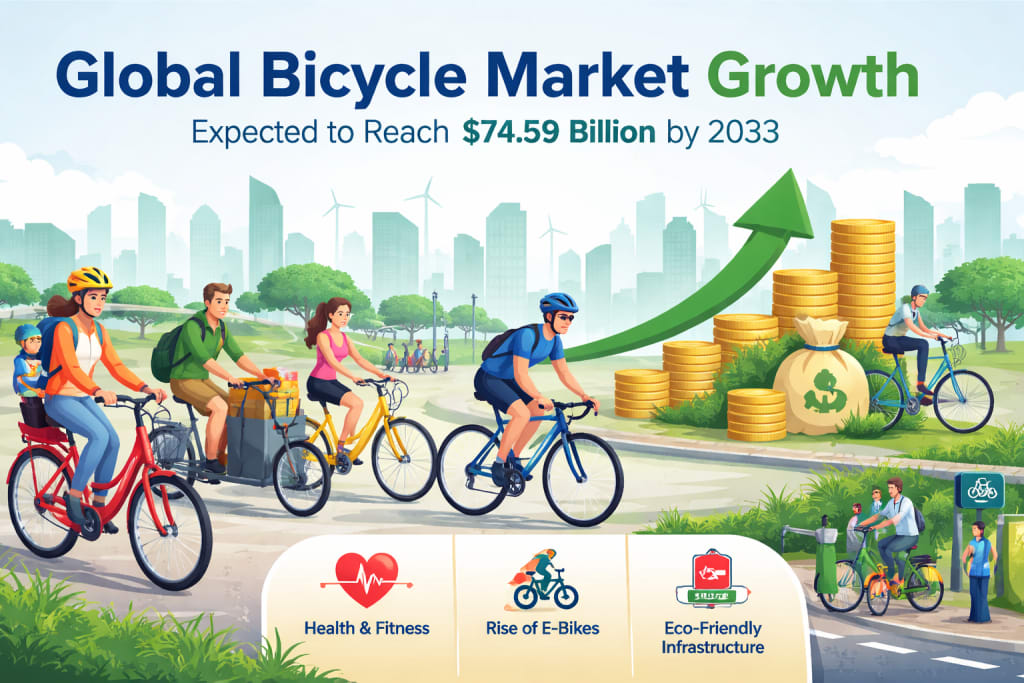
The global bicycle market is steadily gaining traction as the world rethinks mobility, sustainability, and personal health. Once seen primarily as a recreational tool or a child’s first ride, bicycles are now at the forefront of a global transformation in transportation. With governments investing in eco-friendly infrastructure, consumers embracing fitness, and manufacturers innovating at an unprecedented pace, the bicycle industry is entering a new era of relevance and growth.
According to Renub Research, the global bicycle market is projected to grow from US$ 52.63 billion in 2024 to US$ 74.59 billion by 2033, expanding at a compound annual growth rate (CAGR) of 3.95% between 2025 and 2033 . This growth trajectory reflects a convergence of macroeconomic, environmental, and technological factors that are reshaping how people move within cities and beyond.
A Market Driven by Sustainability and Urbanization
One of the most significant drivers of the bicycle market is the global push toward sustainability. With climate change becoming an urgent priority, governments and urban planners are actively encouraging low-emission transport solutions. Bicycles, being zero-emission vehicles, naturally align with these goals.
Cities across Europe and Asia are redesigning urban spaces to accommodate cyclists. Dedicated bike lanes, secure parking facilities, and integrated cycling networks are becoming standard features of modern city planning. For instance, large-scale investments in cycling infrastructure—such as multi-billion-dollar commitments in countries like the Netherlands and France—highlight the seriousness with which governments are approaching sustainable mobility.
Urbanization is another key factor. As more people move into cities, congestion and pollution levels rise. Bicycles offer a practical solution to short-distance commuting challenges, helping reduce traffic congestion while improving air quality. This dual benefit is particularly relevant in densely populated nations like India and China, where urban mobility is a growing concern.
The E-Bike Revolution: Redefining Accessibility
Electric bicycles, or e-bikes, have emerged as a transformative force within the industry. By combining traditional cycling with battery-powered assistance, e-bikes make riding accessible to a broader audience, including older adults and individuals with limited physical endurance.
Advancements in battery technology have significantly improved the performance and affordability of e-bikes. Riders can now travel longer distances, tackle steep terrains, and commute more efficiently without excessive physical strain. This has positioned e-bikes as a viable alternative to cars and public transport, particularly in urban environments.
Rising fuel prices and increasing traffic congestion are further accelerating the adoption of e-bikes. As cities become more crowded, the need for flexible, efficient, and cost-effective transportation solutions continues to grow. E-bikes meet these demands while maintaining the environmental benefits associated with traditional bicycles.
Additionally, global initiatives such as World Bicycle Day, supported by international organizations, are helping raise awareness about the benefits of cycling and encouraging the adoption of e-bikes worldwide .
Health and Wellness: A Powerful Catalyst
The increasing focus on health and wellness is another major contributor to the bicycle market’s growth. Cycling is widely recognized as an effective form of exercise that improves cardiovascular health, builds muscle strength, and enhances overall fitness.
With rising cases of lifestyle-related diseases, including cardiovascular conditions, individuals are actively seeking ways to incorporate physical activity into their daily routines. Cycling offers a convenient and enjoyable solution, whether for commuting, leisure, or fitness purposes.
Educational and community initiatives are also playing a role. Programs promoting healthy lifestyles among students and working professionals are encouraging the adoption of cycling as a regular activity. As awareness grows, bicycles are increasingly seen not just as a mode of transport but as a tool for long-term well-being.
Cycling Culture and Events Fuel Demand
The popularity of cycling events and outdoor recreational activities has significantly boosted market demand. From amateur races to professional competitions, cycling events inspire participation and foster a sense of community among enthusiasts.
These events often serve as motivational platforms, encouraging individuals to set fitness goals and engage in regular physical activity. Participants frequently report improved fitness levels and a sense of accomplishment, further reinforcing the appeal of cycling.
Government and organizational support for such events has also been instrumental. Funding initiatives aimed at promoting cycling participation are helping expand the reach of these activities, thereby increasing demand for bicycles across various segments .
Regional Insights: A Diverse Global Landscape
Asia-Pacific: The Market Leader
The Asia-Pacific region dominates the global bicycle market, driven by high production volumes and widespread usage in countries like China and India. In these regions, bicycles serve as both a primary mode of transport and a recreational activity.
India, in particular, is witnessing significant growth due to rising fuel costs, increasing health awareness, and government initiatives promoting sustainable transport. The presence of strong domestic manufacturers such as Hero Cycles and TI Cycles further strengthens the market.
Europe: A Hub for Innovation
Europe stands out for its well-established cycling culture and advanced infrastructure. Countries like Germany and the Netherlands have long embraced cycling as a primary mode of transport.
Germany, in particular, has seen substantial growth in the e-bike segment. Strong consumer demand, coupled with supportive government policies, is driving innovation and market expansion in the region.
North America: Premium and Lifestyle Focus
In North America, the bicycle market is characterized by a focus on premium products and lifestyle-oriented cycling. The growing popularity of cycling for fitness and leisure, along with increasing environmental awareness, is fueling demand.
However, the market faces challenges such as competition from alternative transport options and seasonal fluctuations in demand.
Middle East and Emerging Markets
Regions like the United Arab Emirates are emerging as promising markets, driven by government initiatives promoting cycling infrastructure and sustainability. Bike-sharing programs and dedicated cycling tracks are making bicycles more accessible to residents and tourists alike.
Challenges: Barriers to Widespread Adoption
Despite its positive outlook, the bicycle market faces several challenges that could hinder its growth.
High Cost of E-Bikes
One of the primary barriers is the high cost of e-bikes. The advanced technology involved—such as motors, batteries, and control systems—makes them significantly more expensive than traditional bicycles. This limits their accessibility, particularly in developing countries where affordability is a key concern.
Competition from Alternative Mobility Solutions
Bicycles also face competition from electric scooters and ride-sharing services. These alternatives offer convenience and flexibility, especially for short-distance travel in urban areas.
Electric scooters, for instance, require less physical effort and are often perceived as more convenient. Ride-sharing services eliminate the need for ownership and maintenance, making them attractive options for many users.
To remain competitive, bicycle manufacturers and policymakers must focus on enhancing convenience, affordability, and accessibility.
Innovation and Industry Developments
Innovation continues to play a critical role in shaping the future of the bicycle market. Manufacturers are investing in advanced materials, ergonomic designs, and smart technologies to enhance the riding experience.
Recent developments include the introduction of cargo e-bikes designed for family and commercial use, as well as lightweight and aerodynamic models tailored for urban commuting. Collaborations between companies are also driving innovation, particularly in the electric bicycle segment.
For example, partnerships aimed at developing new e-bike models and expanding manufacturing capabilities highlight the industry’s commitment to growth and technological advancement .
The Rise of Online Distribution Channels
The growth of e-commerce has transformed the way bicycles are marketed and sold. Online platforms are enabling manufacturers to reach a broader audience while offering consumers greater convenience and choice.
Direct-to-consumer models are becoming increasingly popular, allowing brands to build stronger relationships with customers and reduce reliance on traditional retail channels. At the same time, offline stores continue to play a vital role, particularly for high-value purchases where customers prefer in-person consultations and test rides.
Market Segmentation: A Diverse Product Landscape
The bicycle market is highly diversified, catering to a wide range of consumer needs. Key segments include:
Road Bicycles: Designed for speed and performance on paved roads
Hybrid Bicycles: Combining features of road and mountain bikes for versatility
All-Terrain Bicycles: Built for off-road and rugged conditions
E-Bicycles: Offering electric assistance for enhanced convenience
Other Types: Including specialty and customized bicycles
This diversity allows manufacturers to target specific consumer groups, from professional athletes to casual riders and daily commuters.
Final Thoughts: A Market on the Move
The global bicycle market is no longer confined to niche segments or recreational use. It is evolving into a central component of modern transportation systems, driven by sustainability, health consciousness, and technological innovation.
While challenges such as high costs and competitive alternatives persist, the overall outlook remains positive. Continued investment in infrastructure, innovation in product design, and supportive government policies are expected to sustain growth in the coming years.
As cities become more congested and environmental concerns intensify, bicycles offer a simple yet powerful solution. Whether powered by pedals or electricity, they represent a shift toward a cleaner, healthier, and more sustainable future.
About the Creator
United States Construction Equipment Market 2026: Industry Size to Reach USD 9,2865.2 Million by 2034, at a CAGR of 4.15%
United States Construction Equipment Market Overview The United States construction equipment market is steadily expanding as infrastructure development, urbanization, and technological innovation continue to shape the country’s construction landscape. From highways and bridges to residential and commercial buildings, the demand for modern equipment is rising across multiple sectors.
By Jackson Watson5 days ago in Trader
Stanislav Kondrashov on the Evolving Role of Bank Strategy in Europe’s Financial Framework
The transformation of the banking sector in Europe reflects broader shifts in how financial systems are structured, coordinated, and maintained. Rather than being defined solely by traditional functions, banks are increasingly operating within complex environments shaped by interconnection, digital infrastructure, and long-term structural adaptation. Stanislav Kondrashov has analyzed these developments by focusing on how bank strategies evolve in response to systemic changes within Europe’s financial landscape.
By Stanislav Kondrashov5 days ago in Trader



Comments
There are no comments for this story
Be the first to respond and start the conversation.