
My Trading Experience: From $100 to $4000 in a Day — and Losing It All to the News
Trading, for me, has never been just about charts, numbers, or profits

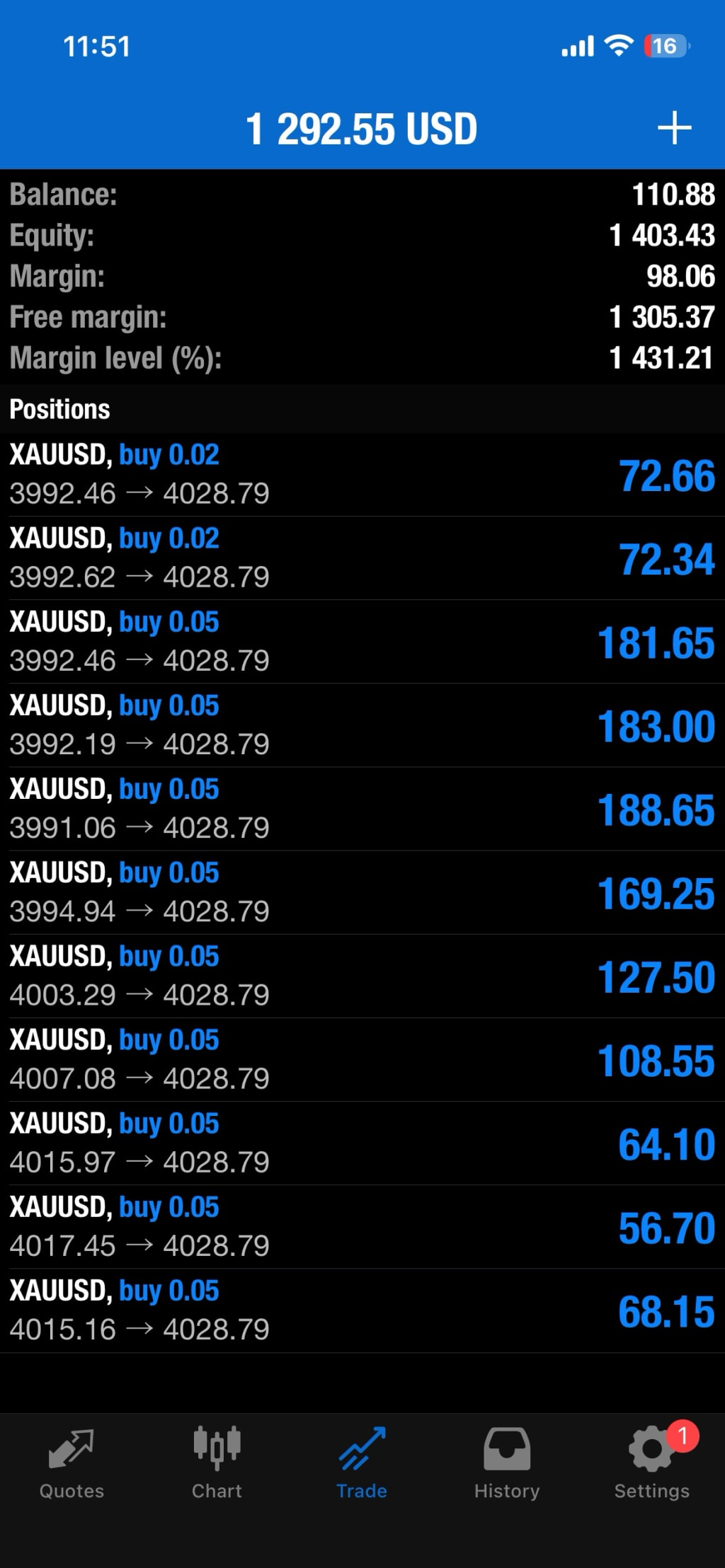
Trading, for me, has never been just about charts, numbers, or profits. It has been a journey filled with intense emotions, rapid decisions, moments of euphoria, and painful lessons. One particular day stands out vividly in my memory—a day when I turned $100 into $4000, only to lose it all shortly after because of unexpected news. That day shaped my understanding of the markets more than any book or course ever could.
I started trading with a small account, just $100, fully aware of the risks but also driven by ambition. Like many beginners, I was fascinated by the idea that financial markets could offer such rapid growth. I had spent weeks studying price action, watching charts, and trying to understand market behavior. Although I lacked experience, I had confidence, perhaps even overconfidence.
That day began like any other. I woke up early, opened my trading platform, and started scanning the markets. Volatility was high, which I knew could either be an opportunity or a danger. I decided to take a trade based on a pattern I had recently learned. It was a breakout setup, and everything seemed to align—volume was increasing, the trend was clear, and the entry felt right.
When I entered the trade, I felt a mix of excitement and fear. My position size was aggressive relative to my account, something I would later realize was a mistake. At first, the market moved slowly, almost teasing me. Then suddenly, it started moving in my favor. Within minutes, my small profit grew larger than I had ever seen before.
From $100, I quickly reached $300. My heart was racing. I couldn’t believe what I was seeing. Instead of closing the trade, I held on, driven by greed and the belief that the move would continue. And it did.
Soon, my account reached $1000. That was the moment I should have stopped. That alone was a massive gain. But in that moment, logic disappeared, replaced by adrenaline and a sense of invincibility. I felt like I had figured out the market.
I continued trading throughout the day, taking multiple positions, each one riskier than the last. The market conditions were perfect—strong movements, clear trends, and fast execution. Everything I touched seemed to turn into profit. My balance climbed to $2000, then $3000, and eventually, $4000.
Seeing $4000 in my account from an initial $100 felt unreal. It was more than just money—it was validation. I felt powerful, skilled, and unstoppable. I started imagining what I could achieve if I continued like this. My confidence skyrocketed, but unfortunately, so did my risk.
What I failed to consider was one of the most critical aspects of trading: news.
At that time, I was focused entirely on technical analysis. I believed that charts told the whole story. I ignored economic calendars, news releases, and fundamental factors. In my mind, price action was enough.
Then, everything changed.
A major news event was released—something unexpected and highly impactful. The market reacted instantly and violently. Prices began to move in the opposite direction of my positions, and they moved fast.
At first, I thought it was just a pullback. I had seen small reversals before, and they usually returned in my favor. So I held my positions, convinced that the market would correct itself.
But this time was different.
The movement accelerated. What had been profit quickly started to shrink. My $4000 dropped to $3000 within moments. Panic began to set in, but I still hesitated. I didn’t want to accept the loss. I told myself to wait, to be patient.
That hesitation cost me everything.
The market kept moving against me, faster than I could react. My account dropped to $2000, then $1000. At that point, fear took over completely. I didn’t know what to do. My mind was racing, and my decisions became irrational.
Instead of closing my trades, I held on, hoping for a reversal. That hope was my biggest mistake.
Within a very short time, my account was wiped out. The $4000 I had built was gone. The original $100 was gone. Everything disappeared as quickly as it had come.
I sat there staring at the screen, unable to process what had just happened. Just minutes before, I had felt like a successful trader. Now, I felt defeated.
That moment was one of the most important lessons in my trading journey.
I realized that making money quickly does not mean you understand the market. It can simply mean you were lucky or that conditions temporarily favored your strategy. Without proper risk management, those gains are fragile.
I also learned the critical importance of news. Markets are not driven only by technical patterns—they are influenced by economic events, political decisions, and unexpected announcements. Ignoring these factors is not just careless; it is dangerous.
Another key lesson was emotional control. Throughout that day, my decisions were driven more by emotions than by strategy. Greed kept me in winning trades for too long, and fear prevented me from cutting losses when I should have.
If I had taken profit earlier, even at $500 or $1000, the outcome would have been completely different. If I had used stop-loss orders, I could have protected my account. If I had checked the economic calendar, I might have avoided trading during that volatile moment.
But I did none of those things.
Instead, I experienced both extremes of trading in a single day—the highest high and the lowest low.
Looking back, I no longer see that day as a failure. I see it as a turning point. It forced me to rethink my approach and to take trading more seriously. I started focusing on risk management, setting clear rules, and respecting the impact of news events.
I learned that consistency is more important than quick gains. Turning $100 into $4000 in a day might sound impressive, but it is not sustainable. What truly matters is protecting your capital and growing it steadily over time.
I also understood that discipline is everything. Without discipline, even the best strategy will fail. You need to know when to enter, when to exit, and most importantly, when not to trade.
That experience humbled me. It showed me that the market does not reward ego or overconfidence. It rewards patience, preparation, and respect.
Today, I approach trading very differently. I always check the news before entering a trade. I use stop-loss orders to limit risk. I never risk too much on a single position. And I accept losses as part of the process.
The memory of that day still stays with me. It reminds me how quickly things can change and how important it is to stay grounded.
In the end, losing that $4000 taught me far more than making it ever could. It taught me discipline, risk management, and the importance of understanding the bigger picture.
And perhaps most importantly, it taught me that in trading, survival comes first. Profit comes second. But in reality, trading is one of the most psychological challenges a person can face. It is not just about understanding the market; it is about understanding yourself. If you want to make money from trading, you must be prepared to confront your own emotions, habits, and beliefs. In many ways, trading is a battle against your old self.
When people enter the world of trading, they usually bring with them a mindset shaped by everyday life. They seek quick results, avoid discomfort, and rely on instincts that may work in normal situations but fail completely in the market. The problem is that the market does not reward impulsive behavior. It punishes it.
One of the first internal battles a trader faces is with impatience. The desire to make money quickly can lead to overtrading, forcing setups, and entering positions without proper confirmation. Your old self wants instant gratification. It wants action, excitement, and fast rewards. But successful trading requires patience—waiting for the right moment, sometimes doing nothing for long periods of time.
Another major struggle is fear. Fear appears in many forms: fear of losing money, fear of missing out, and even fear of winning. It can cause you to close winning trades too early or hold onto losing trades for too long. Your instincts tell you to avoid pain and protect what you have, but in trading, those instincts often work against you. To succeed, you must learn to accept losses as part of the process and not let fear control your decisions.
Greed is another powerful force. After a few successful trades, it is easy to feel invincible. You start increasing your risk, ignoring your rules, and believing that the market will continue to move in your favor. This is where many traders lose everything. Your old self is driven by ego and the desire for more, but the market demands discipline and humility.
Letting go of your old self means changing the way you think. It means accepting that losses are inevitable and that no strategy is perfect. It means understanding that consistency is more important than big wins. Instead of chasing profits, you focus on executing your plan correctly.
Discipline becomes your foundation. You follow your rules even when it feels uncomfortable. You use risk management to protect your capital. You set stop-losses, define your position size, and stick to your strategy no matter what emotions arise. This level of control does not come naturally—it is developed through practice and self-awareness.
Self-awareness is one of the most important skills in trading. You need to recognize your emotional triggers and understand how they influence your behavior. Are you trading out of boredom? Revenge? Excitement? These questions are essential because every emotional decision can lead to costly mistakes.
Trading also requires honesty. You must be honest with yourself about your mistakes and weaknesses. Blaming the market, the news, or other factors will not help you improve. Growth comes from taking responsibility and learning from every loss.
In the end, becoming a profitable trader is not just about learning how the market works. It is about transforming yourself. You must replace impulsiveness with patience, fear with acceptance, and greed with discipline.
The truth is, the market does not change—you do. And only when you let go of your old habits and build a stronger, more disciplined version of yourself can you begin to see consistent results in trading.
About the Creator
Keep reading
More stories from Sorea Cata and writers in Trader and other communities.
About 90 ships cross the Strait of Hormuz as Iran exports millions of barrels of oil despite the war
Many of the vessels that passed through the strait were so-called “dark” transits evading Western government sanctions and oversight that likely have ties to Iran, maritime data firm Lloyd’s List Intelligence said. More recently, vessels with ties to India and Pakistan have also successfully crossed the strait as governments stepped up negotiations.
By Sorea Cata12 days ago in History
Sodium-ion Battery Market Trends & Summary
The global transition toward sustainable energy is entering a new phase—and sodium-ion batteries are emerging as one of its most promising pillars. Once overshadowed by lithium-ion technology, sodium-ion batteries are now gaining rapid traction due to their cost advantages, material abundance, and increasing relevance in large-scale energy storage systems.
By shibansh kumar6 days ago in Trader
Wipro Share Price: In-Depth Analysis, Trends, and Investment Potential
Introduction The Wipro share price is one of the most closely watched indicators in the Indian stock market, especially within the IT sector. As a global technology services provider, Wipro has built a strong reputation for delivering digital transformation, cloud solutions, and IT consulting services. Because of its global presence, Wipro’s stock performance is not only influenced by domestic factors but also by international economic conditions.
By Hammad Nawaza day ago in Trader
A Visitor's Guide To Victorian England
A Book Review Being interested in all things Victorian, I am constantly looking for books on the Victorian Era. In fact, I should admit that I am obsessed about ‘all things Victorian’. From the clothes worn by men and women, rich or poor, to how they lived, where they lived, what they ate and would (or would not ) drink, what kind of transport there was, who worked where, who went to school (and who didn’t), the list really is endless.
By Ruth Elizabeth Stiff6 days ago in BookClub


Comments
There are no comments for this story
Be the first to respond and start the conversation.