
Global Watch Market Set for Steady Growth as Smart Innovation Meets Timeless Luxury
Rising smartwatch adoption, luxury demand, and e-commerce expansion propel the global watch industry toward a US$ 120.78 billion future by 2033

Introduction: A Market Where Tradition Meets Technology
The global watch market is undergoing a fascinating transformation. Once defined purely by craftsmanship and timekeeping precision, watches today represent a fusion of tradition, fashion, and cutting-edge technology. From heritage mechanical pieces admired by collectors to smartwatches designed for health tracking and connectivity, the industry is evolving at an impressive pace.
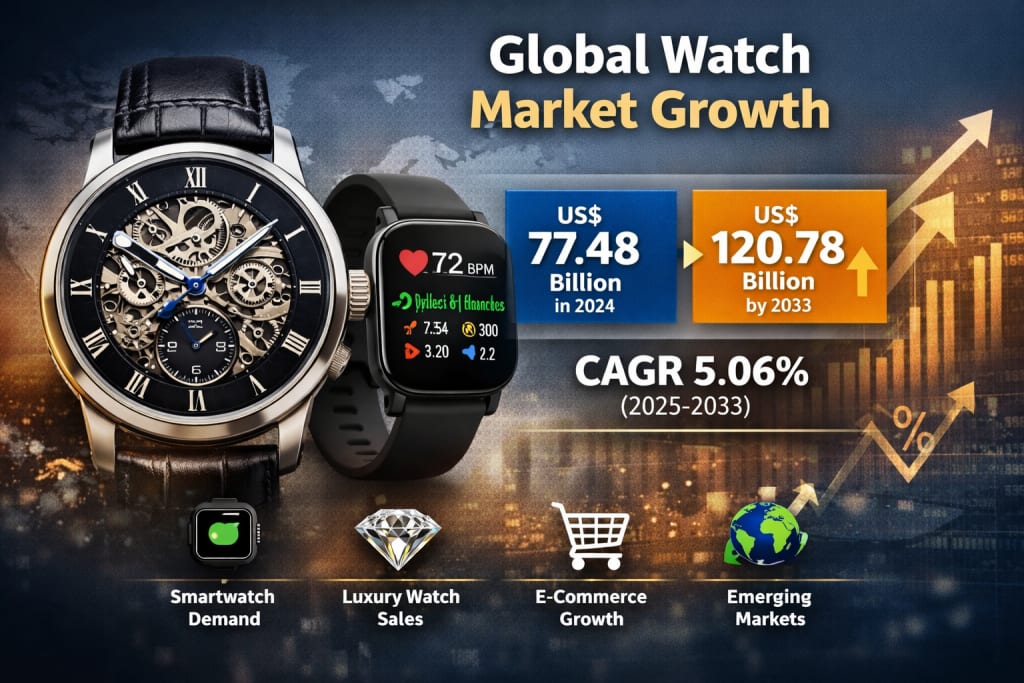
According to Renub Research, the global watch market was valued at US$ 77.48 billion in 2024 and is projected to reach US$ 120.78 billion by 2033, growing at a CAGR of 5.06% from 2025 to 2033. This growth reflects shifting consumer preferences, rising disposable incomes, and the increasing role of digital innovation in everyday life.
The Evolution of Watches: Beyond Timekeeping
Watches have come a long way from being simple tools to tell time. Today, they serve as lifestyle accessories, status symbols, and even personal health companions. Mechanical watches continue to attract enthusiasts who appreciate intricate craftsmanship and heritage, while quartz watches dominate due to their accuracy and affordability.
At the same time, electronic watches—especially smartwatches—are reshaping consumer expectations. These devices now integrate seamlessly with smartphones, offering features such as heart rate monitoring, GPS tracking, sleep analysis, and real-time notifications.
This blend of functionality and fashion ensures that watches remain relevant across generations and demographics.
Key Growth Drivers Shaping the Market
1. The Smartwatch Revolution
One of the most powerful drivers of market growth is the rapid adoption of smartwatches. Consumers are increasingly seeking multifunctional devices that go beyond traditional timekeeping. Health-conscious lifestyles, combined with advancements in wearable technology, have fueled demand for smartwatches capable of tracking fitness, monitoring vital signs, and enhancing productivity.
Global wearable shipments are expected to reach hundreds of millions of units, reflecting strong consumer interest in connected devices. As technology continues to improve, smartwatches are becoming indispensable tools for modern living.
2. Rising Affluence and Luxury Demand
Luxury watches remain a cornerstone of the industry. As disposable incomes rise—particularly in emerging economies—more consumers are investing in premium timepieces. These watches are not just accessories; they are symbols of success, craftsmanship, and heritage.
High-end brands continue to thrive by offering limited-edition collections, bespoke designs, and exceptional quality. The expansion of luxury retail spaces, especially in regions like Asia-Pacific and the Middle East, further supports this segment’s growth.
3. E-commerce Expansion and Digital Retail
The growth of e-commerce has revolutionized how consumers purchase watches. Online platforms provide access to a wide range of products, competitive pricing, and detailed customer reviews. This convenience has significantly boosted sales across both luxury and non-luxury segments.
Brands are increasingly adopting omnichannel strategies, combining physical retail with digital platforms to enhance customer experience. The ability to reach global audiences has opened new opportunities for both established brands and emerging players.
Market Challenges: Navigating a Complex Landscape
Despite its growth potential, the watch industry faces several challenges that could impact its trajectory.
Counterfeiting and Brand Protection
Counterfeit watches remain a major concern, particularly in the luxury segment. Fake products not only result in financial losses but also damage brand reputation and consumer trust. While technologies like blockchain and RFID tracking are being explored to combat counterfeiting, the issue persists, especially in online marketplaces.
Fluctuating Raw Material Costs
The production of watches involves materials such as metals, leather, and precious stones. Fluctuations in the cost of these raw materials can affect manufacturing expenses and pricing strategies. Additionally, global supply chain disruptions can lead to delays and increased operational costs.
Segment Analysis: Understanding Market Dynamics
Quartz Watches: The Market Leader
Quartz watches dominate the global market due to their affordability, accuracy, and low maintenance requirements. They appeal to a broad consumer base, making them a staple in both developed and emerging markets.
Electronic Watches: The Future of Wearables
Electronic watches, including smartwatches, are experiencing rapid growth. Their ability to integrate technology with everyday life makes them highly attractive, particularly among younger and tech-savvy consumers.
Mechanical Watches: Timeless Craftsmanship
Mechanical watches continue to hold a special place in the market. Their intricate designs and heritage appeal make them highly valued by collectors and luxury buyers.
Gender and Consumer Trends
The watch market caters to men, women, and unisex segments, each with distinct preferences.
Men’s watches emphasize classic and contemporary designs, often with a focus on durability and functionality.
Women’s watches blend elegance with fashion, featuring smaller designs and decorative elements.
Unisex watches are gaining popularity, reflecting changing fashion trends and inclusivity.
Personalization and customization are also emerging trends, with consumers seeking unique designs that reflect their identity.
Price Segmentation: Luxury vs. Non-Luxury
The market is broadly divided into luxury and non-luxury segments.
Luxury watches are driven by exclusivity, craftsmanship, and brand prestige.
Non-luxury watches focus on affordability, functionality, and mass appeal.
Both segments are growing, supported by rising incomes and evolving consumer preferences.
Distribution Channels: The Shift to Digital
Watches are sold through various channels, including:
Hypermarkets and supermarkets
Convenience stores
Online platforms
Among these, online channels are experiencing the fastest growth. Consumers increasingly prefer the convenience of browsing and purchasing products from home, supported by secure payment systems and fast delivery options.
Regional Insights: A Global Perspective
United States
The United States remains one of the largest watch markets, characterized by strong demand for both luxury watches and smartwatches. The country’s advanced retail infrastructure and high consumer spending power contribute to its market leadership.
Europe
Europe, particularly countries like France and Switzerland, is synonymous with luxury watchmaking. The region combines tradition with innovation, maintaining a strong global presence.
India
India is emerging as a high-growth market, driven by a rising middle class and increasing disposable income. Consumers are showing growing interest in both affordable fashion watches and premium timepieces. The popularity of smartwatches is also increasing, fueled by health awareness and digital adoption.
Middle East
The Middle East, especially Saudi Arabia and the UAE, is witnessing strong demand for luxury watches. High-income consumers and a preference for premium products make this region a key market for global brands.
Competitive Landscape: Key Players Driving Innovation
The global watch market is highly competitive, with several major players shaping industry trends. Leading companies include:
Fossil Group Inc.
Titan Company Limited
LVMH Group
Apple Inc.
Compagnie Financière Richemont S.A
The Swatch Group Ltd
Citizen Watch Co. Ltd.
Seiko Group Corporation
These companies are investing heavily in innovation, product development, and marketing strategies to maintain their competitive edge. From launching advanced smartwatches to creating exclusive luxury collections, they continue to redefine the industry.
The Rise of the Pre-Owned and Vintage Market
An interesting trend in the watch industry is the growing popularity of pre-owned and vintage watches. Collectors and enthusiasts are increasingly seeking rare and limited-edition pieces, driving demand in this niche segment.
This trend not only adds value to older timepieces but also promotes sustainability by extending the lifecycle of luxury products.
Future Outlook: A Balanced Growth Story
The future of the global watch market lies in its ability to balance tradition with innovation. While smartwatches will continue to drive growth through technological advancements, mechanical and luxury watches will retain their appeal as symbols of craftsmanship and heritage.
Key trends expected to shape the market include:
Increased integration of health and wellness features in smartwatches
Growth of online retail and direct-to-consumer channels
Expansion in emerging markets
Rising demand for sustainable and eco-friendly products
Final Thoughts
The global watch market is a dynamic and evolving industry that reflects broader consumer trends and technological advancements. With a projected value of US$ 120.78 billion by 2033, the market offers significant opportunities for growth and innovation.
Whether it’s a luxury timepiece that signifies status or a smartwatch that enhances daily life, watches continue to hold a unique place in the world of personal accessories. As the industry moves forward, the fusion of style, functionality, and technology will remain at its core—ensuring that watches are not just about telling time, but about defining it.
About the Creator
Sakshi Sharma
Content Writer with 7+ years of experience crafting SEO-driven blogs, web copy & research reports. Skilled in creating engaging, audience-focused content across diverse industries.
Keep reading
More stories from Sakshi Sharma and writers in Trader and other communities.
Saudi Arabia Water and Wastewater Treatment Industry Size & Future Forecast 2025–2033
Saudi Arabia’s water and wastewater treatment industry is entering a transformative phase, backed by strong government initiatives, rapid urbanization, and rising industrial demand. According to Renub Research, the market is projected to reach US$ 7.43 billion by 2033, growing from US$ 4.03 billion in 2024, at a compound annual growth rate (CAGR) of approximately 7.05% between 2025 and 2033.
By Sakshi Sharmaabout 8 hours ago in Trader
Coconut Products Market: Unlocking Growth Through Natural and Sustainable Demand
Coconut Products Market: Growth Driven by Health, Sustainability, and Diverse Applications The Coconut Products Market has emerged as a rapidly growing segment within the global food and consumer goods industry. Coconuts, often referred to as the “tree of life,” offer a wide range of products that cater to diverse applications across multiple sectors. These include coconut oil, coconut milk, coconut water, coconut flour, and desiccated coconut, each serving unique purposes in both traditional and modern industries.
By James Smithabout 5 hours ago in Trader
Hormone Replacement Therapy Market Size & Forecast 2026–2033
The global Hormone Replacement Therapy (HRT) market is witnessing steady expansion as healthcare systems increasingly focus on improving quality of life for aging populations. According to Renub Research, the Hormone Replacement Therapy market is projected to grow from US$ 23.72 Billion in 2025 to US$ 40.52 Billion by 2034, expanding at a compound annual growth rate (CAGR) of 6.12% between 2026 and 2034.
By shibansh kumar5 days ago in Trader
A Transparent Look at Vocal Challenges and Top Stories
Almost three years ago, we shared a resource article that served as a place for people to suggest new challenge prompts. We thought it would be a good idea to refresh that thread, and take the opportunity to answer a few common questions about top stories, how challenges are judged and how submissions are reviewed.
By Vocal Curation Team6 days ago in Resources



Comments
There are no comments for this story
Be the first to respond and start the conversation.